Are there any differences in the properties of lyophilized peptides from different manufacturers?
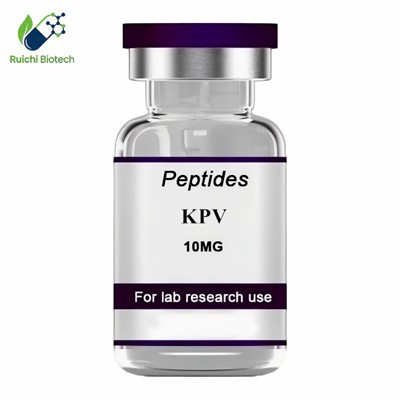
As a supplier of lyophilized peptides, I’ve encountered numerous inquiries from customers regarding the potential differences in peptide properties from various manufacturers. It is an incredibly important topic that directly affects the outcomes of research, clinical trials, and industrial applications relying on these peptides. Lyophilized Peptide
Manufacturing Processes
One of the most significant factors contributing to differences in lyophilized peptide properties is the manufacturing process. At our company, we adhere to strict Good Manufacturing Practices (GMP). This begins with the selection of high – quality raw materials. The amino acids used in peptide synthesis are sourced from reliable suppliers and are thoroughly tested for purity and quality. For instance, we ensure that the enantiomeric purity of amino acids is above a certain standard to avoid the presence of unwanted isomers in the final peptide product.
However, not all manufacturers follow such rigorous standards. Some might cut corners by using lower – grade raw materials to reduce costs. This can lead to peptides with impurities, which may in turn affect their solubility, stability, and biological activity. For example, if an impure amino acid is incorporated during the synthesis process, it could disrupt the peptide’s secondary and tertiary structures, altering its binding affinity to target molecules.
The peptide synthesis method also varies among manufacturers. Solid – phase peptide synthesis (SPPS) is a commonly used technique, but the specific protocols can differ. Our company has developed optimized SPPS procedures that minimize side reactions and maximize coupling efficiency. We use high – quality resins and coupling reagents to ensure complete peptide chain elongation. In contrast, less experienced or cost – cutting manufacturers may use sub – optimal coupling conditions, resulting in peptides with truncated sequences or incomplete amino acid incorporation.
Lyophilization, the process of freeze – drying the synthesized peptides, is another crucial step. The lyophilization cycle involves freezing, primary drying (sublimation of ice), and secondary drying (removal of bound water). Our state – of – the – art lyophilization equipment allows us to precisely control temperature, pressure, and time parameters. This results in a stable, amorphous powder with a low residual moisture content, which is essential for long – term peptide storage. Other manufacturers may not have the same level of control over the lyophilization process, leading to peptides with higher residual moisture. Moisture can accelerate peptide degradation, especially through hydrolysis reactions, and can also cause the peptides to clump together, making it difficult to reconstitute them accurately.
Quality Control
Quality control is a cornerstone of producing high – quality lyophilized peptides. Our quality control team conducts a series of comprehensive tests on every batch of peptides. We use high – performance liquid chromatography (HPLC) to analyze the peptide purity. The purity of our peptides is typically above 95%, and in many cases, we can achieve purities of over 98%. This high level of purity ensures reproducible results in biological assays and other applications.
In addition to HPLC, we perform mass spectrometry (MS) to confirm the peptide’s molecular weight and sequence. This verifies that the synthesized peptide has the correct amino acid composition and that there are no post – translational modifications or other unexpected structural changes. We also test the peptide’s solubility in various solvents to ensure it can be easily reconstituted for use.
Unfortunately, not all manufacturers have such robust quality control systems. Some may only perform basic purity tests, neglecting other important aspects such as sequence verification. This lack of comprehensive quality control can lead to peptides with incorrect sequences or inconsistent properties. For example, a peptide with a single amino acid substitution may have completely different biological activities compared to the intended peptide, which can be disastrous for research projects or clinical applications.
Formulation and Excipients
The formulation of lyophilized peptides, especially the use of excipients, can also lead to differences in properties. Excipients are added to the peptide solution before lyophilization to improve stability, solubility, and reconstitution. Our company carefully selects excipients based on the specific properties of the peptide. For example, for peptides that are prone to aggregation, we may use stabilizers such as sucrose or trehalose. These sugars can form a glassy matrix during lyophilization, protecting the peptide from denaturation and aggregation.
Other manufacturers may use different excipients or add them in inappropriate amounts. Using an incorrect excipient or an excessive amount can alter the peptide’s physical and chemical properties. For example, adding too much salt as an excipient can increase the peptide’s melting point or change its solubility behavior. This can make it challenging for researchers to use the peptide in their experiments, as they may need to adjust their protocols to account for these differences.
Biological Activity
The most important consideration for many customers is the biological activity of the lyophilized peptides. Due to the differences in manufacturing processes, quality control, and formulation, peptides from different manufacturers may exhibit varying levels of biological activity. Our peptides are designed and synthesized to have specific biological functions, such as acting as receptor agonists or antagonists. Through careful optimization of the synthesis and purification processes, we can ensure that our peptides have high and consistent biological activity.
In contrast, peptides from other manufacturers may have lower or even inconsistent biological activity. This can be due to impurities, incorrect sequences, or improper formulation. For example, a peptide used in a drug discovery project may not show the expected potency or selectivity if it is of poor quality. This can waste time and resources in the research and development process.
Impact on Applications
The differences in lyophilized peptide properties can have a significant impact on their applications. In research, these variations can lead to inconsistent experimental results. For example, if a researcher is studying the effect of a peptide on a particular signaling pathway, using peptides with different properties from different manufacturers may lead to conflicting data. This can delay the progress of the research and make it difficult to draw accurate conclusions.
In clinical applications, the quality and consistency of peptides are of utmost importance. Peptides used in diagnostic tests or as therapeutic agents need to have predictable properties. If a peptide used in a diagnostic test has inconsistent properties, it may lead to false – positive or false – negative results. In the case of peptide – based therapeutics, variations in properties can affect the safety and efficacy of the treatment.
Why Choose Our Lyophilized Peptides
Given the potential differences in lyophilized peptide properties from various manufacturers, choosing a reliable supplier is crucial. Our company has a proven track record of producing high – quality lyophilized peptides. We have invested in state – of – the – art equipment, hired experienced scientists, and established strict quality control systems.

Our peptides are synthesized using optimized processes that ensure high purity, correct sequence, and stable formulation. We work closely with our customers to understand their specific requirements and provide customized peptide solutions. Whether you are conducting basic research, drug discovery, or clinical trials, our peptides can provide the consistent and reliable results you need.
Dietary Supplements If you are in the market for high – quality lyophilized peptides for your research or industrial applications, we invite you to contact us to discuss your needs. Our team of experts is ready to assist you in choosing the right peptides and providing any technical support you may require.
References
- Alberts, B., Johnson, A., Lewis, J., Raff, M., Roberts, K., & Walter, P. (2002). Molecular Biology of the Cell. Garland Science.
- Fields, G. B. (Ed.). (2002). Solid – Phase Peptide Synthesis. Academic Press.
- Fringer, A., & Garidel, P. (2013). Impact of excipients on the stability of peptides and proteins in the solid state. Journal of Pharmaceutical Sciences, 102(4), 1150 – 1163.
- Kates, S. A., & Albericio, F. (Eds.). (2000). Solid – Phase Synthesis: A Practical Guide. Marcel Dekker.
Xi’an Ruichi Biotech Co., Ltd.
As one of the most professional lyophilized peptide manufacturers and suppliers in China, we’re featured by quality products and low price. Please rest assured to buy discount lyophilized peptide in stock here from our factory. Contact us for pricelist.
Address:
E-mail: Jenny@ruichibio.com
WebSite: https://www.ruichibio.com/
