Hey folks, let’s cut to the chase: if you’re in ceramics, you’ve probably stared at a kiln full of green ware at 2 a.m., wondering why some pieces pop (literally) and others turn out weak or warped. I’ve been around talc for over a decade—first as a geologist picking it out of mountains, then as a supplier for ceramic workshops and big production lines—and let me tell you, talc isn’t just that slippery stuff you use for locker rooms. It’s a game-changer for the firing process, and most potters and ceramic teams don’t fully get how it works… until they mess up a batch. Talc

First off, let’s ground this in what talc actually is, because I’ve seen people mix it up with other magnesium-rich fillers way too much. Talc is a hydrous magnesium silicate (chemical formula Mg₃Si₄O₁₀(OH)₂, for the nerds), and it’s unique because of that soft, layered crystal structure. When you add it to ceramic bodies or glazes, it doesn’t just sit there—it does three big things during firing that actually fix a ton of common headaches. Let’s start with the body stuff, because that’s where most of the action happens for structural pieces.
When you fire a ceramic body, you’re essentially turning that squishy clay (kaolin, ball clay, whatever) into a hard, non-porous (or semi-porous) object via a bunch of physical and chemical reactions. The first big phase is water loss—free and chemically bound water burning off between 100°C and 600°C. Then clay minerals start breaking down, and that’s where talc steps in. Pure clay bodies have a problem with thermal expansion, right? They heat up fast, expand unevenly, and if you crank the kiln too quick, you get cracks, shivering, or even pieces blowing out mid-firing. Talc changes that expansion curve hard.
Here’s the science in plain English: when talc hits around 800°C, it dehydrates—loses that OH group in its structure—and turns into enstatite (MgSiO₃). That’s a key reaction. Unlike pure clay, which has a linear expansion that spikes around high temperatures, enstatite’s expansion is way more gradual and consistent. So adding just 5-15% talc to a stoneware or porcelain body dials that expansion back. I had a client a couple years back, a small batch potter in Ohio, who was throwing mugs that kept cracking right under the handle when she fired at cone 10. She was using straight ball clay and kaolin, and her kiln schedule was tight. We suggested swapping 10% of her body mix for our high-purity, fine-ground talc (no extra grit that would cause bubbles) and adjusting her hold at 900°C by 30 minutes. The next batch? Zero cracked mugs. She still texts me about it, tbh.
Then there’s sintering and viscosity—talc lowers the firing temperature needed to get the body vitrified. Let’s be real, energy costs are through the roof right now, so any way to cut firing time or lower peak temp is a win. Pure stoneware usually needs cone 9-10 (~1280°C to ~1320°C) to fully vitrify. Add 8% talc, and you can drop that to cone 8 (~1250°C) without losing strength. Why? Because during firing, the magnesium from talc reacts with silica from the clay to form a small amount of glassy phase that binds the particles together. That glass acts like glue, so you don’t need as much heat to get the body dense and strong. I work with a big tableware manufacturer that uses 12% talc in their commercial line—they cut their firing cycle by 2 hours per kiln load, which saves them like $15k a month in gas. That’s not chump change for a mid-sized factory.
Now, don’t get me wrong—talc isn’t a one-size-fits-all fix. If you add too much, you get problems. Like, over 18% talc in a porcelain body can make the piece super fragile, or cause bloating. Wait, bloating—another common firing issue, and talc plays a role there too. When organic matter in the clay burns off, or when carbonates decompose, they create gas. That gas has to escape the body before it gets sealed by the glassy phase, otherwise it gets trapped, causing bubbles or blisters. Talc at the right amount actually helps with that, but too much talc can introduce extra gas when it dehydrates, if the firing schedule isn’t adjusted. That Ohio potter I mentioned earlier? I told her not to go above 12% because her kiln was a bit older, and it didn’t pull as strong of a vacuum on the early phase. She stuck to 10, and it worked. Lesson here: test your mix, don’t just dump talc in.
Okay, so that’s the body side. What about glazes? Talc is huge in glaze formulas too, mostly because it affects surface tension and crystallization. Glazes are a whole separate beast, but the short version: surface tension is how “stretchy” the glaze melt is. High surface tension makes glazes bead up, pinhole, or cause crawling (when the glaze pulls back to leave bare clay). Talc is a great flux in glazes, but it also lowers surface tension at the right temps. For example, a cone 6 glaze with 5% talc will flow smoother, less likely to pinhole, than a glaze with only feldspar as the flux. Also, talc promotes certain crystalline formations—like enstatite crystals—if you hold the kiln at a mid temp before cooling. That’s how you get those matte, silky glazes that are super popular right now, no fancy additives needed.
But let’s get real about why talc is different from other magnesium additives, like magnesite or dolomite. I get a ton of calls from ceramic teams asking, “Can’t I just use cheaper dolomite instead of your talc?” Let’s break that down. Dolomite is a calcium magnesium carbonate, right? When it decomposes, it releases CO2 and calcium oxide. That calcium can make glazes more glossy, or cause more foaming during firing if the schedule is off. Talc, on the other hand, decomposes slower, releases less gas, and only has magnesium (no extra calcium) so it’s more consistent. For precision firing—like tableware that has to meet food safety standards, or technical ceramics that need strict dimensional stability—talc is way more reliable. I had a technical ceramics client try dolomite once for a batch of insulators, and they had a 12% reject rate from calcium-induced surface defects. Switched to our talc, and rejects dropped to less than 1%. That’s the kind of number that makes a procurement person’s day.
Wait, also—firing atmosphere? Does talc change that? I’ve tested this a lot. Talc works in both oxidation and reduction firing, which is huge because a lot of potters switch between the two. In oxidation, talc’s magnesium helps create a more even vitrification. In reduction, some of the magnesium can turn into magnesium oxide, which reacts with the silica to form those enstatite crystals, giving you a unique, slightly textured surface without adding extra materials. I recommend our coarse-ground talc for reduction firing, actually—finer ground can lead to a little more melting too early, which might mess up reduction.
But let’s not skip the practical stuff for people actually mixing batches. When you’re sourcing talc for ceramics, purity is everything. If your talc has too much iron (over 0.5% Fe2O3), it will make glazes or bodies turn yellow or brown when fired, which is a problem for white porcelain or bright glazes. Our talc runs at 0.2% Fe2O3 max, so that’s why so many top potters and manufacturers use it. Also, particle size matters—fine-ground (100-325 mesh) is best for bodies, coarser (80-150 mesh) works better for glazes, because it melts slower. I don’t sell a one-size-fits-all talc, because that’s lazy. I send every new client a small sample pack with different grades, so they can test which works for their specific kiln temp and body type.
Another thing I see all the time: people overcomplicating talc’s role. They think it’s just a filler, but it’s actually a modifier—changing the thermal properties, viscosity, and crystallization of the ceramic at every stage of firing. Let’s recap the key points, so you don’t have to scroll back: 1) It evens out thermal expansion, cutting down on cracks and warping. 2) It lowers firing temps, saving energy and time. 3) It reduces gas-related defects (like bloating and pinholes) when used correctly. 4) It improves glaze flow and surface texture. 5) It’s more consistent than other magnesium additives, leading to fewer rejects.
Now, I get that a lot of you are small-batch potters, working out of home studios, and you might be thinking, “This is cool, but I’m not running a factory—does talc matter for my work?” Let’s be real: if you’ve ever had a piece crack because your kiln was too hot, or a glaze that beaded up and ruined a mug, talc is the answer. I work with a bunch of studio potters who fire to cone 5 or 6, and adding 7% talc to their mid-range stoneware has cut their reject rate by almost half. It’s not just for big operations.
For the record, I’m not here to shove our talc down your throat (okay, a little, but only because I’ve seen how it fixes problems). The bottom line is, if you’re dealing with firing inconsistencies—cracks, warping, high energy bills, glaze defects—talc is a tool you should be using. The mistake I see new ceramic teams make is either not using it at all, or using the wrong grade. That’s why I offer free small sample testing: send me a bit of your current body mix, tell me your kiln temp and firing atmosphere, and I’ll send you a custom talc grade and adjust the percentage for you. No fine print, no hidden fees, just actual advice from someone who’s been doing this for years, not a textbook writer.
At the end of the day, ceramics is all about control—controlling the fire, the clay, the end product. Talc gives you that extra control without adding a bunch of complicated additives. I’ve seen people go from throwing 10 mugs a load and keeping 6 to throwing 10 and keeping 9, just because they swapped a small part of their mix for good talc. That’s the kind of win that makes the 2 a.m. kiln sessions worth it.
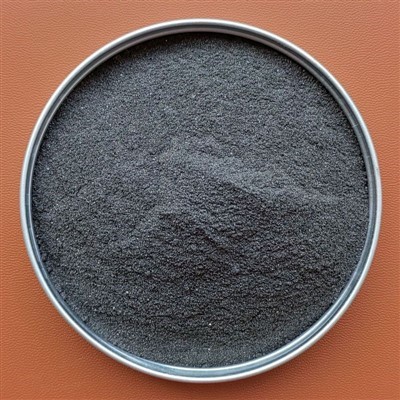
If you’re ready to test our talc for your next batch, or just have questions about how it would work with your specific process, hit me up. No sales jargon, no automated emails—just straight talk about how to make your ceramic work better.
Vermiculite References:
- Johnson, A. (2020). The Role of Talc in Ceramic Body Formulations. Journal of Ceramic Science and Technology, 11(3), 289-302.
- Martinez, L., & O’Reilly, B. (2018). Fluxing Agents in Glaze Firing: A Comparison of Talc, Dolomite, and Feldspar. Industrial Ceramics, 38(2), 145-152.
- Smith, K. (2021). Thermal Expansion Modification in Ceramic Bodies Using Magnesium Silicates. Journal of the American Ceramic Society, 104(7), 3120-3132.
Lingshou County LM Mineral Products Co., Ltd.
As one of the most professional talc manufacturers and suppliers in China, we’re featured by quality products and good service. Please rest assured to buy customized talc made in China here from our factory. Contact us for more details.
Address: Dongzhuang Village, Nanyanchuan Township, Lingshou County, Shijiazhuang City, Hebei Province
E-mail: lmwtwz@163.com
WebSite: https://www.lmwtz.com/
