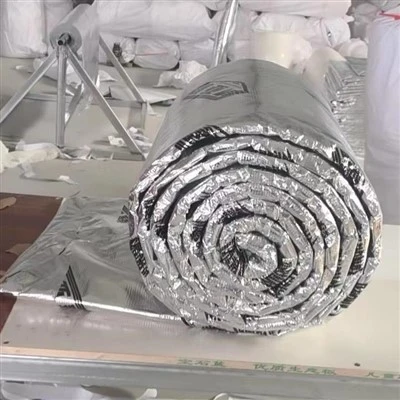
As a seasoned supplier of glass wool insulation, I’ve encountered numerous inquiries regarding the weight per cubic meter of this remarkable insulation material. Understanding the significance of this metric is pivotal, as it not only influences the material’s handling and installation but also its thermal performance and cost – effectiveness. In this blog post, I’ll delve into the details of the weight of glass wool insulation per cubic meter, explore its determining factors, and discuss how it relates to the quality and application of the product. Glass Wool Insulation
Understanding the Concept of Density in Glass Wool Insulation
Density is defined as the mass of a substance per unit volume. In the case of glass wool insulation, it is measured in kilograms per cubic meter (kg/m³). This measurement gives a clear indication of how much insulation material is packed into a given space. Typically, the density of glass wool insulation can vary widely, depending on its intended use and manufacturing process.
For instance, low – density glass wool insulation, which usually ranges from 10 to 20 kg/m³, is often used in applications where flexibility and ease of installation are key. This type of insulation is commonly found in residential wall cavities and attics, as it can be easily cut and fitted into irregular spaces. On the other hand, high – density glass wool insulation, with densities between 40 and 100 kg/m³, is designed for more demanding applications such as industrial settings. It offers better soundproofing and thermal performance, but it is also stiffer and more challenging to install.
Factors Affecting the Weight per Cubic Meter
Manufacturing Process
The manufacturing process of glass wool insulation plays a significant role in determining its density. Glass wool is made by melting glass at high temperatures and then spinning it into fine fibers. The type of spinning technique used, the speed of the process, and the additives introduced during manufacturing can all affect the final density of the insulation.
For example, during the spinning process, if the fibers are produced at a higher speed, they tend to be finer and more randomly distributed, resulting in a lower – density product. Conversely, slower spinning speeds can produce thicker fibers that pack more closely together, increasing the density of the glass wool.
Raw Materials
The quality and composition of the raw materials used in glass wool production also have an impact on its density. Different types of glass have varying chemical compositions, which can affect the melting point and the properties of the resulting fibers. Additionally, the use of recycled glass can influence the density, as the impurities and variations in recycled materials can cause slight differences in the final product.
If the raw materials contain more heavy – metal oxides, the glass wool may be denser. On the other hand, a higher proportion of lighter elements can lead to a lower – density insulation.
Intended Application
The intended use of the glass wool insulation is a crucial factor in determining its density. As mentioned earlier, applications with different requirements call for different densities.
In areas where thermal insulation is the primary concern, such as in cold storage facilities or energy – efficient buildings, higher – density glass wool is often preferred. This is because denser materials have fewer air pockets, reducing the heat transfer through convection. In contrast, for acoustic insulation in areas like recording studios or residential living rooms, a medium – density glass wool might be sufficient to absorb sound waves effectively while still being relatively easy to install.
The Relationship between Weight per Cubic Meter and Insulation Performance
Thermal Performance
The density of glass wool insulation is closely related to its thermal performance. Generally, higher – density glass wool has better thermal resistance, measured as R – value. This is because the denser fibers trap air more effectively, creating a larger number of small air pockets that act as natural insulators.
However, it’s important to note that there is a point of diminishing returns. Beyond a certain density, the increase in thermal performance may not be proportional to the increase in weight. Therefore, it’s essential to select the right density based on the specific thermal requirements of the project to ensure optimal energy efficiency without unnecessary cost.
Acoustic Performance
In terms of acoustic insulation, the density also affects how well the glass wool can absorb sound. A medium to high – density glass wool can effectively reduce noise transmission by converting sound energy into heat energy as the sound waves pass through the fibrous structure. The density helps to match the impedance of the insulation to the acoustic environment, allowing for better absorption of a wider range of frequencies.
Practical Insights for Customers
When purchasing glass wool insulation, understanding the weight per cubic meter can help customers make informed decisions. Firstly, consider the specific needs of the project. If it’s for a small residential wall, a lower – density option may be sufficient and more cost – effective. For larger industrial projects or areas with stricter insulation requirements, a higher – density product should be considered.
Secondly, evaluate the installation process. Lower – density glass wool is generally easier to handle and install, but it may require more careful fitting to ensure proper coverage. Higher – density insulation may need more specialized equipment and skilled labor for installation.
Finally, balance the cost with the performance. While higher – density insulation often offers better performance, it can also be more expensive. Therefore, it’s crucial to find the right balance between budget and the desired level of insulation.
Why Choose Our Glass Wool Insulation?
As a supplier of glass wool insulation, we take pride in offering a wide range of products with varying densities to meet the diverse needs of our customers. Our manufacturing process is carefully monitored to ensure consistent quality and density control. We use only the highest – quality raw materials, sourced from reliable suppliers, to guarantee the best performance of our insulation products.
Whether you’re working on a residential renovation, a commercial building project, or an industrial installation, our technical team is available to provide personalized advice on the most suitable density of glass wool insulation for your specific application. We understand that every project is unique, and we’re committed to helping you find the optimal solution.
Conclusion
The weight per cubic meter of glass wool insulation is a fundamental parameter that affects its performance, handling, and cost. By understanding the factors that influence this density and its relationship to thermal and acoustic performance, customers can make more informed decisions when purchasing insulation materials.
If you’re in the market for high – quality glass wool insulation and need more detailed information about our product offerings, or if you’re ready to discuss a specific project and get a customized solution, we encourage you to reach out to us. Our experienced sales team is eager to assist you with your purchasing decisions.
Fire Rated Duct Wrap References
ASHRAE Handbook: Fundamentals. This comprehensive handbook provides in – depth knowledge on insulation materials, including glass wool, and their properties such as density and thermal performance.
Industry reports on insulation materials. These reports offer insights into the latest trends in glass wool manufacturing and the impact of density on overall performance.
Research papers on the acoustic and thermal properties of fibrous insulation. These academic sources provide detailed scientific analysis of how the density of glass wool affects its ability to insulate against heat and sound.
Langfang Yafeng Energy-Saving Technology Co., Ltd.
As one of the most professional glass wool insulation manufacturers and suppliers in China, we’re featured by quality products and good price. Please rest assured to buy bulk premium glass wool insulation for sale here from our factory. Welcome to view our website for more information.
Address: Langfang Xinyafeng, Liugezhuang Town, Dacheng County, Langfang City, Hebei Province
E-mail: yafengbaowen@gmail.com
WebSite: https://www.xyfinsulation.com/
