Hey there, I’m Jake, and let’s cut to the chase—if you’re looking for a fiberglass fire blanket, you’re probably tired of vague “call for pricing” hoops or hearing numbers that feel like they’re pulled out of thin air. I’ve been supplying these bad boys for 12 years, so I’m gonna break down what actually goes into their cost, why price tags vary so much, and what you’re actually getting for every buck. No corporate jargon, no BS—just the real stuff. Fiberglass Fire Blanket
First off, let’s get one thing straight: not all fiberglass fire blankets are created equal. I’ve seen people pay $15 for a blanket that melts after 10 seconds in a grease fire, and drop $80 on one that’s still intact after putting out a small class B (flammable liquid) or class K (cooking oil) fire. The gap isn’t just markup—it’s in the materials, the manufacturing, the testing, and the warranty. Let’s dive into each part like we’re unpacking a shipment in my warehouse last week.
The biggest cost driver is the fiberglass itself. We don’t skimp on our base material—we use E-glass, which is the gold standard for fire-resistant textiles. E-glass’s melting point is around 1,000°C (1,832°F), way higher than the temperature of most common home and workshop fires (a typical grease fire hits around 500–600°C, and a small electrical fire is lower). Cheaper blankets use what’s called “A-glass” or even recycled fiberglass offcuts—their melting point is way lower, like 600°C, and they fray super fast, especially after a few uses. Right now, E-glass roving (the raw fiber we weave into fabric) runs about $2.20 per yard for our grade A material. If someone’s selling a 4’x6’ blanket (the most popular size for home garages or commercial kitchens) for under $20, their fabric cost is probably half that—so you know they’re cutting corners here.
Next, there’s the coating. This is non-negotiable if you want the blanket to actually work. The base fiberglass is fire-resistant, but it’s not waterproof or oil-proof on its own. We coat our blankets with a food-grade silicone resin. Why food-grade? Because if you’re using it in a commercial kitchen, you don’t want toxic fumes leaching into your food when you yank it over a grease fire. Some budget suppliers use cheaper acrylic coatings that smell like plastic when heated, release fumes, and peel after one or two 10-minute fires. Our silicone coating adds about $0.80 per yard to the cost, but it’s what makes our blankets water-resistant, stain-resistant, and safe for repeated use. Oh, and we add a small amount of flame retardant treatment during the coating process too—another $0.30 per yard, which ensures the blanket doesn’t catch fire itself, only melts back, which is what you want.
Then there’s the hardware—let’s be real, a blanket is useless if you can’t deploy it fast. We reinforced the edges of our blankets with heavy-duty nylon webbing, not flimsy thread that’ll snap when you’re panicking and yanking it off the wall. We add a sturdy nylon carry loop and a metal eyelet (not plastic) for hanging it on the wall near the stove or grill. That hardware adds roughly $1.10 per blanket, depending on size, but it’s the difference between grabbing a blanket that slips out of your hand and one that’s ready to go in 0.2 seconds when you need it.
Now, manufacturing and testing. I run a small, family-owned operation, so I’m not outsourcing to a sweatshop where workers are paid $1 an hour. Our blankets are cut, sewn, and coated right here in the U.S. (I know, I know, that costs more, but quality control is way tighter). Every single one of our blankets goes through a physical fire test before it leaves the warehouse—we test them on both class A (ordinary combustibles like wood or paper) and class K (grease) fires, and we track the performance data for every batch. A budget supplier might make 10,000 blankets in a week, throw them in a box, and ship ’em—no testing, no inspections. That’s a gamble I’m not willing to take with something that’s supposed to save people’s homes. Labor and testing add about $2.50 per blanket, on top of materials, if we’re talking that 4’x6’ size.
Wait, hold on—what about bulk vs. single-unit pricing? That’s another big one. If you’re just a homeowner grabbing one blanket for your garage, you’re gonna pay more per unit than a café that needs 10 for their line of stoves, or a construction company that needs 50 for their job sites. For a single 4’x6’ blanket, retail price is usually around $55–$70. If you’re buying 50 units, that drops to $35–$45 per unit, and if you’re a larger commercial buyer (like a hotel chain that needs 200+), we can work out even better rates, because the per-unit cost of materials and labor goes down when you order in bulk. I recently had a client who’s a food distributor order 150 blankets for their commissary kitchens—their total cost was just under $4,800, which comes out to $32 per blanket, and that includes free delivery.
Now, let’s talk about what you’re not paying for when you get a cheap blanket. A $15 “fiberglass fire blanket” from a big box store? That’s probably made with recycled fiberglass, thin as tissue paper, coated in acrylic that peels after one use, and hasn’t been tested for class K fires. I’ve had customers bring back those cheap ones that melted through when they tried to put out a small grease fire—cost them a $200 pan and a scare, all because they tried to save $40. Another thing: warranty. We offer a 5-year warranty on all our blankets, as long as they’re used correctly (no, you can’t use them as a beach towel, that’s not what they’re for). Most cheap blankets come with no warranty at all, because the supplier knows they’re not gonna last.
Are there ways to save money without sacrificing quality? Absolutely. If you don’t need a 4’x6’ blanket, the smaller 3’x3’ size is perfect for home grills or small countertop fires, and it runs about $30 retail, $20 in bulk. We also run small sales twice a year—usually around fire safety season, which is fall, right before winter when fire risks go up. Last quarter, we had a 10% off sale on bulk orders for local schools, which helped them equip their science labs without blowing their budget. Another tip: buy them in sets if you need multiple—buying two gives you a 7% discount, three gives 10%, so it adds up fast.
Wait, let’s get into some real numbers to make this concrete. Let’s take that 4’x6’ blanket we’ve been talking about. Raw materials for fabric, coating, hardware: $4.40. Labor and testing: $2.50. Overhead (rent, utilities, shipping supplies): $1.10. That’s $8 total per blanket to make it. Then you’ve got packaging, marketing, and profit—so retail price is around $55–$70, bulk is lower. A cheap $15 blanket? Their materials cost is probably $3, labor is $1, testing is zero, so they’re marking it up 5x, but the quality is garbage. That’s the math, plain and simple.
I also wanna mention regulatory stuff, because it’s important. All our blankets meet NFPA 701 standards, which are the fire safety standards that most states require for commercial kitchens. If you’re a restaurant, you can’t use a blanket that doesn’t meet NFPA 701—your insurance won’t cover you if there’s a fire. A lot of the cheap imported blankets don’t meet that standard, so they’re basically useless for commercial use. We send every batch of our blankets to a third-party lab to get certified, so you don’t have to worry about that. That certification adds about $0.50 per blanket, but it’s worth every penny for the peace of mind.
Let’s be honest, no one thinks about fire blankets until they need them. Then you’re scrambling, and you don’t wanna find out the one you bought is a dud. I’ve been in this game long enough to see the worst of it—customers who thought a cheap blanket would save their kitchen, and it didn’t. That’s why we don’t cut corners. Every blanket we ship is one I’d use in my own warehouse, or in my sister’s café, which is down the street from my office.
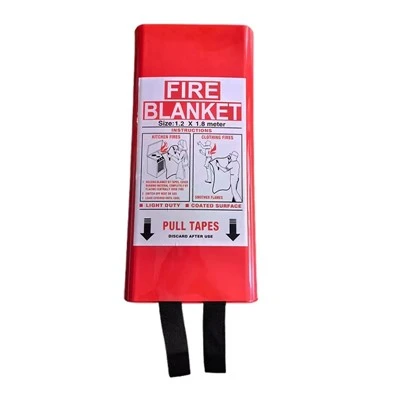
If you’re looking to order, or just wanna chat about what size or grade you need for your space—whether it’s a home garage, a commercial kitchen, a construction site, or a school lab—hit us up. We don’t do pushy sales calls, we don’t spam your inbox, and we’ll give you a straight answer on price and quality. No fine print, no hidden fees. Just good, solid fiberglass fire blankets at a fair price.
Nitrile Fire Hose Now, some quick references to back up what I’ve been saying—you don’t have to take my word for it. NFPA 701 Standard Methods of Fire Tests for Flame Propagation of Textiles and Films, E-glass Fiber Material Properties from the American Glass Research Institute, and Commercial Kitchen Fire Safety Guidelines from the National Fire Protection Association. That’s the stuff we base our products on, so you know it’s legit.
Shaoxing Weimin Fire Fighting Equipment Co., Ltd.
Shaoxing Weimin Fire Fighting Equipment Co., Ltd. is one of the most professional fiberglass fire blanket manufacturers and suppliers in China, also supports customized service with low price. Welcome to buy discount fiberglass fire blanket in stock here and get quotation from our factory. 5 years warranty is available.
Address: CHINA
E-mail: info@weiminfire.com
WebSite: https://www.weiminfire.com/
