Hey there, if you’ve ever stared at a packaged snack, a frozen dinner, or even a pre-made sandwich and thought “why does that wrapper look so crisp?” — odds are you’re looking at rollstock film. As a rollstock supplier, I talk about this stuff every single day with brand owners, package designers, and factory managers, and one of the first things we hash out isn’t just how well the film seals or holds product — it’s appearance quality. Because let’s be real: in a crowded grocery store, if a package looks off, shoppers will skip it before they even read the nutrition label. I’m gonna break down what appearance quality actually means for rollstock film, no stuffy jargon, just the real stuff I deal with on my production floor. Rollstock Film
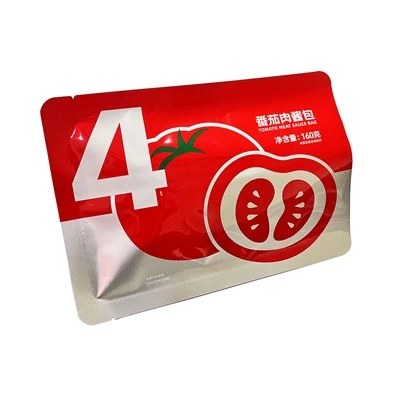
First off, let’s get one thing straight: appearance quality isn’t just “it looks good” — it’s a set of measurable, critical details that tie straight to brand trust. If you’re a cereal brand, your rollstock can’t have random streaks or bubbles that make the package look unprofessional; if you’re a frozen food brand, fogginess in the film will make it look old or freezer-burned, even if the product inside is perfect. Over the years I’ve seen so many people sleep on this part of the process, only to end up with costly rejections at the packaging line or returns from customers. So let’s start with the basics that everyone notices at first glance.
Color consistency is huge. Think about it: if you’re rolling out film to print your brand’s logo, that royal blue has to be exactly the same on the first roll of the run as it is on the hundredth. I can’t tell you how many times we’ve had a client come to us with a horror story: their old supplier’s film went from a bright, vibrant red on Monday to a faded, pinkish mess by Wednesday, and they had to scrap 10,000 finished packages. What causes that? For rollstock, color consistency isn’t just mixing dye — it’s about how the dye is dispersed through the plastic resin, how even the thickness of the film is, and how the printing process applies the ink. If the film is too thin in some spots, the ink will look less saturated; if the dye clumps, you get those weird color splotches that make the whole roll look unpolished. I always tell my team we run a color check every 200 feet of film, not just at the start and end — that’s how we avoid those mid-run surprises.
Next up, clarity and transparency, which matters a lot more than you’d think. For products that let shoppers see inside — like fresh pasta, hard candy, or craft beer — the film has to be crystal clear, not foggy or cloudy. Fog in rollstock usually comes from what’s called “haze,” which is when tiny imperfections in the film scatter light instead of letting it pass through smoothly. Haze can be caused by impurities in the resin, incorrect cooling during production, or even too much of certain additives (like anti-static stuff) that make the film milky. And here’s the kicker: for frozen goods, haze gets way worse when the film is cold, so a roll that looks clear at room temp might turn foggy in a freezer, making your product look like it’s been sitting in a freezer for years. We test all our film at 0°F to make sure that doesn’t happen — small step, but it’s saved so many clients headaches.
Then there’s surface finish and texture. Rollstock film can be smooth, matte, glossy, or even slightly textured (like for non-slip packaging for heavy items), but whatever finish you pick, it has to be consistent across the entire roll. If one section is super glossy and the next is matte, the printed design will look uneven, like it was printed on two different materials. Also, surface defects like scratches, scuffs, or tiny pinpricks are non-negotiable to avoid. Wait, but let’s be real — a few tiny scratches on a roll that’s 10,000 feet long? That’s normal, right? No. We set our threshold at 1 scratch per 100 feet max, and even then, we flag it for our quality team to check. Scratches might not sound like a big deal, but when the film goes through the printing press, those scratches can catch the ink and create lines all across thousands of packages. And pinpricks? Those can lead to leaks in sealed packages, which is a food safety and quality nightmare all at once.
Wait, I can’t forget about registration and print alignment. Registration is basically making sure all the different colors of your logo or design line up perfectly. If your brand has a red logo and a blue text box, those two elements can’t be off by even a fraction of a millimeter — if they are, it looks unprofessional, like a kid printed it on a home printer. For rollstock, which is made to run through high-speed packaging lines (some of our clients run 500 packages per minute), the film has to be perfectly aligned through every step of printing, cutting, and forming. That means the film’s thickness has to be consistent, because if it’s thicker on one side, it will move differently through the press, throwing off registration. I’ve had clients tell me their old rolls had registration that was off by half a centimeter, and they had to slow down their entire line to fix it, costing them thousands of dollars a day in downtime.
Another big one: unwind and roll integrity. This is a detail most people don’t think about until they get the roll to their factory. Rollstock is shipped on huge cores, and when you put it on your packaging line, it has to unwind smoothly, not twist, jam, or have layers that stick together. If the roll is wound too tight, the inner layers can get compressed, leading to creases that show up on the finished package. If it’s wound too loose, the layers shift, causing wrinkles and registration issues during printing. We test every roll’s unwind tension before we ship it — we actually run it through a small test line to make sure it doesn’t jam, and we’ve cut down on line downtime for new clients by like 30% just by nailing this part. Creases are especially bad because they’re permanent — a crease in the roll will turn into a line across every single package that uses that section, so we toss any roll that has even a tiny crease before it leaves our warehouse.
And let’s not talk about the stuff that’s not visible at first, but shows up once the package is sealed: things like seal quality appearance. Wait, is that part of appearance? Yeah, I think it is. A sealed package can’t have wrinkled, bubbly seals — that looks messy, and also signals to shoppers that the package might not be fresh. For rollstock, the heat-seal layer has to be evenly distributed, so the seal forms smoothly every time. If the seal is bumpy, it might not be airtight, but even if it is, customers will see it and think it’s low quality. We test our seals for smoothness and uniformity, so our clients never get that “crinkly seal” complaint.
Now, I know what some of you are thinking: “I just need rollstock that works, do I really need to stress all this stuff?” And yeah, you do — because appearance quality isn’t just about looking pretty. It ties directly to sales, brand reputation, and even operational costs. I had a snack client a couple years back who cut costs on a cheaper rollstock, and their packages had random color streaks. They pulled 20,000 units from store shelves because customers thought the product was damaged, and they lost like $80k in sales and rework. That’s the kind of thing that makes me grind every day to make sure our film doesn’t have those issues.
But here’s the thing: not all appearance issues are the same, and not all of them are easy to catch with the naked eye. That’s why we use tools too — not just human eyes (though my quality team has super trained eyes, we can spot a color difference that’s barely visible to most people). We use spectrophotometers to measure color consistency numerically, haze meters to test transparency levels, and thickness gauges to make sure the film is even across the entire roll. For example, a spectrophotometer will tell us if the blue we’re printing is exactly Pantone 2945 C, no guesswork. That takes out the human error, which is super important for big production runs.
Also, different industries have different appearance requirements, which is why we tailor every rollstock to our client’s needs. For pharmaceutical rollstock, appearance is even more critical — the film has to look sterile, no flaws, because patients are trusting that medication is safe. For artisanal food brands, they might want a slightly textured matte finish to feel more “handmade,” and we make sure that texture is consistent, not patchy. For beverage packaging, the film has to be clear enough to show off the product’s color, but tough enough not to scuff during shipping. I always make sure to ask clients about their specific end use before we even start producing a roll, because a roll that works for a granola bar might not work for a frozen pizza.
Wait, let’s talk about common mistakes I see new suppliers (or even new clients) make. A lot of clients will ask for the cheapest rollstock they can find, and they don’t realize that “cheap” usually means cutting corners on appearance quality. For example, using lower-grade resin that has more impurities, leading to haze. Or cutting back on testing to save time, leading to registration issues. And on the supplier side, a lot of new rollstock shops skip the small tests — like checking unwind tension — to get orders out faster, which ends up costing the client (and the supplier) more in the long run. I’ve turned down orders that were too cheap, because I knew I couldn’t deliver the appearance quality the client needed, and it’s always paid off. Those clients come back later when they’re tired of dealing with bad film from cheaper suppliers.
Another thing: environmental factors can mess with appearance too, and that’s something we warn our clients about. If rollstock is stored in a hot, humid warehouse before it’s used, it can absorb moisture, leading to haze or even mold spots. Or if it’s stored in direct sunlight, the dye can fade. We give all our clients a little guide on how to store rollstock properly, because even the best film in the world will look bad if it’s kept in the wrong conditions. That’s part of the service, right? It’s not just selling a roll of plastic — it’s making sure that roll works for their entire process.

Let me wrap this up with a quick takeaway: appearance quality for rollstock film isn’t a vanity metric. It’s the first thing your customers see, it affects how your brand is perceived, it cuts down on line downtime, and it prevents costly returns and reworks. As a rollstock supplier, I don’t just send out rolls — I make sure those rolls are going to help my clients’ products stand out on shelves and make customers trust their brand.
Pet Food Packaging Solutions If you’re in the market for rollstock film, or you’re dealing with appearance issues on your current rolls, hit me up to chat. I’m always down to walk through your needs, talk about our testing processes, and figure out what works for you. No pressure, just real talk about film that actually does what you need it to.
References
- Soroka, W. (2019). Fundamentals of Packaging Technology. Institute of Packaging Professionals.
- Han, J. H., & Gindi, A. (2021). "Surface Appearance and Optical Properties of Flexible Packaging Films." Journal of Packaging Science and Technology, 35(2), 89-105.
- Thompson, G. (2020). "Rollstock Quality Metrics for High-Speed Packaging Lines." Packaging Digest, 42(5), 34-38.
Qingdao Senlida Packing Co., Ltd.
Qingdao Senlida Packing Co., Ltd. is one of the most experienced rollstock film manufacturers and suppliers in China since 1995. With a professional production team, we are able to meet the needs of the majority of our customers. Please feel free to buy high quality packing products at competitive price from our factory.
Address: No.299 Feichao Road, Luwang Town, Huangdao District, Qingdao, Shandong Province, China.
E-mail: liuxh@qdsenlida.com
WebSite: https://www.senlidapacking.com/
