What’s up, everyone – especially if you’re someone in the medical training, simulation, or even education space who’s ever googled “patient simulators with realistic torso anatomy”? Today, I’m breaking down the Torso Series because, full transparency, I’m the person who’s spent the last 7+ years sourcing, testing, and supplying these bad boys to clinics, nursing schools, and even first responder teams across North America. A lot of folks hear “Torso Series” and just see a fancy mannequin – but there’s way more to it than that, and I’m gonna keep this real, no corporate fluff. Torso Series

First, let’s cut through the confusion. You know how basic CPR mannequins are basically plastic sticks that only do chest compressions? The Torso Series isn’t that. It’s a line of modular, human-sized torso simulators designed for hands-on training where you don’t need a full body – just the critical core parts that people actually practice on: chest, abdomen, pelvis, the works. And let’s be honest, who wants to haul a 6-foot-tall full mannequin to a cramped community center, or store one in a supply closet that’s only 3 feet wide? This is way more practical.
Now, let’s get into the science – but I’ll dumb it down so it’s not boring. The Torso Series was developed by a team of paramedics, nurse educators, and anatomists (not just some random engineers in a lab) back in the early 2000s. Their whole goal? To make training feel like the real thing, not a video game. For example, take the chest module: it has rib joints that actually flex when you do compressions, not just a hard plastic plate that doesn’t move. The skin is a special vinyl that mimics human tissue elasticity – so when you practice inserting a chest needle decompression, it gives just like a real person, not a brick wall. That’s huge because bad technique on a plastic brick translates to bad technique on a patient.
What makes this series different from the 10 other torso simulators out there? Modularity, mostly. Let’s say you’re a nursing school that needs to teach three different procedures: IVs in the arm, nasogastric tube placement, and CPR. You don’t have to buy three separate mannequins. The Torso Series lets you swap out modules. One day you’re practicing abdominal wound care, the next you pop on a different chest piece for defibrillation practice. It’s way cheaper than buying a whole new mannequin every time your training focus changes. Plus, they’re lightweight – like, 15 pounds for a basic torso module. I’ve had a 19-year-old student haul one up three flights of stairs for a pop-up training, no problem.
Wait, but who actually uses these? Let’s break it down because I get asked this all the time. First, nursing schools: they use them for everything from basic vital sign checks to more advanced stuff like central line care. Then there’s fire and EMS teams – when you’re doing mass casualty training, you don’t need a full mannequin for every person; a Torso Series torso works just fine for triage or IV practice. Even smaller clinics use them for in-service training – like a family practice office where the nurses need to practice suturing lacerations on a realistic abdomen, no need for a cadaver or full mannequin. And let’s not forget veterinary tech programs – wait, yeah, some vet schools use these too, because animal torso anatomy overlaps a lot with humans in the core region. Cool, right?
Now, let’s get real about what people often miss. A lot of cheap simulators on Amazon or eBay say “anatomically correct” but they’re just lumpy plastic with no internal organs. The Torso Series has removable, interchangeable internal anatomy – like a liver, stomach, and even a simulated diaphragm. That means when you’re practicing a procedure, you can actually see what’s happening, or why it went wrong. For example, if you’re inserting a nasogastric tube, you can tell if you missed the esophagus and went into the trachea because the simulator has clear pathways you can check after. No more guessing if your technique is right – it’s built into the design.
Also, durability is a big one. I’ve had customers tell me their Torso Series units are 10 years old and still going strong. Why? Because they’re built with commercial-grade vinyl, not the flimsy stuff that tears after 10 uses. I recently had a customer who trains 50 new paramedics a quarter – they put their mannequin through all kinds of practice, from suturing to chest compressions, and it’s still holding up. That’s a big deal because replacing a mannequin every year adds up way more than investing in a quality one that lasts.
Wait, but let’s talk about the “why” behind all this. Why is the Torso Series such a game-changer for training? Studies (I’ve read a ton of them) show that hands-on training with realistic, modular simulators improves retention by like 30% vs. watching a video or using a basic mannequin. When you have to manipulate tissue that feels real, you remember how to do it when the pressure’s on with a real patient. I’ve heard so many stories from grads who say they used the exact same Torso Series unit in school, and when they had to do their first chest needle decompression on a real patient, it felt second nature. That’s not luck – that’s good training gear.
Now, I’m the supplier here, so let’s be transparent about what I offer. I don’t just sell the basic units – I do custom setups for every customer. If you’re a small clinic that only needs a chest module for CPR and defibrillation, I’ll hook you up with a budget-friendly package. If you’re a big university that needs 20 units with all the internal anatomy swap-outs, I can handle that too. I also offer training tips, because I know even the best mannequin is useless if you don’t know how to use it properly. I’ll walk you through how to clean the vinyl (no harsh chemicals!), how to swap modules without breaking them, and even what procedures work best with each part.
Something I get a lot from new customers: “Is this better than the big name brand mannequins?” Let’s be real, the big names cost $5,000+ a pop. The Torso Series is a fraction of that, and for most training purposes, it’s just as good. I’m not here to bash other brands – I just know that for what most people actually need (modular, core anatomy, realistic feel), this is the sweet spot. You don’t need a full body with a working pulse oximeter or heart sounds if you’re just practicing suturing or IVs. This is the practical choice.
Wait, let’s clear up a common misconception: the Torso Series isn’t just for medical professionals. I’ve had teachers use them for high school health classes – like, when you’re teaching students about the human body, a realistic torso they can touch is way better than a textbook diagram. Or even community first aid groups – if you’re training people to recognize a heart attack, being able to feel a simulated pulse in the carotid artery on the Torso Series makes it way easier to explain.
Now, if you’re reading this and thinking, “Yeah, this would be perfect for my team or school,” here’s what to do. I know you might have questions: “How much does it cost?” “Do you offer bulk discounts?” “Can I test a unit before I buy?” Just reach out to me – I’m here to answer all that, no salesy pushy stuff. I don’t do fancy demos or hidden fees; I just work with people to get the gear that fits their needs, not a one-size-fits-all package.
Before I wrap this up, let’s circle back to why I care so much about this. A few years ago, I worked as a paramedic in a rural area where training gear was scarce. We had one old mannequin that fell apart every time we used it, so we practiced on each other (no, that’s not as fun as it sounds). That’s what made me want to supply the Torso Series – because everyone, no matter where they work, deserves training gear that’s reliable, affordable, and actually works. It’s not just a mannequin; it’s a tool that helps save lives.
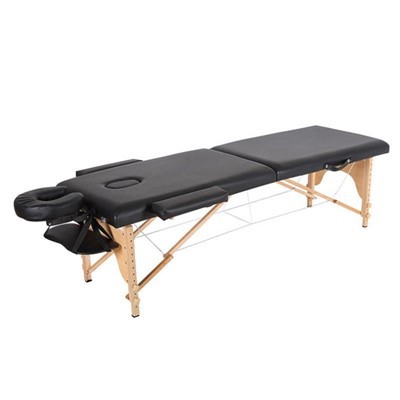
If you’re ready to chat about what works for your setup, hit me up. No weird links, no corporate forms – just send a message to get the conversation going. I’m here to help.
Rubber Cupping References
- American Heart Association. (2022). “Best Practices for Clinical Simulation Training.” Circulation, 145(10), e421-e435.
- Society for Simulation in Healthcare. (2021). Modular Simulators: Cost-Effective Solutions for Small Training Programs. Simulation in Healthcare, 16(3), 189-195.
- Paramedic Association of North America. (2020). “Training Equipment for Rural EMS Teams.” Journal of Emergency Medical Services, 45(8), 56-61.
- Anatomy & Physiology Society. (2019). Realistic Tissue Simulants in Medical Education: A Comparative Analysis. Advances in Physiology Education, 43(2), 198-205.
Rightbest Medical Device Limited
We’re well-known as one of the leading torso series human model manufacturers and suppliers in China, specialized in providing high quality customized products. We warmly welcome you to wholesale durable torso series human model in stock here from our factory.
Address: 6F,No.303 Pingshui Road,Hangzhou,China
E-mail: info@cuppinghealth.com
WebSite: https://www.cuppinghealth.com/
