What’s Mobile Crushing Equipment Price? As someone who’s spent the last eight years selling crushing equipment—talking to mine operators, construction crews, and demolition project managers across the Midwest—I can tell you this: it’s not a number you pull out of thin air. Every time a new client emails me asking, “How much does a mobile crusher cost?” I know they’re not just curious about a price tag. They’re trying to fit a tool into a tight budget, plan for long-term maintenance, and make sure they’re not overpaying for something that won’t work for their job site. Let me break this down the way I do with every customer who sits across my desk (or hops on a video call, these days), no jargon, no hidden costs. Crushing Equipment
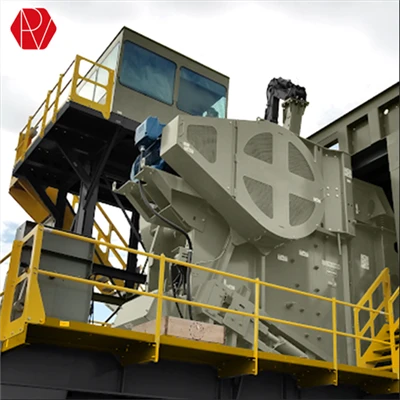
First, let’s get one thing straight: mobile crushing equipment isn’t a one-size-fits-all item. You wouldn’t buy a work truck for a construction site and expect it to haul lumber the same way it hauls dirt, right? Same logic here. The biggest factor that hits the price is what you’re actually crushing. If you’re breaking up soft limestone for a small road project, you don’t need the same crusher as someone crushing hard granite for a quarry that runs 12 hours a day. Let’s start with the main types, because that’s where most people get stuck when they’re pricing.
Jaw crushers are the workhorses for hard, abrasive materials—granite, basalt, reinforced concrete. A compact, track-mounted jaw crusher that can handle 150 tons per hour (perfect for small demolition or residential site prep) will run you roughly $120,000 to $180,000. But if you’re scaling up to a 500-ton-per-hour unit for a quarry, that jumps to $350,000 to $500,000. Then there are impact crushers, which are better for softer materials like limestone, gypsum, or even recycled asphalt. A medium-sized impact crusher (200 tons per hour) might be $150,000 to $220,000, while a large one for heavy recycling work is $400,000 to $550,000. Cone crushers, used for finer crushing and processing harder rock, are even pricier—they’re designed to run consistently for years, so a mid-range cone crusher is $200,000 to $300,000, and large quarry models go up to $600,000.
Wait, but that’s just the base unit. What else factors in? The chassis type is huge. Track-mounted crushers are more expensive than wheeled ones, but they’re worth every penny if your job site is muddy, uneven, or remote. Wheeled units are cheaper—you can get a small wheeled jaw crusher for $90,000 to $130,000—but they need a truck to haul them between sites, which adds in transportation costs you don’t have with a tracked unit. Then there are extras: remote control operation (so you don’t have to climb around the crusher to adjust settings), dust suppression systems (critical for jobs near residential areas to meet EPA rules), overband magnets to pull metal out of recycled material, and extra screens to sort crushed material on-site. Each of these adds 5% to 15% to the base price. I had a client last year who almost bought a basic wheeled impact crusher, until we added a dust suppression system and overband magnet—turned out those extras saved him $20,000 in potential fines and rework on his first project, so it was worth the extra $18,000.
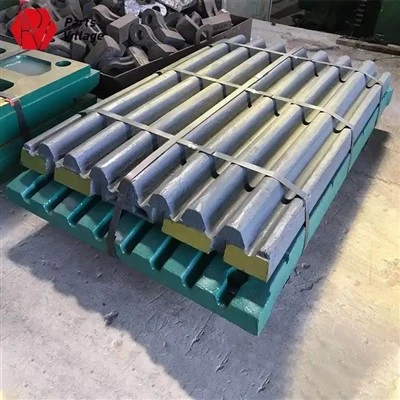
Now, let’s talk about used vs. new, because that’s another big question I get. A lot of contractors try to save money by buying a used crusher, and that can work—if you know what to look for. A 5-year-old used jaw crusher that’s only run 10,000 hours (light use) might be 40% to 50% of the price of a new one. But if it’s been run hard, 18 hours a day, 7 days a week, with no regular maintenance? It could be half that price… and then you’ll end up paying twice as much in repairs. I had a client come to me last year after buying a used crusher from a guy he found on a marketplace. It broke down three times in the first month, and he spent $15,000 on parts alone before he even used it for a big road project. Used equipment has hidden costs: wear parts (jaws, impact bars, cones) that need replacing every few thousand hours, engine overhauls, and compliance with current emissions rules. New crushers come with a 2-year warranty, built-in telematics to track performance, and meet the latest EPA Tier 4 Final standards—so you don’t have to worry about being shut down for not meeting emissions. For most small to mid-sized operations, the peace of mind and lower long-term costs of a new crusher are worth the extra upfront money.
But wait, there’s more to the “price” than the sticker tag. What about operating and maintenance costs? A crusher that’s cheap to buy might cost you $50 an hour to run, while a slightly more expensive model could be $30 an hour. Why? Fuel efficiency. Newer crushers have advanced engines that use less diesel, and they’re designed to process material faster without wasting energy. Wear parts: some crushers use high-quality steel for jaws and impact bars that last twice as long as cheaper parts, so you spend less replacing them. I do a total cost of ownership calculation for every client, not just a price quote. If you’re running a crusher 2,000 hours a year, that $10,000 difference in purchase price could be made up in fuel and wear parts in 18 months. A lot of vendors don’t tell you that—they just show you the base price. I think that’s unfair, because the client ends up paying more over time.
Also, location and order lead time affect the price. If you’re in a remote part of Canada or Alaska, shipping a crusher across the country adds $5,000 to $15,000 depending on the size. And right now, lead times for new crushers are 12 to 18 months, because of supply chain delays for engine components and electronic parts. If you need a crusher in 3 months, you might have to pay a 10% expedite fee, or go for a demo unit—we have several demo crushers that we use for trade shows and testing, which are 15% to 20% cheaper than new and available in 6 weeks. That’s a good middle ground for clients who need equipment fast but don’t want the headaches of used.
Let me give you a real example, to make this concrete. Last quarter, I worked with a demolition company in Ohio that was contracted to tear down an old mall and recycle 80,000 tons of concrete over 6 months. They came to me first with a budget of $100,000, thinking that’s what a crusher would cost. We explained they needed a mobile impact crusher with an overband magnet to pull out rebar, dust suppression for the residential area next to the mall, and track-mounted so they could move it easily as the demolition progressed. The base model we recommended was $175,000, plus $15,000 for the extras, plus $5,000 for shipping to their site. They tried to get a cheaper used one, but the only available unit was 10 years old and didn’t meet current emissions rules—they’d have been fined $10,000 for running it. In the end, they went with our demo impact crusher, which was $160,000 (20% cheaper than new) and had a 1-year warranty. They saved $10,000 up front, and ran it for 6 months without any major repairs, so the total cost ended up being less than if they’d bought a used one or the wrong size.
Another example: a small road construction company in Kentucky. They only needed a crusher for 3 months to crush gravel for a subdivision access road. They didn’t want to buy anything, so we offered them a rental option. Rental prices for mobile crushers run from $300 to $800 a day, or $5,000 to $12,000 a month. For 3 months, that was $15,000 to $36,000, depending on the size. That’s a way better option for short-term jobs than buying, and it includes maintenance and repairs, so they don’t have to worry about downtime. I always ask clients how long they’ll use the crusher for, because rental is a game-changer for one-off projects.
Now, I know what some of you are thinking: “This all sounds good, but what if I just need a rough number?” Let’s break it down by use case, no frills: small residential demolition or site prep (20-50 tons per hour): $80,000 to $150,000; medium quarry or large demolition (100-250 tons per hour): $180,000 to $350,000; large quarry or heavy recycling (300+ tons per hour): $400,000 and up. But remember, that’s without extras. Add 5-15% for dust suppression, magnets, remote control, etc. Add 10-25% if you want track-mounted instead of wheeled.
The biggest mistake I see clients make when pricing mobile crushing equipment is focusing only on the upfront number. A $100,000 crusher that breaks down every week and uses double the fuel will cost you way more over its lifespan than a $150,000 crusher that runs reliably for 10 years with minimal repairs. That’s why I take the time to ask questions: what material are you crushing? How many tons per hour do you need? How many hours a year will you run it? Do you need it to move around often? What are the local emissions rules? Those answers aren’t just small talk—they’re what let me give you a real price, not a generic one from a catalogue.
At the end of the day, mobile crushing equipment is an investment, not a purchase. If you’re a contractor or operator, your crusher is your livelihood—downtime means lost money, so it’s worth taking the time to get the right one, at a price that fits your budget. If you’re ready to stop guessing at prices and get a quote tailored to your project, I’d be happy to talk through your needs, walk you through the options, and give you a breakdown of total cost of ownership, not just a sticker price. Reach out to us to connect and discuss your mobile crushing equipment needs.
Crusher Wear Parts References:
- "Mobile Crushing and Screening Equipment: Selection and Application for Aggregate and Recycling Projects," Mining and Quarry Magazine, 2022.
- Tier 4 Final Emissions Standards for Construction Equipment, U.S. Environmental Protection Agency, 2021.
- Total Cost of Ownership for Mobile Processing Equipment, National Ready Mixed Concrete Association, 2023.
- "Choosing Between New, Used, and Demo Mobile Crushers," Pit & Quarry, 2022.
- Mobile Crusher Operating Cost Analysis, Construction Equipment Association, 2023.
Hangzhou Cohesion Technology Co., Ltd.
As one of the most experienced crushing equipment manufacturers and suppliers in China, we also support customized service. We warmly welcome you to buy advanced crushing equipment at competitive price from our factory. If you have any enquiry about quotation, please feel free to email us.
Address: No.182 ChaoHui Road, HangZhou, China
E-mail: sales@partsvillage.cn
WebSite: https://www.china-stonecrushers.com/
