Hey, let’s cut to the chase—if you’re in the aggregate, mining, or construction waste recycling game, you’ve probably heard the term “tertiary stationary crushing plant” thrown around. But what is it, exactly? And why should you care, especially if you’re looking for reliable crushing gear that doesn’t quit mid-job? Let’s break this down like we would in our service bay—no fancy jargon, just straight facts. Stationary Crushing Plant
First, let’s back up a sec. Crushing plants aren’t one-size-fits-all. You’ve got primary plants (the big jaw crushers that take massive boulders from a quarry or construction site and chomp ’em down to fist-sized chunks), secondary plants (cone or impact crushers that shrink those chunks to pebble size), and then tertiary plants—aka the ones that do the “polish” work. This is where you turn that secondary ¼- to 2-inch rock into the fine material people actually use: sand for concrete, gravel for road base, or even engineered fill for building foundations. That’s the tertiary’s whole gig.
Now, why “stationary”? Unlike portable or mobile plants that roll from site to site (great for small, scattered jobs), a stationary plant is bolted to a concrete foundation once it’s installed. We’re talking long-term, high-volume operations—think a permanent quarry, a concrete recycling yard that sticks around for years, or a big mining operation where you don’t want to move your core crushing gear every few months. The “S” word might sound old-school, but let’s be real: if you’re producing 500+ tons of finished material an hour, moving a plant that big is a logistical nightmare and a money drain. Stationary just makes sense for consistent, high-output work.
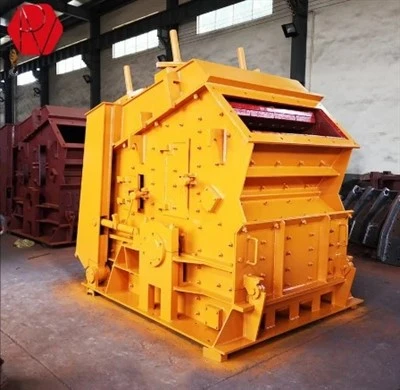
So what makes a tertiary stationary plant different from other crushing setups? Let’s talk equipment specs here. Most tertiary plants use one of two main crusher types: horizontal shaft impactors (HSI) or cone crushers (often called “short-head” cones, since their crushing chamber is smaller than secondary cones). Wait, why not a jaw? Jaws are too aggressive for fine crushing—you’d end up with uneven, jagged particles that don’t meet spec. Tertiary crushers are built to create uniform, cubical material, not just break rocks. That’s non-negotiable if you’re supplying concrete plants, asphalt crews, or government road projects that have strict material gradation rules.
Another key part of the plant? The screening and conveying system. A tertiary plant doesn’t just crush—it sorts. After the crusher, the material goes through a series of vibrating screens that separate it into different sizes. Oversize bits that didn’t get crushed enough get sent back to the tertiary crusher for another pass, while the properly sized material moves along conveyors to storage piles or directly to your trucking fleet. And since it’s stationary, you can customize the layout to fit your site—we’ve helped clients add extra screen decks, bigger conveyor belts, or dust suppression systems (super important for keeping your crew OSHA-compliant and not driving neighbors crazy).
Let’s get into the real-world use case to make this concrete (pun intended). Say a customer comes to us with a secondary plant that crushes 2-inch granite. They need ¼-inch minus sand for a new residential development’s concrete slabs. A tertiary stationary plant will take that 2-inch granite, feed it into a short-head cone or fine-impactor, crush it down, screen out the oversized chunks, and end up with exactly the fine material they need—no more, no less. This isn’t a one-off job; we recently installed a 500-tph tertiary stationary plant for a midwest quarry that’s been running 12 hours a day, 6 days a week for 2 years straight with only routine maintenance. That’s the kind of reliability stationary brings.
Now, why would you choose a tertiary stationary plant over a mobile one? Let’s do a quick cost vs. value breakdown. Mobile plants cost 20-30% more upfront, and their daily operating costs are higher because you’re moving them, setting them up, and tearing them down constantly. A stationary plant has a higher initial cost (you need that concrete foundation, heavy steel mounting, proper wiring) but it pays for itself in 18-24 months if you’re running consistent volume. Plus, stationary plants can handle way higher tonnages—we’ve built tertiary plants that crank out 1,000 tph, which is way more than even the biggest mobile units can manage. For long-term, high-output operations, stationary is the way to go.
But wait—no plant is perfect. A common mistake we see clients make is skimping on the auxiliary gear for their tertiary plant. You can’t just drop a crusher on a slab and call it a day. You need a heavy-duty feed hopper (to keep material from jamming), a metal detector (to catch any rebar or broken drill bits that would destroy your crusher’s liners), and a dust control system (crystal silica from crushed rock is a big OSHA hazard—you need wet suppression or baghouses to keep air quality safe). We design every tertiary plant with these add-ons built in, because cutting corners here leads to breakdowns, downtime, and hefty fines.
Another thing to consider: scalability. Maybe right now you only need 300 tph, but in 3 years your quarry expands and you need 700 tph. A good stationary tertiary plant is modular—you can upgrade motors, add extra screen decks, or even swap out the crusher type without tearing the whole thing down. We love modular designs because they let our clients grow without blowing their budget.
Let’s talk maintenance, because no plant runs itself. Tertiary crushers take a beating—they’re crushing hard rock all day, so you need to replace wear parts (liners, blow bars) regularly. The beauty of a stationary plant is that it’s in one spot, so your maintenance crew can access it easily, no climbing on a mobile unit every time you need to swap parts. We offer 24/7 support for our clients—if a liner breaks at 2 a.m., we’ll ship a replacement same-day, and our techs can be on site within 48 hours to get you back up. That’s the kind of peace of mind you don’t get with smaller, cheaper setups.
Wait, let’s address a common myth: some people think tertiary plants are only for big quarries. No way. We recently sold a smaller 150-tph tertiary stationary plant to a concrete recycling company that processes old road pavement and building slabs. They were generating too much oversize material that couldn’t be used for new concrete, so adding a tertiary plant let them turn that waste into saleable fine aggregate—cutting their landfill costs by 70% and adding a whole new revenue stream. That’s the kind of versatility we build into our plants.
So when is the right time to invest in a tertiary stationary crushing plant? Let’s outline the signs: if you’re producing secondary aggregate and 30% or more of it is oversize (meaning you’re leaving money on the table), if you’re running the same site for 3+ years, if you need consistent, spec-compliant fine material for clients, or if you’re looking to reduce waste from your operation. If any of that hits home, a stationary tertiary plant is your next move.
Now, I know what you’re thinking: “Okay, this makes sense, but how do I pick the right one for me?” It’s not just about size. You need to match the crusher type to your material. If you’re crushing granite or basalt (super hard rock), a short-head cone is better—it produces more uniform material and wears slower. If you’re crushing softer limestone or recycled concrete, an HSI is more cost-effective and gives you better cubical shape. You also need to factor in your power supply (stationary plants need heavy electric service, not just a generator), your site’s layout (how much space do you have for foundation and conveyors), and your long-term production goals.
That’s where we come in. We don’t just sell you a plant—we work with you from day one: assess your site, test your material, design a plant that fits your budget and needs, handle installation, and offer ongoing maintenance support. We’ve been doing this for 15 years, and every plant we build is built to last—no cheap steel, no undersized motors, just gear that works as hard as your crew.
If you’re tired of downtime, inconsistent material specs, or throwing money at mobile plants that can’t keep up, let’s chat. We’ll walk you through everything: what size plant you need, what type of crusher fits your material, how much it will cost, and how quickly you’ll see a return on investment. No sales pitches, no hidden fees—just straight answers.
Don’t let your operation leave money on the table because you don’t have the right crushing gear. A tertiary stationary plant is an investment that pays for itself, reduces waste, and lets you deliver the high-quality material your clients demand. Reach out to us today, and let’s build a plant that works for you.
Crushing Equipment References:
- Mining and Quarry Crushing Plant Design. International Society for Rock Mechanics, 2021.
- Aggregate Production Specifications for Concrete and Asphalt. American Society of Civil Engineers, 2022.
- Stationary vs. Mobile Crushing: Operational Cost Analysis. National Stone, Sand & Gravel Association, 2023.
Hangzhou Cohesion Technology Co., Ltd.
As one of the most experienced stationary crushing plant manufacturers and suppliers in China, we also support customized service. We warmly welcome you to buy advanced stationary crushing plant at competitive price from our factory. If you have any enquiry about quotation, please feel free to email us.
Address: No.182 ChaoHui Road, HangZhou, China
E-mail: sales@partsvillage.cn
WebSite: https://www.china-stonecrushers.com/
