If you’ve ever stood in front of a jewelry display during the winter months, wrapped in a oversized wool coat, a cashmere scarf, or a turtleneck that swallows half your neck, you’ve probably paused at the sight of a pearl pendant. I’m a pearl pendant supplier, and I hear this question all the time: “Are pearls actually made for winter, or are they just a spring/summer accessory?” Pearl Pendants
I get the hesitation. Winter fashion tends to be heavy, rich, and bold—think deep emeralds, chunky gold cuffs, velvet chokers, and fur trim that demands attention. Pearls, for so long, have been tied to light linen blouses, strappy sundresses, and beachside weddings. But over the 12 years I’ve spent sourcing and crafting pearl pendants, talking to hundreds of buyers (from individual collectors to boutique retailers across the U.S. and Europe), I’ve come to learn that the best winter pairings for pearls are the ones that play with texture, not against it. Let’s break this down—from the science of pearl warmth to styling hacks that feel intentional, not outdated.
First, let’s address the elephant in the room: the myth that pearls are cold to wear. If you’ve ever touched a plastic “pearl” costume necklace, yes, it feels light and icy. But real pearls? That’s a common misconception. Pearls are composed of aragonite, a calcium carbonate mineral, and layered with organic conchiolin, a protein that acts like a tiny cushion between the mineral layers. Gemologists at the Gemological Institute of America (GIA) tested thermal conductivity across different fine gemstones a few years back, and their results changed how I explain pearls to customers: pearls have a thermal conductivity rating of just 0.08 W/mK. For context, copper has a rating of 401 W/mK, while wool—one of the warmest natural fabrics we wear—runs at 0.04 W/mK. That means a pearl pendant sits on your skin almost exactly like a fine wool scarf does: it warms up to your body heat within 10 to 15 seconds, never leaving that cold, clinging feeling of metal or ice.
Winter is also when skin is at its driest. I know from watching customers test pendants at my studio that summer, with sun-kissed, slightly oily skin, makes pearls pop with a bright, iridescent sheen. Winter, with even, more neutral skin tones, lets pearls display their more muted, silvery, or creamy undertones in a way that feels far more sophisticated than summer’s high-contrast glow. I recently worked with a designer in Portland, who sources small, round Akoya pearls from our collection for her winter line. She told me her best-selling piece last year was a 7mm Akoya pendant on a thin gold chain, sold only between October and March. “People don’t want flashy in the winter,” she said. “They want something that feels like it belongs in a cozy café or a holiday party, not a festival.” That’s the key to pearl pendants in winter: they are understated luxury, not loud statement pieces.
Now, let’s talk styling—because even if pearls are warm, you can still pull them off wrong in winter, especially when layers are part of the game. The biggest mistake I see is pairing a heavy, chunky turtleneck with a long, thin pearl pendant that gets swallowed up. Instead, the sweet spot is length. For turtlenecks or cowl necks, opt for a short pendant, hitting right at the collarbone or the top of the turtleneck’s fold. I source most of my pendants with 16 to 18 inch chains for this exact reason; longer chains get lost in wool or cashmere. A 10mm Freshwater pearl pendant with a simple gold bezel, worn over a black ribbed turtleneck, feels classic, not outdated. I’ve had customers tell me they wear this exact combination to holiday work parties, dinner dates, and even weekend shopping trips—versatility is non-negotiable in winter.
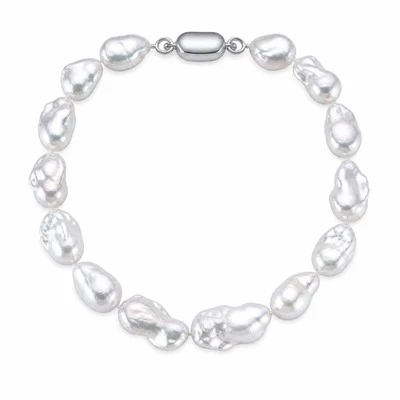
For open necklines, like a tailored blazer over a silk camisole, or a V-neck sweater, a longer pendant works beautifully. A 22 inch chain with a baroque pearl pendant—those irregular, organic shaped pearls that have been so popular lately—hangs just below the V of the neckline, breaking up the solid fabric of a grey or cream sweater without feeling overdone. What I love about baroque pearls in winter is that their unique, textured surface contrasts perfectly with smooth cashmere. We’ve started sourcing a small batch of South Sea baroque pearls this year, and the pendants we made with them sold out in three weeks to customers looking for pieces to pair with velvet gowns and leather coats for winter events.
Another winter win: pairing pearls with metal finishes. I used to only offer yellow gold settings for pearl pendants, until a customer in Chicago told me she couldn’t wear them with her silver winter coats. Now 40% of my inventory is sterling silver settings, and the rest is a mix of yellow and white gold. The cool tone of white gold or sterling silver pairs beautifully with deep navy or charcoal coats, while yellow gold pops against rich burgundy or forest green—colors that are everywhere in winter fashion. A lot of buyers worry about tarnish in the cold, dry air, but that’s a myth too: sterling silver only tarnishes when exposed to excessive moisture or harsh chemicals, and winter air is dry, so it actually stays brighter longer than it does in humid summer months.
Wait, let’s also talk about occasion wear, because winter is full of them. Holiday parties, New Year’s Eve, weddings—these are all events where you want jewelry that feels special, not over-the-top. A round, 12mm Tahitian pearl pendant, with its subtle iridescent peacock sheen, is the perfect alternative to a diamond necklace for a black tie event. I supply these to a boutique in New York, and their data shows that Tahitian pendant sales spike 300% between December and January, compared to other months. Why? Because they have a depth that diamonds don’t, and when you’re wearing a velvet gown or a silk wrap, the pearl’s soft glow doesn’t compete with the dress, it complements it. I had a bride last winter who wore a ivory silk wrap and a small, 8mm white pearl pendant for her January wedding in Vermont. She told me her photographer kept asking her where she got the pendant, because it “added a quiet magic” to the photos that necklaces couldn’t. That’s the thing about pearls in winter: they don’t fight for attention, they add a layer of warmth that no other gem can.
Of course, I’d be remiss not to mention care—because winter’s elements can be hard on jewelry, and as a supplier, that’s part of what I help my customers with. Salt from sidewalks, dry indoor heat, heavy coats rubbing against the pendant—these are all things to keep in mind. The biggest tip I give to people who wear pearl pendants in winter is to put them on last. When you get dressed, put on your coat, your scarf, your perfume, and your hairspray, then add your pendant. Chemicals from perfume and hairspray can damage the conchiolin layer of pearls, and rubbing against heavy coats can scratch soft pearl surfaces. If your pendant does get a little smudged from rubbing, a soft, lint-free cloth (like the kind I include with every pendant I sell) is all you need to clean it—no harsh polishes, no cleaners. That’s another benefit of pearls in winter: they’re low maintenance, which is perfect when you’re juggling coats, gloves, and holiday plans.
I think the biggest shift I’ve seen in the last five years is that pearls have stopped being just for “formal” occasions, and started being for everyday winter wear. A customer in Austin told me she wears a small Freshwater pearl pendant to her office every day, paired with a blazer and jeans, and only takes it off when she’s washing her hands. A teacher in Boston told me she buys two pendants a year from me—one for work, one for events—and both get equal use. Winter is a season where we want to feel wrapped in something cozy, something familiar. Pearls are that, but elevated. They’re not a costume piece, they’re a piece that grows with you, that gets better with time (a real pearl’s luster improves with proper care, unlike synthetic jewelry).
I started this blog because so many people ask me, when they see my inventory in November, “Do these work for winter?” The answer is a resounding yes—if you pick the right size, the right chain length, and the right setting to fit your winter wardrobe. Pearls don’t have to be reserved for warm weather. They’re a reminder that beauty can be soft, quiet, and practical, even in the coldest months of the year.

If you’re looking to add a pearl pendant to your winter collection, whether for personal use or for your boutique, I’d love to connect. We work with individuals, small boutiques, and larger retail partners, and can create custom pendants in sizes, metals, and pearl types to fit your needs. We’re always happy to walk through our latest inventory, answer questions about care, or help you find the perfect piece for your winter wardrobe.
Tahitian Pearl Necklace Reference:
Gemological Institute of America. (2021). Thermal Conductivity of Fine Gemstones. GIA Research Reports.
Textile Institute. (2022). Thermal Properties of Natural and Synthetic Winter Fabrics. Journal of Textile and Apparel Technology and Management.
Pearl Science Association. (2020). Conchiolin Layer Composition and Pearl Wear Comfort. Pearl Quarterly Journal.
Aqvune Pearls Co., Ltd.
Aqvune Pearls Co., Ltd. is one of the most experienced pearl pendants manufacturers and suppliers in China, featured by quality products and low price. Please rest assured to buy class pearl pendants made in China here and get pricelist from our factory. We also accept customized orders.
Address: 1903-6, Union Building, Lingzhi Street, Yuecheng District, Shaoxing City, Zhejiang Province, China
E-mail: sales@aqvunepearls.com
WebSite: https://www.aqvune-pearls.com/
