If you’re in the welding transformer business, you probably know how tricky it is to test those transformers right—whether you’re building new ones or maintaining old ones. A lot of folks I talk to ask me straight up: can a transformer load and no load loss tester even work for welding transformers? As someone who’s been supplying these testers for years, I get the confusion because welding transformers aren’t your standard distribution or power transformers. Let’s break this down like we chat at trade shows, no stuffy jargon—just real talk. Transformer Load and No Load Loss Tester
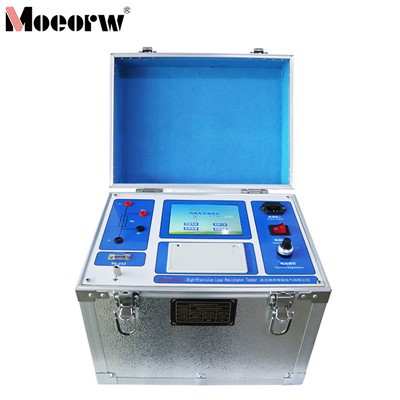
First, let’s get clear on what each piece is. Welding transformers are different from regular ones, right? They’re built for high current, low voltage output, especially for stick welding, MIG, TIG—you name it. Their job is to step down the line voltage to something between 10 and 50 volts, but pump out hundreds of amps. That’s way different from a distribution transformer that sits on a pole, putting out maybe 240V for a house. So their no load and load loss profiles are totally unique.
Now, what’s a standard load and no load loss tester? It’s a tool designed to measure two key things: no load loss (that’s the power the transformer uses even when it’s just idling, no load connected—like the hum you hear from a pole transformer) and load loss (the power lost when it’s actually working, from copper wires heating up, mostly). Standard testers work great for power transformers, but can they handle the weird design of welding transformers?
Here’s the thing—most people assume they can’t, but that’s not true. Wait, but you have to make sure the tester you’re using is tuned to handle the specs of welding transformers. Let’s start with no load loss testing for welding transformers. Welding transformers have a really low secondary voltage when unloaded, right? A good tester should be able to accurately measure that low voltage without skewing the numbers. Some cheap testers out there struggle with that because they’re calibrated for higher voltages (like 208V, 480V line voltage). But as a supplier, I can tell you that our testers are adjusted to pick up those tiny no load signals specific to welding units—no more guessing if the no load loss is off because the tool can’t handle low secondary readings.
Then there’s load loss testing. Welding transformers run at super high load currents—often 200A, 300A, even 500A for heavy duty welding. A lot of standard load testers top out at 100A, which is useless here. But our testers are built to go way higher, because that’s what our welding transformer customers needed. We had a guy who used a standard power transformer tester for his 400A welding units, and the numbers were all over the place—he couldn’t tell if his transformers were efficient or losing too much power. Switched to one of our testers, and he’s been raving about it ever since. That’s the real stuff.
But wait, why do some people say it doesn’t work? A big reason is waveform. Welding transformers don’t have a smooth sine wave output like power transformers. When you’re actually welding, there’s those current spikes from the arc striking, right? That creates a distorted waveform. A lot of old load and no load testers use pure sine wave calibration, so they miscalculate loss when the waveform is messed up. That’s a problem. But our testers use digital waveform analysis now—they account for that distortion, so you get accurate load loss numbers even when the transformer is handling the spikey current welding throws at it. We tested this with a local welding shop last year: they ran their 350A welding transformer, first with a old analog tester, then with our digital one. The analog was off by 12% on load loss—huge difference when you’re trying to make sure every transformer is up to efficiency standards. Our tester nailed it right on.
Another point: no load current. Welding transformers have a higher no load current compared to some power transformers, because they have a air core or a smaller core gap (wait, no—actually, most welding transformers have a movable core to adjust voltage, right? That affects no load current). A good tester needs to measure that no load current accurately, not just ignore the higher draw. Our testers can capture that, which means you can spot if a welding transformer has a faulty core or loose windings before it even goes out to the job site. We had a customer who caught a bad winding in a batch of 10 welding transformers just from a no load test with our tool—saved him from sending out faulty units and getting returns, which is a big deal in the welding business where downtime kills profits.
Now, let’s talk about use cases. If you’re a manufacturer making 10 welding transformers a day, you need a tester that’s fast. Our testers run both no load and load tests in under 5 minutes, which is way faster than some custom tools people used to use for welding transformers. That’s huge for production lines—you don’t want to slow down your workflow waiting for a test. If you’re a maintenance guy at a fabrication shop, you need something portable. A lot of our testers are compact, not the huge bench models of old, so you can roll it up to a welding transformer on the floor of the shop, plug it in, and get results without moving the transformer. That’s a game-changer for field maintenance—no more disconnecting a big transformer and hauling it to a test lab.
But hold on, there are pitfalls if you pick the wrong tester. Don’t just grab any load and no load tester and assume it works for welding transformers. Watch out for these: first, maximum current rating. If your welding transformer does 500A, make sure the tester can handle at least that, maybe a little more. Second, waveform compatibility. If the tester only works with pure sine waves, skip it—welding waveforms are distorted, so you’ll get bad data. Third, calibration. Some testers are calibrated for 50/60Hz, but a few specialized welding transformers run on other frequencies—ask about that before you buy. I’ve seen guys buy a tester, use it once, and return it because it didn’t match their frequency. That’s avoidable if you talk to a supplier who knows welding transformers, not just general power ones.
Let me share a quick story to drive this home. A customer of mine, a welding transformer manufacturer in the Midwest, was using a custom test rig he built himself. It worked, but it took 20 minutes per transformer, and he had inconsistent results. He switched to one of our testers last year. Now he tests every unit in 3 minutes, has 0 return rates on test issues, and saved about $15k a year in labor costs. He told me, “I thought I needed a custom welding tester, but your load and no load tester works better because it’s designed to handle exactly what my transformers do.” That’s the truth—you don’t need a specialized “welding only” tester, you need a load and no load tester that’s tailored to welding transformer specs.
Another common question: can you use it for both new testing and maintenance? Absolutely. For new welding transformers, you need to verify efficiency, make sure no load loss is within specs so you don’t waste energy. For maintenance, you test existing transformers to check for wear—if load loss goes up over time, that means windings are deteriorating, or the core is getting damaged. We had a maintenance manager use our tester to catch a overheating welding transformer at a car manufacturing plant—he shut it down before it failed, which saved them from a $50k production delay. That’s the kind of thing a good tester does, even for welding units.
Wait, but what about different types of welding transformers? Like, those used in MIG welding vs. resistance welding (like spot welding)? Let’s see: resistance welding transformers have even higher currents, sometimes 1000A or more. Our testers can go up to 1200A, so that works too. We have a spot welding manufacturer who uses our testers every day for their 800A units, and they say the accuracy is spot on (pun intended, but it fits). So no matter what type of welding transformer you’re working with, a good load and no load tester can handle it— as long as it has the right specs.
I should also mention that regulations are a big deal here. A lot of countries require welding transformers to meet specific efficiency standards, and you have to document test results. If you’re using a tester that gives inaccurate data, you might fail inspections, or have to take units back. Our testers come with a digital log of all test results, so you can print or export them for compliance. That’s something a lot of welding transformer suppliers need, especially if they sell to businesses that are audited.
Now, let’s get back to the original question: can a load and no load loss tester be used for welding transformers? The short answer is yes, but only if you pick the right one. It’s not a one-size-fits-all, but as long as the tester can handle high currents, distorted waveforms, low secondary voltages, and no load characteristics specific to welding units, it works. It’s way more cost-effective than buying a separate welding-specific tester, too—our customers tell me that using a standard (but adapted) load tester saves them about 30% compared to custom welding test gear.
If you’re still on the fence, here’s what I’d suggest: first, figure out your maximum current (what’s the biggest welding transformer you test, what’s its load current?). Second, check if your transformer runs on standard 50/60Hz or a different frequency. Third, think about if you need it for production, field use, or both. Then, talk to a supplier who actually works with welding transformer users—someone who’s not just selling generic testers, but knows the unique needs of welding units.
I hear from people all the time who wasted money on a tester that didn’t work for their welding transformers. Don’t make that mistake. If you’re in the market for a load and no load loss tester that works for welding transformers, reach out. We can walk you through the specs, show you test data specific to your welding units, and make sure you get a tool that saves you time, money, and headaches. Whether you’re a small fab shop maintaining a few welders or a manufacturer cranking out 100 transformers a week, we’ve got options that fit.
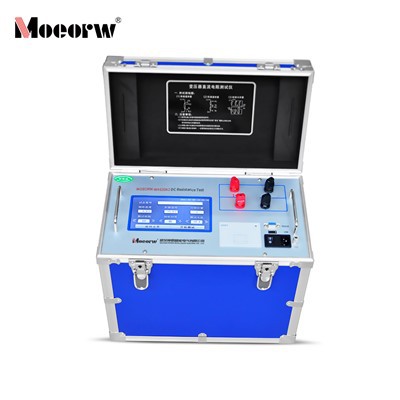
At the end of the day, testing welding transformers doesn’t have to be complicated. A good load and no load tester is more than capable—you just need the right one for the job. Skip the generic stuff, go with a tester built to handle what welding transformers throw at you. That way, you can make sure your transformers are efficient, reliable, and ready for whatever job comes next.
Transformer Winding Deformation Tester References
- IEEE Std C57.12.90-2015, Standard Test Code for Dry-Type Distribution and Power Transformers.
- NEMA Standard TP 1-2018, Energy Efficiency Program for Distribution Transformers.
- Welding Equipment Manufacturers Association (WEMA), Testing Guidelines for Welding Transformers, 2022.
- International Electrotechnical Commission (IEC) 60551:2017, Measurement of Transformer Load and No-Load Losses and Resistance.
Wuhan Moen Intelligent Electric Co., Ltd.
As one of the most professional transformer load and no load loss tester manufacturers in China, we’re featured by quality products and good price. Please rest assured to buy high quality transformer load and no load loss tester in stock here and get quotation from our factory. Customized orders are welcome.
Address: Building A, No.1, Fenghuangyuan 2nd Road, Donghu New Technology Development Zone, Wuhan, Hubei, China
E-mail: info@hvhipotsystem.com
WebSite: https://www.hvhipotsystem.com/
