Hey everyone, if you’ve ever worked with substation transformers—whether you’re a utility engineer, a plant manager, or someone just dipping their toes into power infrastructure—you’ve probably heard the phrase “ANSI standard” tossed around more than a cold beer at a job site cookout. As a substation transformer supplier who’s been deep in this game for over a decade, I can tell you it’s not just some random set of jargon to pad a spec sheet. It’s the rulebook that keeps your power from going out, your equipment from frying, and your wallet from getting hit with unnecessary repair bills. Let me break this down like we’re chatting over a coffee during a lull between site visits. Substation Transformer
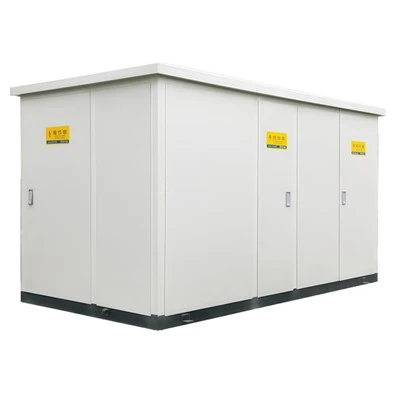
First off, let’s clear the air: ANSI stands for the American National Standards Institute, right? But here’s the thing—most people don’t realize ANSI itself doesn’t write all the specs for substation transformers. Wait, hold up, let me get that straight for you: ANSI is the organization that approves and publishes standards developed by other groups, like IEEE (Institute of Electrical and Electronics Engineers) and NETA (Interstate National Testing Agency). So when you hear “ANSI standard for substation transformers,” you’re usually referring to the suite of standards that ANSI has adopted from IEEE, primarily the big one: IEEE C57.12. That’s the main playbook we use every day, and let me tell you, it covers way more than just “how to make a transformer.” It’s the backbone of everything from how we design a 10 MVA transformer for a rural substation to how we test a 200 MVA unit for a city’s grid hub.
Let’s start with why this matters. Imagine building a transformer in a garage with no rules—you could end up with a unit that works fine at room temperature, but bake it under a summer sun or crank it up to full load during a heatwave, and it’d melt down before the end of its first year. That’s exactly where ANSI/IEEE C57.12 saves the day. It sets hard limits on things like insulation performance, temperature rise, and load capacity, so every transformer we build leaves our shop knowing it can handle the worst your grid throws at it. As a supplier, we don’t cut corners here—because if we do, you’re not just out a transformer, you’re dealing with downtime that costs you thousands, maybe tens of thousands, in lost production. That’s not a risk either of us wants to take.
Now, let’s dive into the key parts of ANSI C57.12 that actually affect you—whether you’re specifying a new unit or replacing an old one. First up: temperature ratings. This isn’t just a random number. The standard defines different insulation classes (like Class A, Class B, Class F) and how much heat each can take before it starts to degrade. For most distribution and substation transformers, we use Class F insulation these days, which lets us run at a maximum hot-spot temperature of 155°C. If you go with a lower class, like Class B, you’re looking at a 130°C limit, which means you can’t load the transformer as hard in hot weather. I’ve seen guys skip this spec to save a few bucks upfront, then end up overloading it and burning out the windings two years later. Trust me, the extra cost for Class F is nothing compared to a replacement.
Next, there’s load tap changers (LTCs) if you’re dealing with larger transformers, like 50 MVA and up. ANSI C57.12 lays out exactly how those tap changers should work—how many positions they need, how fast they can adjust (no one wants a tap changer that takes 10 minutes to adjust when your voltage drops), and how they should perform under heavy cycling. We’ve had clients come to us with old transformers that had custom LTCs that failed because they didn’t follow ANSI specs. Those units were a nightmare to maintain, and parts were impossible to find. Stick to ANSI, and you’ll have a transformer that parts are available for anywhere in North America—no hunting for specialty components on some obscure import site.
Then there’s the testing side. ANSI doesn’t just tell us what to build; it tells us how to prove it works. Every transformer that leaves our shop has to pass a series of tests per C57.12: dielectric tests (making sure it can handle the voltage spikes from lightning or switching), load and no-load loss tests (so you know exactly how much energy it’s wasting), and temperature rise tests (we run it at full load in a climate-controlled test chamber to make sure it doesn’t overheat). A lot of cheaper suppliers skip the full dielectric test, which means their transformer might fail during its first lightning storm. We don’t cut those tests—because when your substation goes down, you need to know the transformer you’re installing won’t be the weak link.
Wait, let’s talk about the difference between ANSI and IEC, because I get this question all the time. A lot of clients will ask, “Should I go with ANSI or IEC?” Here’s the lowdown: ANSI is tailored for North American grids, which run at 60 Hz, have specific voltage levels (like 12 kV, 34.5 kV, 69 kV), and have different load profiles than, say, European grids (which are 50 Hz and different voltages). If you’re in the US, Canada, or parts of Mexico, ANSI is your guy. IEC is more global, but it doesn’t always account for the heavy load swings we see here—like when a city’s industrial plants kick on at 8 a.m. every day. We once supplied an ANSI transformer to a client who’d been running an IEC unit; they said the ANSI one lasted twice as long because it was built for the grid they actually have, not a generic one.
Now, let’s bust a common myth: some people think ANSI is only for new transformers. Nope, it also covers how to evaluate and recondition existing units. If you’ve got an old transformer that’s still kicking but isn’t performing like it used to, ANSI C57.12 has guidelines for testing its insulation, checking its load capacity, and deciding if a rewind is worth it versus replacing the whole unit. As a supplier, we work with utilities all the time to assess their aging fleets—sometimes a rewind per ANSI specs is cheaper than a new transformer, and it buys them another 10 years of life. Other times, replacing is the smarter move, and we help them pick the right ANSI-rated unit to fit their needs.
Another point: safety. ANSI standards aren’t just about performance—they’re about keeping people safe too. Things like arc-flash protection, grounding requirements, and enclosure design are all covered in C57.12. A transformer that doesn’t meet ANSI’s safety specs could be a hazard for your maintenance crew when they’re working on it. We’ve seen incidents where a non-ANSI transformer’s enclosure wasn’t properly grounded, leading to a shock. That’s the last thing anyone wants, especially when a little attention to ANSI during design would’ve prevented it.
Let me give you a real example from a project we did last year. A utility in rural Ohio came to us needing a 25 MVA substation transformer for a growing housing development. They’d bought a cheap non-ANSI unit a few years prior that kept tripping during peak summer load. When we looked at the old unit, it had a Class A insulation rating, per the manufacturer’s specs, but it didn’t meet ANSI’s temperature rise limits—so every July, it’d overheat and shut down. We supplied them a Class F ANSI C57.12 unit, and they told us this summer it didn’t trip once, even when temps hit 95°F and AC usage was through the roof. That’s exactly what ANSI is for: solving real problems that come from cutting corners.
Now, if you’re someone who’s not a utility engineer but is buying or specifying a transformer, what do you need to know about ANSI? First, always check that the unit is labeled as ANSI/IEEE C57.12-compliant. Don’t just take the supplier’s word for it—ask for the test report that shows it passed the required tests. Second, match the rating to your grid: ANSI defines specific standard kVA sizes and voltage ratios, so make sure the unit you’re getting fits those. If you need a custom size, work with a supplier who knows ANSI specs well, because they can adjust the design without sacrificing compliance.
Wait, let’s also mention that ANSI has updated its standards over the years. The latest revision of IEEE C57.12 is from 2023, right? It updated some temperature limits and added requirements for energy efficiency, which is huge now that utilities are pushing to cut carbon emissions. We’ve already updated our manufacturing processes to meet the 2023 specs, because if we didn’t, our transformers wouldn’t be eligible for rebates from many North American utilities. So if a supplier is still using an old 2010 version of C57.12, that’s a red flag—they’re not staying current with the latest safety and efficiency rules.
As a substation transformer supplier, I can tell you that every project we work on starts with making sure the transformer is ANSI-compliant. It’s not just a box to check; it’s our promise to you that the unit will perform as expected, last as long as it should, and keep your power flowing. I’ve been in this business long enough to see the difference between a transformer built to ANSI specs and one that’s not. The ANSI ones are the ones that run smoothly for 30+ years, the ones that don’t give you midnight emergency calls, the ones that save you money in the long run.
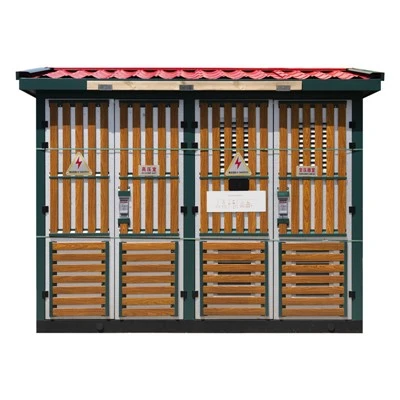
Now, if you’re in the market for a substation transformer—whether it’s a small unit for a distribution substation or a big one for a transmission hub—don’t just go with the cheapest option. Ask for ANSI compliance, ask for test reports, and make sure the supplier knows their stuff. We’ve helped dozens of clients pick the right ANSI-rated transformer for their specific needs, whether they’re replacing an old unit or building a new substation. If you’ve got questions about ANSI standards, need help sizing a transformer, or want to get a quote for a unit that meets all the specs, hit us up to connect and talk through your project. We’re here to make sure you get the right transformer, built to the standards that work for your grid.
Distribution Transformer References
IEEE C57.12.00-2023, General Requirements for Liquid-Immersed Distribution, Power, and Regulating Transformers.
ANSI/NETA STS-2022, Standard for Transformer Testing Specification.
IEEE C57.12.90-2021, Test Code for Liquid-Immersed Distribution, Power, and Regulating Transformers.
Zhejiang Tianrun Electric Co., Ltd.
Zhejiang Tianrun Electric Co., Ltd. is one of the most professional substation transformer manufacturers and suppliers in China, featured by quality products and good price. Please feel free to buy CE approved substation transformer made in China here and get quotation from our factory. We also accept customized orders.
Address: No.788 Wenyi Road, Bihu Industrial Park, Liandu District, Lishui City, Zhejiang Province, P.R. China
E-mail: luna@trne-electric.com
WebSite: https://www.trne-electric.com/
