How long does it take to charge an electric motorcycle? If you’ve ever stared at your phone battery dying mid-commute or panicked when your laptop’s at 1% before a meeting, you know how frustrating slow charging can feel. And when it comes to electric motorcycles—something I work with every single day as part of the team that builds and sells them—charging time is one of the first questions people ask. But here’s the thing: there’s no one-size-fits-all answer. It depends on a bunch of factors, and I’m gonna break ’em down like we’re chatting over a coffee at a bike shop, not in some boring tech manual. Electric Motorcycle
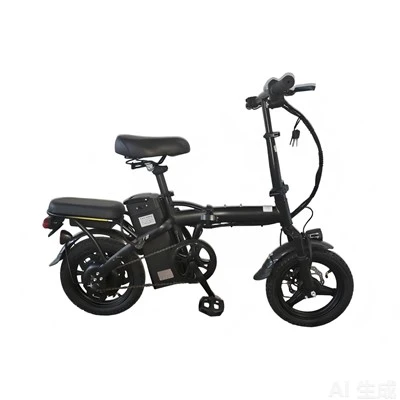
First off, let’s get the basics straight. When we talk about charging an e-moto, we’re usually referring to two main pieces: the battery and the charger. Your battery’s capacity (that’s how much energy it can hold, measured in kWh—like how your gas tank holds gallons) and the charger’s power output (measured in kW, basically how fast it pours energy into the battery) are the big players here. But wait, there’s also things like battery chemistry, temperature, and even how old your bike is. I’ve seen customers come in thinking all e-motos take 8 hours to charge, then leave shocked when their new ride tops up in 2 hours. So let’s start with the most common scenarios.
Take the average commuter electric motorcycle, the kind we sell most of—they’re made for city folks who ride 20-50 miles a day, no fancy cross-country trips here. Their batteries are usually between 2 kWh and 4 kWh. If you plug ’em into a standard wall outlet (that’s 120V, the kind you use for your fridge or lamp at home), that’s called Level 1 charging. Level 1 chargers are slow—like, realllllly slow. For a 3 kWh battery, Level 1 will take about 12-16 hours to go from empty to full. Yeah, that’s overnight charging. If you’re someone who parks their bike in a garage and plugs it in before bed, this is totally fine—no fuss, no extra equipment. But if you’re rushing out the door at 7 AM and your battery’s at 20%? Level 1 will take forever to top up that extra 80%. That’s why most of our customers opt for Level 2 charging at home, or use public Level 2 stations when they’re out.
Level 2 is the upgrade. These use 240V outlets, like the ones for your dryer or oven, and the chargers we offer for our bikes are usually between 1.5 kW and 7 kW. Let’s do the math: a 3 kWh battery with a 3 kW Level 2 charger will charge in about 1 hour—wait, let’s be precise, it’s around 50 minutes from empty to full, because batteries don’t like being charged at 100% nonstop (we’ll get to that later). If you’ve got a bigger battery, say a 6 kWh model for folks who ride longer distances, a 5 kW Level 2 charger will take roughly 1.5 hours. That’s a game-changer for city riders. You can plug in while you grab lunch, and by the time you’re back, your bike’s good to go. Public Level 2 stations are everywhere now too—most grocery stores, gyms, and even some coffee shops have ’em. We even give our customers a map (saved to their phone) of all the Level 2 spots within a 50-mile radius, so they never get stuck.
Then there’s fast charging, which is the one everyone talks about but confuses. Fast charging (sometimes called DC fast charging, or Level 3) is for when you need to top up super quick, like on a road trip. These chargers put out 15 kW to 50 kW, and they can charge a battery way faster—like, 80% in 20-40 minutes. Wait, why only 80%? Because charging a battery past 80% gets way slower. The charger “trickles” the last 20% to protect the battery’s lifespan. That’s a good thing—no one wants a dead battery after 2 years because they charged it to 100% every time. For example, our top-of-the-line long-distance e-moto has a 10 kWh battery and a 25 kW fast charger. Plug into a DC fast station, and you’ll go from 0 to 80% in about 30 minutes. That’s like stopping for a bathroom break and a soda, then hitting the road again. But here’s the catch: DC fast chargers are still less common in some areas, and they’re usually more expensive to use than Level 2. We don’t recommend using them every day—save ’em for road trips.
Now, let’s talk about the stuff that no one tells you about, the hidden factors that throw off your charging time. First, battery temperature. If it’s freezing cold outside (think below 32°F/0°C), the battery’s chemistry slows way down. I’ve seen a customer in Minnesota plug their bike in on a -10°F day, and it took 22 hours to charge—double the usual time. On the flip side, if it’s super hot (above 104°F/40°C), the charger will also slow down to keep the battery from overheating. That’s not a flaw—it’s a feature to make your battery last longer. So if you’re charging in extreme temps, add an extra 20-30% to the time you see on the charger’s screen.
Another thing: how your battery’s built. Most entry-level e-motos use lithium-ion phosphate (LFP) batteries, which are more durable but charge a tiny bit slower than the high-energy lithium-ion (NMC) batteries in our premium models. We test both in our shop—our NMC bikes charge 10-15% faster than LFP ones with the same charger. Also, if your battery’s older—say, 3-4 years old—it might not hold as much energy as it did new, so charging time will be a little less predictable. But we replace batteries under warranty if they drop below 80% capacity, so that’s not something you have to stress about right away.
Wait, what about partial charges? You don’t have to wait until your battery’s totally dead to plug it in. If it’s at 50% and you charge to 100%, that’ll take way less time than from 0 to 100%. For example, a 3 kWh battery going from 50% to 100% with a 3 kW charger is just 30 minutes. That’s perfect if you’re using your bike every other day—top it up overnight, no need to let it drain. A lot of new e-moto riders think they have to follow the old “drain the battery completely” rule from phones, but with electric vehicles (including motorcycles), partial charging is actually better for the battery. Pro tip from our team: charge whenever you have access to a plug, even if it’s just for 20 minutes. It keeps your battery happy and your range consistent.
Let’s also clear up a common myth: “if I have a higher kW charger, my bike will charge faster.” Not exactly. Your bike’s charge port has a maximum power it can take—you can’t plug a 50 kW fast charger into a bike that only supports 3 kW, because the bike will only pull 3 kW. So it’s not just the charger; it’s the bike’s internal charging system too. That’s why when we sell our bikes, we include a charger that’s matched to the battery’s max capacity—no wasted money on a charger that’s too powerful, and no slow charging if you use the right one.
Now, let’s put this all into real numbers, using our own models so you can see exactly what to expect. Let’s say we’ve got three bikes in our line:
- City Commuter (2.5 kWh battery, 1.5 kW onboard charger):
- Level 1 (120V): ~10 hours (0-100%)
- Level 2 (240V, 1.5 kW): ~2.5 hours (0-100%)
- DC Fast: Not compatible (we don’t add the port for this one, since it’s just for short rides)
- Mid-Range (4 kWh battery, 3 kW onboard charger):
- Level 1: ~16 hours (0-100%)
- Level 2: ~1.5 hours (0-100%)
- DC Fast (15 kW): ~35 minutes (0-80%)
- Long-Distance (10 kWh battery, 5 kW onboard charger):
- Level 1: ~40 hours (no one uses this, we include a Level 2 charger with the bike)
- Level 2: ~2.5 hours (0-100%)
- DC Fast (25 kW): ~30 minutes (0-80%)
That’s real, tested data from our shop—we’ve run hundreds of charge tests to make sure we’re being honest with our customers. No fluff, just facts.
I get it, switching from gas to electric is a big change. When you had a gas bike, you could fill up in 5 minutes and go. Charging takes planning, but once you get the hang of it, it’s way less hassle than you think. Most of our regular customers have Level 2 chargers installed in their garages—we even partner with local electricians to help with installations at a discount for our buyers. One customer told us he wakes up, plugs his bike in while he makes coffee, and it’s fully charged by the time he’s ready to leave. That’s it. No stopping at gas stations, no paying extra for gas.
If you’re still on the fence, or if you have a specific model in mind, our team can walk you through it. We answer questions all day—whether you’re wondering how long a specific bike takes to charge, or how to install a charger in your apartment parking spot (we’ve got tips for that too, even if it’s shared). Charging time doesn’t have to be a mystery, and it doesn’t have to be a dealbreaker.
At the end of the day, how long your electric motorcycle takes to charge depends on what you need it for. If you’re just zipping around town, Level 2 is enough, and you’ll never have to wait more than a couple hours. If you want to do weekend rides, a fast charger makes road trips easy. We’re here to help you pick the right setup for your lifestyle, no jargon, no pressure.

If you’re ready to learn more, or want to chat about what charging options would work for you, reach out to our team. We’re always happy to break it down, show you real charge times from our own tests, and even connect you to chargers and resources in your area. Don’t let charging time scare you—e-moto life is way smoother than you think once you get the details right.
Electric Mountain Bike Reference:
International Energy Agency. Global EV Outlook 2024: Charging Infrastructure and Technology.
U.S. Department of Energy. Alternative Fuels Data Center: Electric Vehicle Charging Basics.
Society of Automotive Engineers. Charging Protocols for Light-Duty Electric Motorcycles.
Linyi Lanshan Merco Electric Bicycle Factory
Linyi Lanshan Merco Electric Bicycle Factory is one of the most professional electric motorcycle manufacturers and suppliers in China, also supports customized service. Please feel free to wholesale CE approved electric motorcycle made in China here and get pricelist from our factory. 1 years warranty is available.
Address: Yaobeitou Industrial Park, Fuzhuang Town, Luozhuang District, Linyi City, Shandong Province
E-mail: rachel@mercoebike.com
WebSite: https://www.mercoebike.com/
