If you’ve ever worked in a cleanroom, semiconductor fabrication lab, or medical isotope production facility, you might have glanced at a bulky stainless steel unit tucked away near your gas distribution rack and wondered: What is that for? For those of us who’ve spent years as suppliers of rare and special gas equipment, that unit is a gas purifier—and it’s far more than just a piece of auxiliary gear. Rare gases—think neon, xenon, krypton, argon, or the more esoteric helium-3—are not just inert fillers; they’re high-value, precision-critical materials that underpin industries from chip manufacturing to cancer treatment, and their purity makes all the difference between a successful process and a costly failure. Rare/Special Gas Equipment
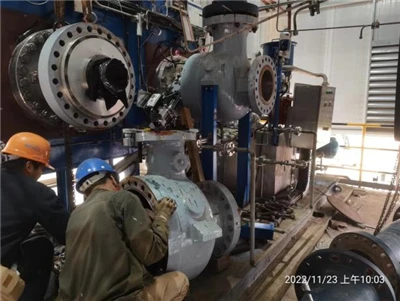
Let’s start with the basics: Rare gases are, by definition, found in trace concentrations in the atmosphere or in byproducts of industrial processes like natural gas extraction or uranium refining. Unlike bulk gases such as nitrogen or oxygen, they are often expensive to produce, with even minor impurities turning a $100 per liter xenon cylinder into a ruined, unusable asset. These impurities fall into two broad categories: non-condensable gases like oxygen, nitrogen, and water vapor (which are hard to remove with simple pressure regulation) and reactive trace contaminants like hydrocarbons, carbon dioxide, or even trace amounts of heavy metals that can interact with the rare gas mid-process.
Take semiconductor manufacturing, for example. Modern logic chips and memory devices use neon as a key component in extreme ultraviolet lithography (EUV), the technology that makes tiny, high-performance chips possible. EUV tools operate at extremely low pressures, and even a single part per billion (ppb) of water or hydrocarbon in the neon supply can cause a catastrophic contamination event. That contamination etches tiny defects into the wafer, rendering thousands of dollars’ worth of production material useless. A gas purifier for neon in this setting acts as a final, fail-safe filter, stripping those ppb-level impurities before the gas enters the EUV chamber. Without it, chip fabs would face unplanned downtime, yield losses of 10-15% per run, and millions in wasted product.
The same logic applies to medical applications. Xenon, for instance, is used in both diagnostic imaging (as a contrast agent for MRI scans) and some types of anesthesia. Even trace amounts of carbon monoxide or nitrogen in a xenon cylinder can trigger adverse reactions in patients, from mild nausea to severe respiratory distress. Purifiers here don’t just boost purity for regulatory compliance—they protect patient safety. And for industries like aerospace, where rare gases are used as purge agents for fuel systems, impurities can cause corrosion in critical metal components, leading to structural failures during flight.
Another often-overlooked purpose of rare gas purifiers is resource recovery. Rare gases are finite, and their production is energy-intensive. A 2022 study from the International Union of Pure and Applied Chemistry (IUPAC) noted that the global supply of helium, for example, is projected to run out by 2030 at current consumption rates. For suppliers like us, that means every cubic meter of rare gas recovered from impurities is a win for both the customer’s budget and the planet. Purifiers work by adsorbing contaminants onto high-capacity molecular sieve beds or using getter materials that react specifically with unwanted gases, leaving the target rare gas untouched. This process can recover up to 99.999% of the input rare gas, turning what would have been a waste stream into a reusable asset. For customers who pay premium prices for specialty rare gases, this recovery translates to a 20-30% reduction in annual gas costs, depending on their volume.
Now, let’s talk about the nuances that set rare gas purifiers apart from the purifiers used for bulk gases. Bulk gas purifiers might focus on removing large volumes of water, but rare gas purifiers need to target contaminants at the part per trillion (ppt) level. That requires specialized materials: for example, palladium-based getters that react only with hydrogen and oxygen, or activated carbon beds that are treated to adsorb hydrocarbons without sequestering the noble target gas. Many of our customers come to us after using a generic purifier meant for nitrogen or argon, only to find that it leaves trace impurities intact, defeating the purpose. As a rare/special gas equipment supplier, we don’t just sell a one-size-fits-all unit—we engineer purifiers tailored to the specific rare gas, the application, and the customer’s input impurity profile.
A common question we get is: Why not just purchase ultra-high-purity (UHP) rare gases from a supplier? UHP gas certifications usually list purity levels of 99.999% (5N) or 99.9999% (6N), which sounds exceptional. But even with cylinder certification, gases can accumulate impurities during storage, transportation, or when connected to a distribution system. Cylinders are not perfectly sealed, so tiny amounts of atmospheric nitrogen or water vapor can diffuse into the cylinder over time. For critical processes like EUV lithography, a cylinder certified as 5N pure might drop to 4.8N after a week of use, which is not enough. A purifier installed right at the point of use acts as a "last mile" purification step, ensuring that the gas delivered to the process chamber meets the exact purity requirements, no matter how old the cylinder is or how long it’s been in service.
This is especially true for small-volume users of rare gases. A research lab running a small number of experiments might not need a permanent, industrial-scale purifier, but a portable, skid-mounted unit that can be connected to a standard cylinder. These smaller purifiers are designed to run on-demand, with low power consumption, making them ideal for labs or testing facilities. For large-scale users, like a semiconductor fab with multiple EUV tools, we design centralized purifier systems that feed purified gas to multiple distribution points, ensuring consistent purity across the entire facility.
Another less obvious purpose of rare gas purifiers is process stability. Many specialty processes using rare gases are highly sensitive to gas composition. For example, in the production of fiber optics, krypton is used to dope the core of optical fibers to adjust their refractive index. Even a 1 ppb change in the amount of nitrogen in the krypton supply can cause the refractive index to shift, leading to defective fiber that won’t meet telecommunications standards. Purifiers maintain a consistent 99.9999% purity level, so process engineers don’t have to adjust for unexpected gas composition changes, reducing process variability and improving yield.
We’ve seen the cost of skipping a gas purifier firsthand. A few years back, we worked with a startup semiconductor company that was scaling a new chip design. They decided to forgo our purifier to save on upfront costs, relying solely on UHP neon cylinders. Within three months, they experienced three consecutive wafer runs with a 25% yield loss, costing them over $2 million in wasted materials and delayed production. When we installed a custom purifier, the next run hit a 92% yield rate—exactly the target they’d been aiming for. That experience drove home for us that a purifier isn’t an optional expense; it’s a capital investment that pays for itself in a matter of weeks, not months.
Of course, not all purifiers are created equal. Some low-cost units on the market use outdated technology that requires frequent bed replacement, adding long-term maintenance costs for customers. Our purifiers use regenerable sieve beds that can be heated and evacuated to remove accumulated contaminants, extending the bed life to 3-5 years, compared to 6-12 months for non-regenerable units. This reduces downtime for maintenance and lowers the total cost of ownership for our customers, a key differentiator for us as a specialized equipment supplier.
So, to circle back to the original question: What is the purpose of a gas purifier for rare gases? It’s threefold. First, it ensures the purity required for process success, protecting against product defects, safety risks, and costly downtime. Second, it recovers valuable rare gas, reducing waste and lowering operating costs. Third, it acts as a reliable, on-demand purification step that compensates for cylinder degradation and process variability. For industries that rely on rare gases—whether it’s making life-saving medical devices, advanced semiconductor chips, or aerospace components—this unit is not an afterthought; it’s a core part of the supply chain.
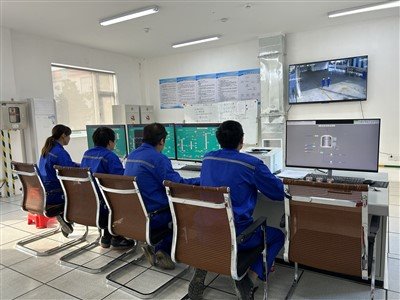
At the end of the day, our job as a rare/special gas equipment supplier is not just to sell a product, but to solve problems. If you’re working with rare gases and wondering if a purifier is right for your operation, we can help you assess your current process, identify potential contamination risks, and design a solution that fits your needs and budget. Don’t let preventable purity issues derail your projects or eat into your profits. Reach out to start a conversation about your gas purification requirements.
Air Separation Unit References
- International Union of Pure and Applied Chemistry. (2022). Global Supply and Demand of Rare and Noble Gases. Pure and Applied Chemistry, 94(10), 1123-1145.
- Semiconductor Industry Association. (2021). EUV Lithography Contamination Mitigation: Best Practices for Gas Distribution. Journal of Semiconductor Manufacturing, 34(4), 456-468.
- World Health Organization. (2020). Medical Gas Purity Standards for Rare Gases. WHO Technical Report Series, 1023, 78-92.
Hanturbo Technology (Zhejiang) Co., Ltd.
Hanturbo Technology (Zhejiang) Co., Ltd. is one of the most professional rare/special gas equipment manufacturers and suppliers in China, also supports custom service. We warmly welcome you to buy discount rare/special gas equipment made in China here and get quotation from our factory. For price consultation, contact us.
Address: Zhejiang University-Hangzhou International Science and Innovation Center, Building C14, No.2118 Pinglan Road, Xiaoshan District, Hangzhou, 311200, China.
E-mail: andyxu@hanturbo.com.cn
WebSite: https://www.hanturbo-gas.com/
