If you’re in the autoclaved aerated concrete (AAC) manufacturing space, you know that investing in a reliable turning cutting system isn’t just a purchase—it’s the backbone of your production line. For nearly a decade, I’ve been on the front lines as a supplier of these systems, talking to plant managers, small-scale producers, and operations directors every week. One question comes up more than any other: “What’s the typical cost of an AAC turning cutting system?” It’s a fair ask, but the answer isn’t one-size-fits-all. Over the years, I’ve seen pricing range from a low of $60,000 for small, semi-automated setups to over $350,000 for fully integrated, high-capacity systems, and every number in between. Let’s break down what drives those costs, so you can make a decision that aligns with your production goals and budget. AAC Turning Cutting System
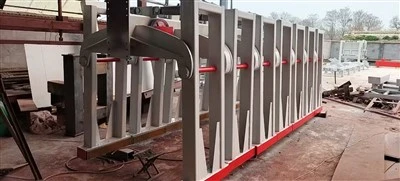
First, let’s start with the basics: what an AAC turning cutting system actually does. AAC blocks or panels are formed from a slurry of cement, lime, sand, water, and aluminum powder, which expands into a lightweight, porous block before being cut into precise shapes. The turning cutting system’s job is to rotate the partially cured block (called a green cake) and cut it into the required dimensions—usually blocks, panels, or custom profiles—using wire blades, diamond saws, or combination tools. So a cheap system that cuts unevenly will waste raw material, while an overpriced one for a small 10,000 m³/year plant will just tie up capital that could go to other upgrades. That’s why context matters more than just the sticker price.
Let’s talk about the smallest end of the spectrum: semi-automated, small-scale systems for plants producing up to 15,000 m³ of AAC annually. These are often ideal for startups or regional producers who don’t have high demand. These systems typically include a manual or semi-automated cake turning station, a single-wire cutting head, and basic guide rails. They require a small team to operate, with workers positioning the green cake manually before cutting. On average, these cost between $60,000 and $95,000. A few caveats here: some budget models skip precision calibration features, so you might face more waste (up to 3-5% more raw material per batch) and higher maintenance from misaligned blades. I recently worked with a startup in rural Ohio that went for the $72,000 semi-automated system, and while it met their first-year production needs, they had to replace two cheap wire blades within six months, adding $1,200 in extra costs that they didn’t budget for. So if you’re leaning into the lower end, factor in long-term maintenance savings for higher-quality parts.
Next, the mid-range systems, which are the sweet spot for most medium-sized AAC plants producing 15,000 to 50,000 m³ per year. These are fully semi-automated with programmable logic controller (PLC) features, meaning you can input your desired block dimensions once, and the system will adjust the turning and cutting paths automatically. Most include a dual-wire cutting head, precision laser alignment guides, and an integrated dust extraction system to reduce on-site cleanup. I’ve seen these priced between $100,000 and $220,000. What’s included here that’s not in the small systems? For one, a PLC that reduces human error—so waste drops to 1-2% at most. The laser alignment also means you can switch between block and panel cuts in minutes, not hours, which is a game-changer if you have fluctuating orders (like a construction company that needs custom panel sizes for a project one month, and standard blocks the next). A plant manager in Texas upgraded to a mid-range system two years ago; he told me that his weekly production output went up 20% because he didn’t have to manually reset the cutting station every other day, and his raw material costs dropped by 4% annually. That’s the kind of return on investment that makes the mid-range worth the extra cost for most.
Then there’s the high-capacity, fully automated systems, for plants producing 50,000 m³ or more per year. These are for large-scale producers or manufacturers that supply multiple regional construction companies. These systems integrate with your entire AAC production line: they automatically move the green cake from the curing chamber to the turning station, use multi-blade cutting heads, and can even cut custom shapes (like L-blocks for foundation work or curved panels for architectural projects) without manual reprogramming. They also include predictive maintenance sensors, which alert you to blade wear or component issues before they cause downtime. These are the most expensive, ranging from $250,000 to $350,000. A client in Florida runs a 80,000 m³/year plant and opted for a $310,000 fully automated system; he reported that his production downtime dropped by 12% compared to his old semi-automated setup, and he was able to take on three new accounts in the first year because the system could handle larger batch sizes. The key here is that the higher cost isn’t just for speed—it’s for reliability, which is critical when you have hundreds of thousands of dollars in raw materials and deadlines to meet.
Now, beyond the base system price, there are hidden costs that most buyers overlook, so I always make a point to mention these in consultations. First, installation: even the best system won’t work if it’s set up wrong. Installation costs range from 10% to 20% of the base price, depending on the system’s size and your plant’s layout. A small semi-automated system might cost $6,000 to $12,000 to install, while a high-capacity system could be $25,000 to $50,000. Then there’s training: operating a PLC-controlled system isn’t like using a old manual tool. Most suppliers include basic training, but advanced training for maintenance or custom programming can add $1,500 to $3,000. Also, blade costs: depending on the type, wire blades for AAC cutting can be $50 to $150 each, and a medium system goes through 20 to 30 blades per month, so that’s an ongoing cost of $1,000 to $4,500 monthly.
Another factor that changes the cost is customization. If you need the system to cut non-standard shapes, like insulated panels with a composite outer layer, or if you’re working with a specialty AAC mix (like lightweight structural AAC for high-rise buildings), you’ll need to pay for custom tooling or adjusted cutting head specs. I had a client in Toronto who needed a system to cut 4-inch thick panels for a university dorm project; because the standard cutting head wasn’t designed to handle the dense mix they were using, we had to add a diamond blade upgrade, which added $12,000 to the base price of their mid-range system. That’s a small tweak, but it’s worth it to meet project requirements and avoid rejected orders.
Now, let’s talk about how to choose the right cost range for you. First, calculate your current annual AAC output, and your projected growth over the next 3-5 years. If you’re a startup with projected output of 10,000 m³ in Year 1 and 18,000 m³ in Year 3, a small semi-automated system makes sense—don’t overspend on a high-capacity system you won’t use for 5 years. If you’re already at 30,000 m³ and plan to expand to 60,000 m³ in 2 years, a mid-range or high-capacity system will save you money in the long run, because you won’t have to replace your cutting system when you outgrow it. I’ve seen too many producers buy a cheap small system, then have to invest another $50,000 two years later for a new system, which ends up costing them more total than if they’d gone for a mid-range setup upfront.
Also, don’t just look at the initial cost—calculate return on investment (ROI). For example, a $70,000 small system might have an ROI of 18 months if your waste is low, while a $180,000 mid-range system might have an ROI of 12 months because of higher production and lower waste. That’s a key number to ask your supplier to help you calculate. When I work with a new client, I walk them through their current waste rate, their weekly production, and their order volume, to come up with a custom ROI estimate, not just a generic number.
At the end of the day, the “typical cost” doesn’t exist in a vacuum—it depends on your plant’s size, production goals, and special requirements. If you’re ready to stop guessing and find a system that fits both your budget and your production needs, I’m here to help. Whether you’re a startup looking for your first cutting system or an established plant looking to upgrade, we can walk through your needs, break down costs, and make sure you’re getting a system that delivers value for years to come. Don’t hesitate to reach out to start a conversation.
AAC Ingredient Pouring System References
- Autoclaved Aerated Concrete Manufacturing Equipment Industry Report, 2023
- Global AAC Production Capacity and Machinery Pricing Analysis, International Masonry Institute, 2022
- Small and Medium AAC Plant Operational Cost Benchmark, American Concrete Manufacturers Association, 2023
- AAC Cutting System Reliability and Waste Rate Study, Journal of Sustainable Construction Materials and Technologies, 2022
Qingzhou Shuangfengda Machinery Engineering Co., Ltd.
As one of the most professional AAC turning cutting system manufacturers and suppliers in China, we’re featured by quality products and good price. Please rest assured to buy durable AAC turning cutting system for sale here from our factory. Customized orders are welcome.
Address: Gaojiazhuang Village, Gaoliu Town, Qingzhou City, Shandong Province
E-mail: 13793620873@163.com
WebSite: https://www.sfdmachinery.com/
