Hey everyone, if you’ve ever worked in a warehouse, a retail storage facility, or even a manufacturing plant, you’ve probably seen those big metal racks that hold pallets—right? But when it comes to choosing the right one for your space, two options that often mix people up are stacking racks and drive-in racks. I’m Jake, part of the team at our stacking racks supply business, and I’ve had so many customers hit me up confused about which is which, when to use each, and why it even matters. Today I’m breaking this down straight, no fancy jargon, so you can stop overthinking and make a call that saves you space, time, and money. Stacking Racks
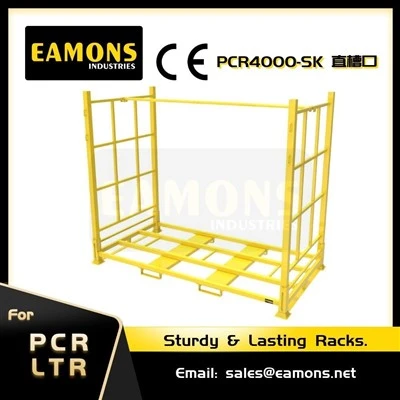
First, let’s start with the basics of each because that’s where most people get stuck. Stacking racks (I’ve also heard ’em called stacking frames or nestable racks by the way) are exactly what they sound like: they’re heavy-duty metal frames you can stack one on top of another when they’re empty. Wait, no—wait, not just stacking them any way. They’re designed to nest into each other when not in use, right? So when you don’t have pallets sitting in ’em, you can collapse ’em down to like a quarter of their original height, which is a total game-changer for saving empty storage space. We make ’em in different sizes, too—most fit standard 48×40 inch pallets, which is the US standard, but we can tweak ’em for odd sizes too, like if you use bigger pallets for industrial goods. They’re freestanding, too—no bolts, no concrete anchors, most of the time. You just plop ’em on the warehouse floor, drop your pallets in, and you’re good to go. No installation crew needed, no extra cost to set ’em up.
Now drive-in racks? Those are a whole different beast. Drive-in racks (sometimes called drive-thru racks) are a fixed structure, like a tunnel for your forklift. The forklift drives straight into the rack to drop or pick up pallets, so there’s no open aisles between each rack unit—wait, no, not exactly no aisles, just narrow ones. Instead of every pallet being accessible from an aisle, the pallets sit in deep lanes, right? Like, you can have 3, 4, even 5 pallets deep in a single lane. The first pallet you put in is the last one you take out—so it’s a Last-In, First-Out (LIFO) system, basically. Drive-in racks are bolted down to the warehouse floor and ceiling usually, so they’re not movable at all. They’re built for high-density storage, but only for products that don’t rotate a lot, like bulk canned goods, or frozen veggies that stay the same all year.
Now let’s jump into the real differences—this is where the rubber meets the road for your business. Let’s talk about space first, because that’s the number one thing warehouses care about. Wait, stacking racks vs drive-in: stacking racks when full—let’s say you have 10 pallets, each stacked 2 high. That’s 5 pallets a floor, plus aisles. But when empty, you can stack 5 empty nesting racks for every 1 full one, so your empty storage space cuts way down. Drive-in racks, on the other hand, are fixed, so when they’re empty, they take up exactly the same space as when full—no collapsing ’em. But when full, they use way less space than stacking racks because you don’t need those wide aisles between each rack. Wait, I should clarify the aisle part: with normal stacking racks (not the stacking ones I sell, regular static stacking racks) you need 3-4 feet of aisle between each unit for forklifts to turn around. With drive-in racks, that aisle is only like 10 inches, so you can fit way more pallets in the same footprint. But wait, that’s only if you’re storing the same SKU, right? Because drive-in is LIFO. If you have 10 different SKUs, each with a few pallets, you can’t put ’em in drive-in racks—you’d get all mixed up. Stacking racks, though, each unit is separate, so you can store a different SKU in every rack. That’s a huge point.
Next up, accessibility. Let’s say you need to grab a single pallet today. With stacking racks? Easy. You just walk your forklift down any aisle, pull out the pallet you need, and you’re done. No messing with pallets behind it. It’s First-In, First-Out (FIFO), which is non-negotiable for a lot of industries—like food and pharmaceuticals, where you can’t have expired stuff. Drive-in racks? If you need the pallet at the back of a lane, you have to pull out every pallet in front of it first. That’s a total pain, and if that’s a fast-moving product, you’re wasting so much time moving pallets around. I’ve had a customer tell me before that they tried drive-in for their popular snack, and their forklift driver was spending 2 extra hours a day just rearranging pallets. It wasn’t worth the space savings for them. Also, stacking racks are super flexible. If you rearrange your warehouse layout, or you’re moving inventory around a lot, you can pick up the stacking racks, move ’em with a forklift, and reconfigure them in 10 minutes. Drive-in racks are bolted down—you can’t move ’em without a crew and a forklift, and that’s a huge cost if you ever expand or change your storage needs.
Then there’s cost. Let’s be real, everyone cares about this. Stacking racks are way cheaper upfront. No installation, no concrete work, no engineering plans. You unbox ’em, set ’em up, and you’re done. We sell ’em in bulk too, so if you need 50 or 100, you can get a good deal. Drive-in racks? They’re way more expensive. They’re heavy-duty, bolted, need to be custom-fitted to your warehouse, so the upfront cost is like 2-3 times what stacking racks cost for the same number of pallets. Also, if you ever need to expand, drive-in racks are a dead weight—you can’t reuse them easily, whereas stacking racks you can drag to your new warehouse, or sell ’em off if you don’t need ’em anymore. Wait, but what about long-term space needs? If you have a fixed warehouse, storing only one SKU, drive-in might pay off, but if you’re growing or have multiple products, stacking racks are the way to go.
Durability and safety, too. I see so many people sleep on this. Stacking racks are made from thick steel, but because you can nest ’em, when they’re empty, they’re shorter, so less risk of tipping. Also, each rack is separate, so if one gets damaged, you just replace that one, not the whole rack structure. Drive-in racks are a single, big structure. If one part gets damaged, the whole lane is out of commission. Also, forklifts drive into drive-in racks, so there’s a higher risk of collision—those tunnels are tight, so drivers have to be super careful, and even then, I see a lot of bent posts, which can be a safety hazard. Stacking racks, because they’re open, there’s more room for error, and the risk of forklift crashes is way lower. Also, stacking racks are made to handle different loads, right? We do light-duty for retail stuff, heavy-duty for industrial pallets, even some with wire decks for small parts. Drive-in are only for heavy, uniform pallets—if you have a pallet that’s a bit off, or odd-shaped, it won’t fit right in the drive-in lanes.
Wait, let’s throw in a real example to make this concrete. A customer of mine a few months back ran a frozen food warehouse. They had 12 SKUs, each with 10 pallets. They were using regular static stacking racks before, and they were wasting 30% of their floor space on aisles. So they tried drive-in racks, thinking that would save space. But after 2 weeks, their staff was complaining because they couldn’t get the pallets they needed fast, and they had 2 pallets go bad because it was LIFO, so the oldest ones were at the back. They ended up ditching the drive-in racks and buying our stacking racks with aisle optimizers—we added little extensions on the racks so the forklifts could turn in a 10-foot aisle instead of 4, so they saved 25% of the space, kept FIFO, and didn’t have to deal with fixed racks. That’s the kind of tradeoff everyone misses.
Another example: a manufacturing plant that stores only steel parts for one type of machine. They have 50 pallets, all the same size, same SKU, and they don’t rotate them fast. Drive-in racks were perfect for them—they saved 40% of their space, it was worth the upfront cost because they didn’t need to access pallets often. That’s exactly the case where drive-in makes sense.
So let’s wrap up when to pick which, because that’s the takeaway. Pick stacking racks if: you have multiple SKUs (so you need separate access), you need flexibility to rearrange your space, you have a mix of fast and slow-moving products, you want low upfront cost and easy setup, and you need to save empty storage space. That’s 90% of the customers I work with, honestly. Pick drive-in racks only if: you have a single SKU or very few, all pallets are uniform and slow-moving, you have a fixed warehouse footprint, and space is your absolute top priority over accessibility.
Wait, I should also clear up a common misconception: some people think stacking racks are just for small stuff, but no—we make ’em that hold up to 5,000 pounds per pallet, which is way more than most drive-in racks can handle for multiple pallets deep. And nesting? It’s super easy—you just lift the empty rack up a few inches, line it up with the one below, and drop it. No tools, no bolts, takes 2 seconds per rack. A lot of first-time buyers are shocked how fast they collapse ’em.
Also, let’s talk about maintenance, because that’s something that creeps up later. Stacking racks are low-maintenance—just wipe ’em down, check for bent posts every few months, and if one breaks, swap it out. Drive-in racks need regular inspections of all the bolted joints, because if one bolt comes loose, the whole structure can shift. That’s a safety issue, and it adds ongoing cost you don’t have with stacking racks.

Hey, if you’re still not sure which is right for you? That’s why we’re here. I get it, storage needs are different for every business, so I don’t push a one-size-fits-all. We can help you measure your warehouse floor space, count your SKUs, and walk through what you’re storing, then give you a custom quote that makes sense. No hard sell, no fine print, just straight-up advice. If you’re tired of wasting space on aisles, dealing with fixed racks that won’t move, or struggling to pick up the right pallet fast, hit us up to chat about your needs. We can even send a sample rack to test in your warehouse, no obligation.
Storage Racks References:
- Material Handling Industry Association. (2022). Pallet Racking Best Practices for Warehouse Efficiency.
- Smith, J. (2023). Heavy-Duty Storage Solutions: Comparing Nestable and Drive-In Racking Systems.
- Industrial Storage Association. (2021). Safety Guidelines for Industrial Racking and Shelving.
- Logistics Management Magazine. (2022). Cost-Benefit Analysis of Flexible vs. Fixed Warehouse Storage.
Qingdao Eamons Industries Co., Ltd.
As one of the most professional stacking racks manufacturers and suppliers in China, we’re featured by quality products and good service. Welcome to buy bulk customized stacking racks made in China here from our factory. If you have any enquiry about cooperation, please feel free to email us.
Address: Room 1720, Poly Center Mansion, No.1068 Jinshui Road, Licang District, Qingdao City, Shandong Province, China
E-mail: Sales@eamons.net
WebSite: https://www.eamons.net/
