If you’ve ever held a smartphone that fits in your pocket, a car part that alerts you to brake wear, or a laptop that powers your work, you’ve relied on semiconductors—and you’ve indirectly relied on semiconductor testing equipment. I run a small but tight-knit team that supplies this gear, and for years, I’ve gotten the same question over coffee at industry events and from first-time buyers scrolling our website: “Wait, do I even need this stuff? Can’t I just skip testing to save money?” Testing Equipment

Let me break this down like I would to a friend who’s new to the semiconductor game. First, semiconductors are tiny, complex things—think about a chip smaller than a grain of sand that holds millions of circuits. Even the tiniest flaw, like a misaligned transistor or a speck of dust left during manufacturing, can turn a $10 worth of raw material into a $1,000 dud. Semiconductor testing equipment isn’t just a “checklist step” at the end of a line; it’s the safety net that keeps bad chips from reaching products, prevents costly recalls, and ensures devices work when they’re needed most.
Let’s start with the basics: there are two main phases we supply gear for, and both are non-negotiable. The first is wafer-level testing, which happens before chips are even cut into individual pieces. Imagine a wafer is a thin, round disk of silicon covered in hundreds of tiny, uncut chips. During this phase, our equipment probes every single chip on the wafer to check for electrical functionality. We run simple tests: does each transistor turn on when it’s supposed to? Do circuits hold a charge without leaking? If a chip fails here, we mark it (usually with a tiny ink dot) and move on—no need to cut and package it, which saves companies thousands in wasted material and labor. This is a huge win for high-volume lines, where a single wafer can hold 10,000 chips, and even a 5% failure rate means 500 duds you never have to touch.
The second phase is final testing, after chips are cut, packaged, and ready to go into a device. This is where we put chips through real-world-like conditions to make sure they hold up. For example, a car microchip has to work in temperatures ranging from -40°F (way colder than a Minnesota winter) to 185°F (hotter than a summer day in Arizona). Our thermal chambers, which are part of the equipment we supply, crank the heat and cold, and our test tools check if the chip keeps working. We also run stress tests: power the chip 24/7 for a week to see if it wears out, or flood it with electrical signals to see if it glitches. One of our recent clients, a maker of industrial sensors, told us before they used our gear, they had a 8% failure rate in field installations—after switching, that dropped to less than 0.1%. That’s the difference between a product that annoys customers and one that’s reliable enough to use in factories where downtime costs $10,000 an hour.
I know some folks think they can test chips manually, or use cheap off-the-shelf gear to cut costs. But here’s the thing: semiconductors have shrunk so much in the last 10 years. The chips in your smartwatch are 5nm—way smaller than a human hair. Manual testing can’t spot flaws that small. Even a small speck of dust, invisible to the naked eye, can cause a chip to short out. Our equipment uses precision probes that can touch points on a chip that are as narrow as 10 micrometers (that’s 0.0004 inches, for perspective). If you’re using something that’s not calibrated for that size, you’ll either miss flaws or damage the chip while testing—worse than not testing at all.
We also specialize in equipment for specialty semiconductors, not just the big-name chips you see in phones. Power semiconductors, which run electric vehicle batteries, have totally different testing needs than microcontrollers in a smart TV. Those power chips handle high voltages, so our gear checks for insulation leaks and how they hold up when you’re accelerating fast in an EV. Sensors for medical devices, like the ones in glucose monitors, need to be super accurate—our testing equipment checks if a sensor’s readings are within 1% of the true value, because a wrong reading there could make a person’s insulin dose wrong. If you’re a startup making a new IoT sensor for home security, we have gear that can test for low power consumption—critical because those sensors run on batteries for years without needing a change.
Wait, let’s talk about another big, often overlooked part: compliance and liability. If a semiconductor fails in a medical implant, or a car’s brake system, the company that made the chip is on the hook. Our equipment produces detailed, timestamped test reports that are traceable—meaning if a product does fail later, you can go back, check exactly what tests were done, and find the root cause. That’s not just good business; it’s required by industry standards like ISO 9001 and automotive ISO 26262. A few years ago, a small chip maker we worked with had a batch of power chips go bad in a fleet of electric scooters. They used our test logs to show they’d checked every batch’s performance, and avoided a $2 million recall. If they’d skipped that testing, they’d have been on the hook for every scooter, not just the bad batch.
I get it—when you’re building a new production line, every dollar counts. But skimping on testing equipment is like building a bridge without checking the concrete. It might look fine, but if it fails, the cost is way higher than the materials you saved. We’ve had clients who tried to use generic test tools, and within six months, they had to replace all of them because the tools couldn’t keep up with their chip’s speed or size. They ended up spending twice as much as they would have if they’d bought our gear in the first place.
What makes our equipment different? We don’t just sell a box with buttons. Our team has been around the block—we used to work in semiconductor manufacturing, so we know the pain points: lines that need to run 24/7, test tools that break down at the worst time, new chip designs that require custom testing. We build our gear to be flexible, too. If a client is making a mix of automotive and consumer chips, our equipment can switch between test protocols in minutes, instead of hours. That saves downtime, which is money in their pocket. We also offer on-site calibration and support—if a test tool is acting up at 2 a.m., someone from our team can be there by sunrise, no extra rush fees.
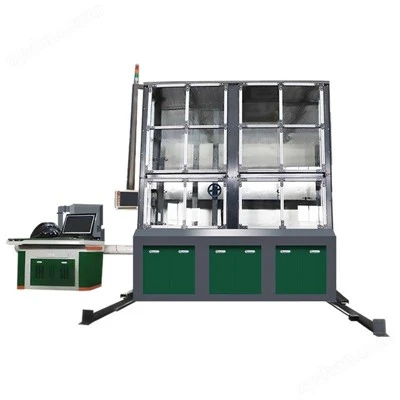
If you’re here, you’re probably either building a new semiconductor line, upgrading your testing process, or tired of dealing with unreliable test gear. Let’s chat—we can walk through exactly what your chips need, show you how our equipment cuts waste and improves quality, and even help you build a testing workflow that fits your budget. No sales pitch, just real talk from people who’ve been in the trenches. We’re here to help, and we’d love to hear what you’re working on.
Laboratory Consumables References:
- International Technology Roadmap for Semiconductors (ITRS) Test and Test Equipment Working Group. (2021). Semiconductor Testing Requirements for Advanced Node Devices. Semiconductor Industry Association.
- ISO 26262:2018, Road Vehicles – Functional Safety. International Organization for Standardization.
- National Institute of Standards and Technology (NIST). (2022). Quality Control in Semiconductor Manufacturing: The Role of Automated Testing Equipment. U.S. Department of Commerce.
- SEMI. (2023). Global Semiconductor Testing Equipment Market Report. Semiconductor Equipment and Materials International.
- IEEE. (2021). Journal of Semiconductor Testing: Principles, Methods, and Applications. Institute of Electrical and Electronics Engineers.
Hebei Wanluda Testing Instrument Equipment Co., Ltd.
As one of the most professional testing equipment manufacturers and suppliers in China, we have world-leading production equipment and strong manufacturing capabilities. Please rest assured to buy advanced testing equipment made in China here from our factory.
Address: Zhouguantun Village, Xian County, Cangzhou City, Hebei Province, P.R.China
E-mail: wldinstrument@163.com
WebSite: https://www.wldinstrument.com/
