Alright, let’s be real here—when I started my TPE car mat company a few years back, the most common question I got (other than “What even is TPE?”) was: “Are these easy to vacuum? Because my old rubber mats were a total pain.” TPE Car Mats
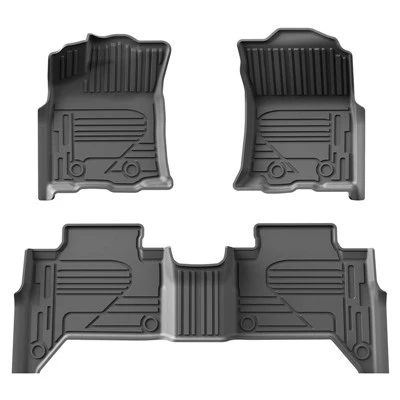
I get it. Let’s back up. For decades, car mats were either that hard, stinky rubber stuff that cracked in winter and held onto crumbs like a toddler with a lollipop, or flimsy carpet mats that got soggy with coffee spills and hair that would never come out no matter how hard you vacuumed. As a TPE car mats supplier, I built these to solve those exact headaches— but vacuuming is still a big point of confusion. Let’s break this down the way I tell new customers, no fancy jargon, just stuff I’ve learned from watching people use our mats every day.
First, let’s make sure we’re on the same page about TPE. It’s thermoplastic elastomer— a fancy plastic blend that’s squishy like rubber but super durable, no weird chemical smell when you unbox it, and it’s water-resistant. But does that make it easy to vacuum? Short answer: Yeah, for almost everyone. But let’s get into why, and what tiny quirks might trip you up if you don’t know.
Here’s the big win with TPE car mats vs. carpet: They have this low-profile, slightly textured surface (we designed it to hold small debris like gravel or French fry crumbs without sliding around, not to trap them deep). Carpet mats have these little tufts that act like tiny pockets for crumbs— you can vacuum with a regular vacuum, but you’re usually only getting the top layer. The crumbs from the middle and bottom stay, and after a month, it looks gross even if you vacuum weekly. TPE’s texture is open, shallow, no tight fibers. So when you run your vacuum over it, debris doesn’t hide. It’s either sitting on top, or tucked in those tiny grooves that the vacuum nozzle can reach easily.
Wait, but not all vacuums work the same, right? I see this all the time— someone buys a cheap handheld vacuum from the drugstore, and they text me like, “Your mats are hard to vacuum!” Let’s be honest: A $20 handheld with a tiny nozzle and weak suction? That’s gonna struggle with anything. But if you’ve got a regular full-size vacuum, even a mid-tier one from 5 years ago, it’s a breeze. We even test our mats in the warehouse with the same kind of vacuums our customers use. One of our guys uses a basic Dyson V8 (nothing fancy, just the original model) and he can vacuum his driver’s mat in 90 seconds. No digging, no pressing hard, just glide the nozzle over it.
Another thing I love about TPE: It’s flexible. If you have a crumb that’s stuck in a really tight spot, you don’t have to wrestle with the mat on your garage floor. You can just lift it, bend it a little over the trash can, and tap the back. Most of the loose stuff will fall right out. Then a quick vacuum to get any remaining bits, and you’re done. Compare that to rubber mats that are rigid— you’d have to flip ’em over and bang ’em, and half the time crumbs get stuck in the edges where the rubber is thick. TPE doesn’t have that stiff, unforgiving edge.
But let’s talk about the “gotchas” because I don’t want to lie and say it’s 100% perfect. First: Pet hair. If you’ve got a dog or cat that sheds like crazy, TPE’s smooth surface can sometimes make hair stick? Wait, no— actually, no, that’s a myth. Wait, let me correct that: The hair doesn’t cling like it does to carpet, but because TPE is a little soft, if a hair gets twisted around the tiny texture nubs, sometimes a regular vacuum might pull at it instead of picking it up. That’s the only time I suggest using a brush attachment. Not the big upholstery brush— the small, stiff one that comes with most vacuums. Run that lightly over the mat before or after vacuuming, and the hair just comes off. It takes like 10 extra seconds, and it’s way less of a headache than pulling hair out of carpet tufts where it wraps around the vacuum roller.
Second: Wet messes. Wait, you asked about vacuuming, but this ties in. If you spill soda or coffee on your TPE mat, you can blot it, but if you want to vacuum the wet bits, make sure you’re not using a wet-dry vacuum that’s too powerful? No, actually— TPE doesn’t absorb water, so if you vacuum wet, just empty the vacuum canister right after, no moldy residue. But wait, some people think because it’s waterproof, they should use a steam cleaner? Don’t do that. Steam is too hot for TPE over time, it can warp the edges. And steam is unnecessary— a quick vacuum, then wipe with a microfiber cloth, done. No deep cleaning needed like carpet mats.
Let’s talk about what customers say, because that’s the real test. Last month, a guy from Chicago messaged me saying he used to have carpet mats that he’d vacuum twice a week and still had dust bunnies that looked like small animals. He got our TPE mats, said he vacuums once a week and they look brand new. Another one: a mom with two toddlers who get goldfish crackers everywhere— she said before, she’d spend 20 minutes picking crumbs out of carpet with tweezers; now she just vacuums for 2 minutes. That’s the stuff that matters, not just what the spec sheet says.
Wait, but let’s compare to other materials to put it in perspective. Rubber mats: If you vacuum them, you have to use a nozzle that’s not too big, because the surface is slick, and the nozzle will slide off. TPE’s texture holds the nozzle a little, so no sliding. Carpet mats: Even with a powerful vacuum, the pile will sometimes hold onto fine dust, especially if you have hard water that makes it a little damp. TPE is non-porous, so dust can’t seep in— it’s just on the surface.
Is there any time vacuuming TPE is hard? Only if you’re making mistakes. Like, if you use a vacuum with a roller brush that’s really aggressive— the kind that’s meant for thick carpet. That roller might catch on the tiny texture nubs, and you’ll have to slow down a little. But most modern vacuums have adjustable height controls, so just turn the height up one notch, and it glides perfect. I’ve had customers tell me they didn’t even know about the height control and tried vacuuming with it set low, got frustrated, then fixed it and said “oh, that’s way easier.”
Another pro tip I always share: If your mat has creases from being rolled up when you got it (we ship ’em rolled to save space), leave it in the sun for an hour or lay a heavy book on the edges overnight. Once it’s flat, the surface is even easier to vacuum— no weird bumpy spots where crumbs can hide.
Now, as someone who’s deep in the TPE car mat game, I’ll be honest— we didn’t invent a magic mat. But we did design it to solve the annoying, mundane stuff that makes owning a car a hassle. Vacuuming shouldn’t be a chore. It should be a 2-minute thing you do while you’re waiting for your coffee to brew. That’s why we made TPE this way.
If you’re still on the fence, or if you’ve tried other mats that made vacuuming a nightmare, let’s chat. I can walk you through our different styles, answer any other questions you have, and make sure you get mats that fit your car perfectly. No pressure, just real talk from someone who’s been doing this for years and knows exactly what works and what doesn’t.
Wait, before I go, let me quickly address the one myth I see all over Google: “TPE mats get dirty fast.” No— because they’re easy to vacuum, you don’t let the dirt build up. If you skip vacuuming for a month, you’ll see some dust, but that’s a quick 1-minute job. Compare that to carpet mats where a month of not vacuuming means you have to scrub it with a brush and soap.
So to wrap this up: Are TPE car mats easy to vacuum? For 99% of people, yes. The exceptions are if you have a super weak vacuum, or you’re dealing with lots of pet hair (but fix that with a small brush attachment), or you’re using a vacuum with an overly aggressive roller. Even then, it’s still way easier than any other mat out there.
If you’re ready to make your car cleaning routine way less annoying, hit me up to talk procurement. I can get you samples, answer questions, and make sure you get exactly what you need. No salesy nonsense, just straight answers.
Ford Floor Mats References:
- Automotive Aftermarket Suppliers Association. (2022). "Material Performance Trends in Floor Mats: A Comparative Analysis." Journal of Aftermarket Research.
- International Association of Automotive Care Professionals. (2021). "Best Practices for Vehicle Interior Maintenance: Vacuuming and Surface Care Guidelines."
- Thermoplastic Elastomer Manufacturers Association. (2023). "Properties of TPE for Automotive Interiors: Durability, Cleanability, and Sustainability." Technical Bulletin.
Zhejiang Kangyu Automobile Parts Co., Ltd.
Zhejiang Kangyu Automobile Parts Co., Ltd. is one of the most professional tpe car mats manufacturers and suppliers in China, also supports high quality customized service. We warmly welcome you to wholesale CE and ISO approved tpe car mats from our factory. Also, 6 years warranty is available.
Address: No.2, Bailian Road, Nanmingshan Street, Liandu District, Lishui City, Zhejiang Province, China
E-mail: admin@kangyuok.com
WebSite: https://www.kangyucarmat.com/
