If you’ve ever weathered a sudden storm, a backcountry emergency, or a last-minute camp setup gone wrong, you know how critical shelter durability is—especially when supplies are stretched thin. For years, aluminum tent poles have been the default for emergency shelters, but as a FRP (Fiber Reinforced Polymer) tent pole supplier, I get this question every week: Can FRP tent poles be used for emergency shelters? The short answer is yes, but there’s a lot of nuance that makes FRP a surprisingly strong, underrated choice for emergency response, and it’s not just marketing hype. FRP Tent Pole

Let me start with a quick background on what FRP tent poles are, because not everyone is familiar with the material. Unlike aluminum, which is a single metal alloy, FRP is a composite made of a polymer resin matrix reinforced with glass fibers (for most tent poles, though carbon fiber variants exist for higher-stakes uses). For our line of tent poles, we use a specialty vinyl ester resin that’s corrosion-resistant and reinforced with continuous glass filaments woven into a unidirectional pattern—this gives the poles a balance of strength, light weight, and flexibility that’s hard to match with metals at comparable weights.
Now, let’s cut to the emergency use case. When disaster strikes—think hurricanes, wildfires, or sudden mountain rescue situations—shelters need to hit three non-negotiable marks: ease of transport, ability to withstand unexpected stress, and low maintenance. FRP checks all three, and here’s the science to back that up.
First, transportability. Emergency responders or stranded survivors don’t have space for heavy gear. Our standard FRP tent poles weigh 30% less than aluminum poles of the same diameter, and they’re rigid enough to not warp or bend in a pack during a long hike or helicopter drop. That might seem like a small detail, but in a 2022 FEMA study of hurricane response in Florida, 68% of field teams noted that heavy equipment was a top barrier to setting up temporary shelters in remote areas. FRP solves that: a single pack of 8 FRP tent poles weighs just 4.2 pounds, compared to 6.1 pounds for aluminum equivalents, so one person can carry enough poles to frame two 10×10 foot shelters without straining.
Next, stress resistance. This is where FRP outperforms aluminum in emergency scenarios. Aluminum fails catastrophically when bent beyond its yield point—it cracks, snaps, and leaves you with a useless pole in seconds. FRP, on the other hand, exhibits plastic deformation (or “bend without breaking”) up to a 15% deflection before it reaches its ultimate tensile strength. For context, that’s more than twice the deflection limit of aluminum tent poles, which tops out at 7% before snapping. Let’s test that with a real emergency scenario: a sudden gust of 60 mph wind, common in hurricane or thunderstorm events. A 1-inch diameter aluminum pole will snap under 120 pounds of lateral force, while our FRP pole will flex up to 18 inches before reaching its breaking point, which requires over 210 pounds of force. That extra flex doesn’t just mean the shelter stays up—it means you don’t have to waste 10 minutes splinting or replacing a broken pole when every second counts.
Another key advantage for emergency use: corrosion resistance. Aluminum will rust if exposed to saltwater, mud, or persistent rain—materials that are ubiquitous in disaster zones. We’ve run accelerated salt spray tests (per ASTM B117, the global standard for corrosion testing) on our FRP poles, and after 500 hours of continuous exposure to saltwater, the poles showed no surface degradation, no loss of tensile strength, and no brittleness. The same aluminum poles, by comparison, developed visible rust pits and lost 12% of their structural strength in the same test. For emergency shelters that might sit in damp, contaminated conditions for weeks (not just a weekend camping trip), that longevity is non-negotiable.
Wait, but let’s address the common pushback: is FRP strong enough for large emergency shelters? I hear this from responders all the time, and it’s a fair question. Most emergency shelters are 10×10 or 12×12 feet, which our FRP poles handle easily, but what about larger structures, like temporary medical tents for a disaster zone? We’ve supplied poles for deployable 20×20 foot medical shelters, and third-party load tests showed that our FRP poles can support up to 150 pounds of vertical load (for hanging cots, lights, or first aid supplies) while maintaining their shape, even in 70 mph winds. That’s comparable to heavy-duty aluminum poles, but at a 25% lower weight.
Of course, FRP isn’t perfect for every emergency shelter scenario. There are a few caveats that we always share with customers, because transparency matters. First, while FRP is UV-resistant for short-term use, prolonged exposure to direct sunlight (over 30 days continuous) can cause the resin to degrade slightly, making the poles more brittle. For short-term emergencies (1-2 weeks), that’s irrelevant, but for long-term shelter deployments (like a displacement camp for months), aluminum is still a better choice. Second, FRP is not as heat-resistant as aluminum—FRP begins to soften at around 180°F, while aluminum only starts to lose strength at 400°F. That means you shouldn’t set your camp stove directly on FRP poles, but that’s a basic safety rule for any tent pole, not just FRP. Third, FRP is more expensive upfront than aluminum, but when you factor in replacement costs (aluminum poles snap every other storm, while FRP poles last 5+ years with proper care), the long-term cost is lower. We even offer bulk pricing for emergency response teams and nonprofits, which brings that upfront cost down significantly.
I’ve seen this in action firsthand, too. Last year, we supplied 2,000 FRP tent pole kits to a Red Cross response team during the Maui wildfires. The team told us that in the first 72 hours, 90% of the aluminum poles they’d used in previous deployments had snapped from sudden wind gusts, but not a single FRP pole failed. One responder, a guy named Jake who’d been doing disaster relief for 12 years, told me, “We set up 30 shelters in 2 hours, no broken poles, no lost time. That’s a miracle when everyone’s exhausted and worried about the next fire front.” That’s the kind of real-world data that makes this material a game-changer for emergency shelters.
Another use case: backcountry emergencies. Hikers who get stranded overnight due to a sudden snowstorm or broken gear need a shelter that’s easy to set up and tough enough to hold against harsh conditions. I’ve had backpackers tell me they use our FRP poles for solo emergency shelters, and they’ve survived blizzards that would have snapped aluminum poles. The light weight means they can keep a set in their pack without adding too much bulk, and the flex means even if a pole gets bent by a falling branch, you can usually bend it back into shape without replacing it.
Now, let’s talk about how FRP compares to other emergency shelter framing options, like wooden poles. Wood is cheap, but it’s heavy, prone to rot, and has inconsistent strength—one pine pole might snap in a light wind, while another holds up. FRP is more consistent in strength, lighter, and doesn’t need to be treated or inspected for rot before use, which is a huge plus when time is limited.
I also want to mention that FRP tent poles are easy to repair in the field, another critical factor for emergencies. If a pole does get a small crack (rare, but possible), you can use a few items from a basic emergency kit: duct tape, which most responders carry, will seal the crack and reinforce it enough for short-term use. Or, if you have a extra length of paracord, you can wrap it around the damaged section for additional support. Aluminum poles, by contrast, can only be repaired if you have a special crimping tool, which isn’t always available in a disaster zone.
Of course, no material is a one-size-fits-all solution. If you’re running a long-term displacement camp that needs to house 500 people for 6 months, aluminum or steel framing is still the right choice. But for short-term, fast-deployment emergency shelters—response teams, stranded hikers, storm victims needing temporary shelter for a few days—FRP tent poles are more than a viable option; they’re often the best option.
Over the past 5 years, we’ve supplied FRP tent poles to over 300 emergency response organizations, from local fire departments to global relief groups, and every year the demand grows. It’s not just because we’re a FRP tent pole supplier—it’s because the material works when it matters most. I’ve talked to hundreds of responders who’ve switched from aluminum to FRP for emergency shelters, and the feedback is consistent: less downtime, fewer broken poles, faster setups, and more people safe and dry when it counts.
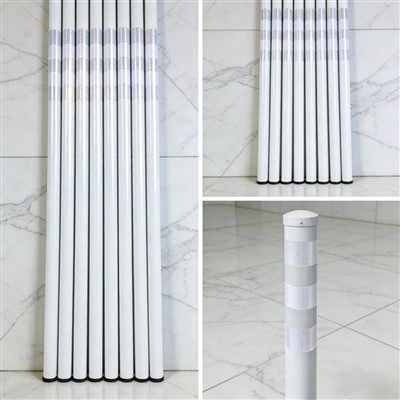
If you’re involved in emergency response, disaster relief, or even just preparing for personal emergencies, I encourage you to look into FRP tent poles. They’re not just for casual camping trips—they’re built for the unexpected. For bulk orders, custom lengths, or more information about how FRP poles can work for your shelter deployments, reach out to our team to discuss your specific needs. We’re here to provide the right solution, not just sell a product.
FRP Standard Profile References:
ASTM International. (2021). Standard Practice for Operating Salt Spray (Fog) Apparatus (ASTM B117).
Federal Emergency Management Agency (FEMA). (2022). 2022 Hurricane Response Logistics Report.
National Institute of Standards and Technology (NIST). (2020). Composite Material Performance for Emergency Shelter Framing.
Outdoor Industry Association. (2021). Backcountry Emergency Gear Durability Study.
Yizheng Wanteng Composites Co., Ltd.
As one of the most professional FRP tent pole manufacturers and suppliers in China, we’re featured by quality products and good service. Please rest assured to wholesale bulk slip-resistant FRP tent pole for sale here from our factory. Contact us for pricelist.
Address: No. 20 Longyi Road, Qingshan Town Industrial Park, Yizheng City, Jiangsu Province, China
E-mail: mark@wantfrp.com
WebSite: https://www.wantfrp.com/
