If you’ve ever stood on the manufacturing floor next to a polishing station, you know that the difference between a perfect finish and a scrap part often comes down to one tiny detail: the hardness of your abrasive polishing wheel. I’ve been in the abrasive supply game for over a decade, and I’ve lost count of how many shop managers have come to me frustrated, saying their wheels are either eating into the workpiece too fast or barely doing anything at all. Most of them didn’t realize it’s not just the grit size or abrasive material that matters—hardness is the unsung hero of a smooth, efficient polish. Let’s break this down in plain, no-bullshit terms, because I know you don’t care for the overly technical jargon that makes your eyes glaze over. Abrasive Polishing Wheel
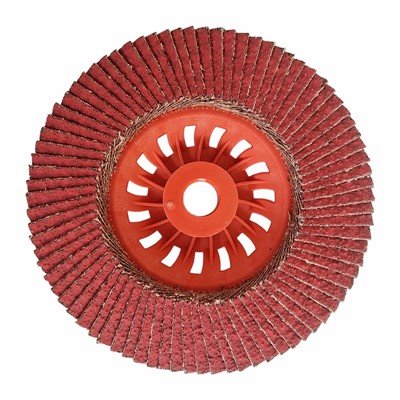
First, let’s get one thing straight: wheel hardness isn’t the same as how hard the abrasive grains inside it are. The grains (like aluminum oxide, silicon carbide, or diamond) are the actual cutting tools, but they’re held together by a bond—vitrified resin, rubber, epoxy, whatever your wheel is made with. Hardness here refers to how easily that bond breaks down to release old, dull grains and expose new, sharp ones. Think of it like a pencil: the graphite (the grain) writes, but the wood (the bond) holds it steady. If the wood’s too soft, the pencil wears down in 2 strokes; if it’s too hard, you can’t get any graphite onto the paper. That’s exactly how wheels work.
Now, let’s talk about the first big impact: material removal rate (MRR). This is how much material you take off the workpiece per minute, and it’s make-or-break for production speed. If your wheel is too soft, the bond gives way way too fast. The sharp new grains pop out almost immediately, but before long, you’re left with only half-cut grain fragments. Instead of slicing through the workpiece, those fragments drag and scratch the surface, and you’re replacing wheels every 10 minutes. On the flip side, a wheel that’s too hard? The bond doesn’t break down at all. Those grains stay dull for hours. They don’t cut, they just burnish the surface—or worse, they sit there digging into the workpiece, leaving deep gouges. I’ve had a customer machining 304 stainless steel tell me they were using a super-hard wheel and it was taking 2 hours to get 0.5mm off a part; we swapped in a medium-hard one, and they had the same amount removed in 45 minutes. That’s not magic—that’s hardness working for (or against) you.
Next up: surface finish quality. If you’re polishing something that needs to look good, like a custom car part or a medical implant, MRR doesn’t mean jack. You need a mirror-like finish, and hardness is everything here. Too soft, and those erratic grain fragments I mentioned before leave random tiny scratches all over the workpiece. It’s like trying to paint a wall with a roller that has loose fuzz; no matter how careful you are, you get little bumps. Too hard, and the dull grains just tear at the surface, creating deep, uniform grooves. A customer who makes titanium hip replacements once came to us with a problem: their ultra-hard wheel was leaving a finish that was too rough for FDA approval. We suggested a soft-hard wheel (wait, no, that’s not a thing—we graded it as J hardness, medium-soft) that broke down just enough to keep sharp grains exposed without the loose fragments. Their reject rate dropped 18% that month. That’s the kind of win that makes your day.
Then there’s heat buildup, which is a killer for workpieces that are sensitive to heat. Plastics, aluminum, even some steels warp or discolor if they get too hot during polishing. Here’s the thing: soft wheels tend to generate more heat because the loose grains drag and rub instead of cut. That friction turns into heat, and if you’re working with thin workpieces, you might have a warped part before you know it. Hard wheels, on the other hand, don’t shed grains, so they don’t have that extra rubbing—but wait, they also don’t cut efficiently, so you’re pushing the wheel harder to get the job done, which also creates heat. The sweet spot is usually a medium hardness: the bond breaks just enough to keep grains sharp, so you’re cutting cleanly with minimal extra friction. One of our aerospace clients uses our medium hardness wheels for thin aluminum brackets because they tell me their heat-related rejects went from 1 in 20 to 1 in 100. That’s a huge difference for a high-tolerance industry.
Wait, let’s not forget about how the wheel interacts with the workpiece material. You don’t use the same hardness for every material, right? Soft metals like aluminum or brass are softer than the abrasive grains, so they tend to load up the wheel—bits of metal get stuck in the pores between grains, which makes the wheel act even harder and scratch the surface. A soft wheel is perfect here, because the bond breaks down and pulls out the loaded grains along with the dull ones, keeping the wheel clean. For hard materials like hardened steel or carbide, you need a harder wheel. Those materials wear down grains really fast, so a hard bond keeps the grains in place long enough for them to do their job before dulling. If you use a soft wheel on carbide, you’ll be swapping wheels every 5 minutes and spending a fortune. I’ve seen customers try to use a medium wheel on aluminum and load it up so bad they had to stop mid-job—they switched to our soft resin bond wheels, and their uptime went up 30%.
Now, I know what you’re thinking: “This sounds great, but how do I pick the right hardness for my process?” It’s not just a one-size-fits-all. A lot of people get stuck on the grit size, but you have to pair it with hardness. For rough grinding (the first step, where you’re taking off a lot of material quickly), you want a medium to medium-hard wheel. For fine polishing (the last step, where you want a smooth finish), go for a soft to medium-soft wheel. If you’re working with fragile workpieces, like glass or ceramics, super soft wheels are the way to go—they’ll cut gently without cracking the part. If you’re doing high-volume production, medium-hard wheels are the sweet spot because they last longer than soft ones and cut better than hard ones, so you don’t have to slow down the line.
Here’s a common mistake I see all the time: people testing a wheel that’s the wrong hardness and writing off the whole brand. I had a customer once who complained that all our wheels were too hard, but it turned out he was using a vitrified bond wheel for a soft brass polishing job—vitrified is way harder than resin, so we swapped him to our soft resin bond wheels, and he’s been a loyal client ever since. The bond type ties right into hardness too, by the way. Vitrified bonds are harder, resin can be softer, rubber is super soft—so it’s not just the hardness grade, but the bond material that plays into it.
So, why does this matter for you, the person reading this? Whether you’re a shop foreman tired of scrap parts, a production manager looking to speed up your line, or a quality control lead trying to hit finish specs, wheel hardness is the thing you’re probably overlooking. I’ve been in this business long enough to know that small adjustments to your wheel hardness can make huge differences: less scrap, higher productivity, better quality parts, lower operational costs. I’ve seen it time and time again.

If you’re struggling with inconsistent finishes, too much material removal, heat buildup, or constant wheel changes, don’t guess. Talk to someone who actually knows what they’re talking about. We’ve got years of experience testing wheels for all kinds of materials and processes, and we can help you pick the right hardness (and bond, and grit) to get your polishing process running smoothly. No jargon, no sales pitch—just real advice from a guy who’s been on the manufacturing floor too. Reach out, and let’s figure out what’s holding your process back.
Ceramic Flap Disc References
- Malkin, S., & Cook, N. H. (1984). Grinding Technology: Theory and Applications in Machining of Metals. John Wiley & Sons.
- Shaw, M. C. (1996). Principles of Abrasive Processing. Oxford University Press.
- Lindberg, R. A. (2010). Processes and Materials of Manufacture (4th ed.). Pearson.
- American National Standards Institute. (2018). Safety Requirements for Abrasive Grinding Machines (ANSI B7.1-2018).
- Tawakoli, T., & Rabiey, M. (2015). Effect of Wheel Hardness on Material Removal in Precision Grinding. Journal of Manufacturing Processes, 19, 112-119.
Henan Yandisc Hardware Tools Co., Ltd.
As one of the most professional abrasive polishing wheel manufacturers and suppliers in China, our products have good reputation in the market. Please feel free to wholesale high quality abrasive polishing wheel made in China here from our factory. Customized orders are welcome.
Address: Zinan Road, High-tech Industrial Development Zone, Zhengzhou, Henan, China
E-mail: info@yandisc.com
WebSite: https://www.yandisc.com/
