If you’ve ever stood beside a production line where precision metal parts are being hardened, you’ve probably heard operators talk about “quenching stress” like it’s a hidden flaw that can derail an entire run. As a quenching furnace supplier who’s worked with metal fabricators, automotive part makers, and tool and die shops for over a decade, I’ve seen this term misunderstood more times than I can count. It’s not just some vague factory jargon—it’s the difference between a part that passes a quality test and one that cracks mid-production, or even worse, fails in the field. Today, I’m breaking down exactly what quenching stress is, how it forms, and why it matters for anyone relying on a quenching furnace to get the job done right. Quenching Furnace
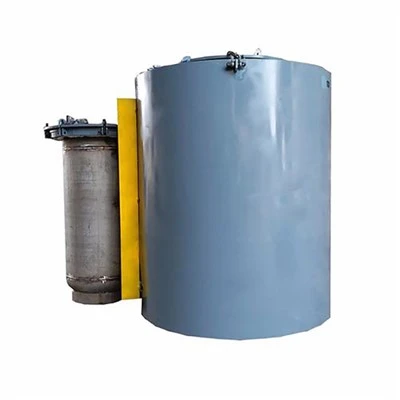
Let’s start with the basics: quenching is a heat treatment process where metal is heated to a specific high temperature, then cooled rapidly to transform its internal microstructure. For steels, that usually means heating to the austenite phase, then quenching in water, oil, or polymer to turn that austenite into martensite—a hard, strong phase that makes metal ideal for everything from engine crankshafts to drill bits. But here’s the catch: that rapid cooling doesn’t happen evenly across the part. Quenching stress is the residual internal strain that builds up when different parts of the same metal cool at different rates, and their atomic structures change at different speeds.
To make this concrete, imagine a thick steel gear. The outer surface of that gear will hit the quench medium first—it cools fast, forming martensite almost immediately. But the center of the gear is insulated by the surrounding metal, so it stays hot longer. By the time the center starts cooling and turning to martensite, the outer surface is already hard and rigid. As the center shrinks during its phase change, it pulls against the already solid outer layer. That pull is tensile quenching stress—one of the most common culprits for cracking parts. On the flip side, if a part cools too unevenly at the surface, the outer layer might be compressed inward against the core, creating compressive stress. Compressive stress isn’t always bad; in fact, it can improve wear resistance by making the surface more resistant to pitting or chipping. But either way, unmanaged quenching stress is a problem. It can warp a delicate aerospace component, cause a automotive drive shaft to crack during driving, or ruin a high-end cutting tool before it ever touches material.
Now, let’s talk about why your quenching furnace plays a huge role in how much quenching stress ends up in your parts. A lot of operators think quenching stress only comes from the quench oil or water they use—and that’s part of it, but the furnace is where the process starts, and small furnace settings can make a massive difference. Take furnace temperature uniformity, for example. If your quenching furnace has hot spots or cold spots, the part won’t heat evenly before quenching. A part that’s 20 degrees hotter on one side will cool faster on that side, amplifying uneven cooling and stress. I’ve worked with customers who switched from a budget furnace with 50-degree temperature variation to a mid-range model with 5-degree uniformity and saw their part failure rates drop by 30%—all because the pre-quench heating was consistent.
Another big factor is quenching transfer time, which is how fast the part moves from the furnace to the quench tank. When parts cool, the first few seconds are the most critical for stress formation. If your furnace has a long transfer time (say, 10 seconds) and a part cools partially as it moves, you get uneven hardening and higher stress. A high-quality quenching furnace with a fast, precise transfer system can cut that time to 2 seconds, limiting the amount of cooling that happens before the part hits the quench medium. We’ve tested this ourselves: same steel parts, same quench medium, same hold time in the austenite phase—just different transfer speeds. The parts that moved fast had 25% lower residual stress, and none of them showed the tiny microcracks that were common in the slower run.
Quenching stress isn’t just a quality control issue—it’s a cost issue too. I once had a customer who was throwing away 15% of their forged tool steel blanks after quenching, just because of stress-related cracking. They were using a furnace that couldn’t maintain consistent pressure in the quench zone, so the quenching intensity (how fast heat is removed from the part) was uneven across the load. When we upgraded their furnace to one with variable quench pressure and uniform gas flow, that scrap rate dropped to 2%. Multiply that over a year of production, and that’s tens of thousands of dollars saved in material and labor costs.
So what can you do to manage quenching stress, even if you’re working with a furnace you already have? First, make sure your pre-quench heating is as uniform as possible. That means regular calibrations of your furnace’s thermocouples, checking for blocked air flow in the heating chamber, and avoiding overloading the furnace (too many parts can block heat and create cold spots). Second, match your quench medium to the part’s size and shape. A small, thin part might need a fast-quenching polymer, while a large, heavy part needs a slower quench oil to reduce stress. Third, use stress-relieving tempering after quenching. Tempering heats the part to a lower temperature (usually 150-600 degrees Celsius) after quenching, letting some of the residual stress dissipate while still keeping most of the martensite hardness. Even a 1-hour temper can cut quenching stress by 50%, without sacrificing too much strength.
But here’s the thing: all these fixes rely on having a quenching furnace that’s built to support low-stress quenching. A cheap furnace that cuts corners on temperature uniformity, transfer speed, and quench control will always create more stress, no matter how careful you are with your quench medium or tempering. I’ve seen customers try to patch a bad furnace with workarounds for years—using slower quenches, adding extra temper steps, sorting through failed parts by hand—when a simple furnace upgrade would have solved 90% of their problems.
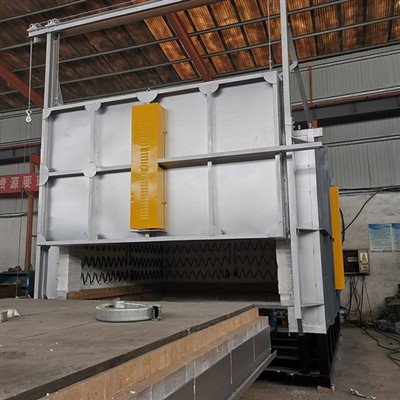
If you’re tired of dealing with stress-related part failures, high scrap rates, and inconsistent results from your quenching process, I’m here to help. As a quenching furnace supplier, I don’t just sell equipment—I work with you to design a process that fits your parts, your production volume, and your quality goals. Whether you’re making small precision fasteners or large industrial gears, we can help you measure current quenching stress in your process, adjust your furnace settings to lower stress, or upgrade to a furnace that can handle your specific needs. We’ve worked with shops of all sizes, from small job shops with 10 employees to large OEMs with hundreds of parts running daily, and we can tailor a solution that works for you. Don’t let hidden quenching stress derail your next production run—reach out to us to talk through your challenges and find a way to make your quenching process more reliable, efficient, and cost-effective.
Quenching Furnace References
- Taus, K. (2015). Quenching: Basics, Materials, Processes. ASM International.
- Totten, G. E., & Bates, C. E. (2007). Handbook of Quenchants and Quenching Technology. ASM International.
- Lindahl, U., et al. (2019). Residual Stress Formation During Quenching of Steel Components. Journal of Materials Processing Technology, 271, 115-124.
- Ashby, M. F., & Jones, D. R. H. (2012). Engineering Materials 1: An Introduction to Properties, Applications, and Design. Butterworth-Heinemann.
Danyang Dingfeng Industrial Furnace Co., Ltd.
Danyang Dingfeng Industrial Furnace Co., Ltd. is one of the most experienced quenching furnace manufacturers and suppliers in China, also supports customized service with low price. Please feel free to wholesale high quality quenching furnace made in China here from our factory. For pricelist, contact us now.
Address: Lizhuang Economic Development Zone, Danyang City
E-mail: saleszk@dffurnace.com
WebSite: https://www.dffurnace.com/
