If you’ve ever worked with powder processing, from pharmaceuticals and food ingredients to industrial chemicals or metal alloys, you’ve probably run into the same common problem: too much moisture. Even a 1% deviation in moisture content can alter powder flow, cause caking, reduce shelf life, or mess up final product quality. A lot of people ask me, “Can drying machinery even be used for powders?” As a supplier who’s spent 18 years troubleshooting drying challenges with powder manufacturers, the answer isn’t a simple yes or no—it’s yes, but only when you match the right drying technology to your powder’s specific properties. Let me break this down, based on what I’ve seen work (and what doesn’t) across hundreds of client projects. Drying Machinery
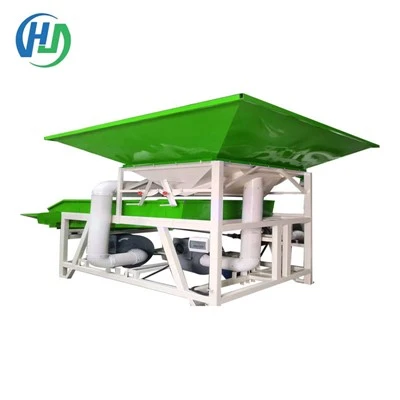
First, let’s start with why powders are tricky to dry, because that’s where a lot of mistakes happen. Powders have way more surface area than liquids or solids, which sounds like it should make drying easier, but it’s also a double-edged sword. Fine powders (like pharmaceutical API powders, for example) are prone to blowing away in airflow, sticking together when wet, or overheating if exposed to too much direct heat. Coarser powders, on the other hand, might have internal moisture trapped in larger particles that takes longer to remove, and they can be harder to mix evenly during drying, leading to inconsistent final moisture. Then there’s heat sensitivity: things like fruit powders, yeast, or certain ceramic precursors will degrade if exposed to high temperatures, so traditional oven drying (which is just too slow and too hot for many powders) is out of the question. That’s why generic drying equipment won’t cut it—you need machinery designed specifically to handle powder’s unique characteristics.
Let’s talk about the technologies that actually work for powders, because I get calls every week from people who bought a standard rotary dryer or oven and it’s ruining their product. The first one I always recommend for most powder applications is the fluidized bed dryer, or FBD. Here’s how it works: you blow a stream of heated air through a perforated bed of powder, which suspends the particles like a fluid. This means every single powder particle is exposed to uniform, controlled heat, no hotspots, no over-drying, and the flow means you don’t get the clumping that plagues static drying. Last year, a client who made instant cocoa powder came to me saying their old oven dryer was causing the cocoa to turn bitter and form clumps that wouldn’t dissolve in milk. We installed a batch-scale fluidized bed dryer, and within two weeks, their moisture consistency went from ±0.8% to ±0.2%, and they cut drying time in half. The only catch with FBDs: they work best for powders between 10 microns and 3 millimeters. If your powder is finer than that (like a pharmaceutical nanopowder), the airflow will blow it out of the dryer, so you’ll need an adjustment, like a cyclone collector to recapture fine particles. That’s a small tweak, but it makes all the difference.
Another technology we see great results with is vacuum tray dryer, which is perfect for heat-sensitive powders. Unlike FBDs that use atmospheric heat, vacuum tray dryers operate under low pressure, so water evaporates at a much lower temperature—usually between 40°C and 80°C, depending on the model. I worked with a herbal supplement manufacturer a couple years back who was drying organic aloe vera powder; their old FBD was burning the active compounds, making their product less potent. We swapped in a small-scale vacuum tray dryer, and they kept 98% of the aloe’s bioactive properties, while getting their moisture down to 3% (the required spec) without any clumping. The downside here is that it’s a slower process, so it’s better for batches rather than continuous high-volume production. If you’re making metal powder for 3D printing, a continuous vacuum belt dryer might be the sweet spot—it feeds a thin layer of powder on a moving belt through a series of heated, low-pressure zones, so you get consistency even at high output. A metal powder client I work with uses a continuous belt dryer to dry aluminum powder for aerospace components, and they’ve seen zero contamination issues (a big risk with metal powders) because the closed system keeps out oxygen, which prevents oxidation.
Wait, but what about freeze drying? I know a lot of people confuse freeze drying with other drying methods, and yes, it can work for powders, but it’s only for super high-value products. If you’re drying a specialty enzyme powder or a space-exploration-grade chemical, freeze drying keeps moisture removal without damaging the powder’s structure, but it’s way more expensive than the other options I mentioned. I rarely push freeze drying for standard industrial powders, because the energy costs are 3-4 times higher than FBDs, unless the client absolutely needs to preserve 100% of their product’s properties.
Now, let’s talk about the mistakes I see clients make when they try to use drying machinery for powders. The biggest one is skipping a powder property test. Every powder is different—even two batches of the same ingredient can have slight variations in particle size, density, or moisture content, which changes how it dries. Last year, a small chemical manufacturer bought a fluidized bed dryer without testing their polyvinyl chloride (PVC) powder first; their powder was coarser than standard, so the airflow wasn’t suspending it evenly, leading to a batch that was 1.2% moisture in the top layer and 0.4% in the bottom. We adjusted the perforated plate of their FBD to create a more uniform airflow, and it fixed the issue, but they wasted two weeks of production because they didn’t test the powder before buying the machine. Another common mistake is not accounting for material loss. Fine powders can carry over in the exhaust of a dryer, which is a problem for two reasons: lost product means wasted money, and if you’re working with hazardous materials (like pharmaceutical APIs or heavy metal powders), that carryover is a safety risk. That’s why all our powder-specific dryers come with integrated cyclones or bag filters to recapture 99.5% of fine particles—something standard dryers don’t have.
Is there any case where drying machinery can’t be used for powders? Almost never, but you have to be careful with very fine, nano-sized powders (below 1 micron). Those are so light that even low airflow will blow them away, and they’re prone to agglomerating into hard clumps if exposed to too much heat. For those, we use a vacuum cone dryer, which tumbles the powder slowly under vacuum, so the particles mix without being suspended in air. It’s a slower process, but it works for nano powders because there’s no forced airflow. We also have a partner who works with graphene nanopowder, and they use a modified vacuum cone dryer to dry it without losing any of the material’s structural integrity.
Another thing to consider: regulatory compliance. If you’re drying food, pharmaceutical, or cosmetic powders, your drying machinery has to meet strict hygiene standards. Our powder dryers for the food industry have smooth, easy-to-clean stainless steel surfaces with no crevices where powder can get trapped, which is required by the FDA and EFSA. A pharmaceutical client I work with recently audited their drying equipment and switched to our FBDs because their old dryer had too many hard-to-clean parts that were failing sanitary standards. That’s a big point—any drying machinery for powders, especially for consumer-facing products, can’t have areas that harbor bacteria or contaminants.
Let me also touch on process control, because that’s what makes the difference between a good drying machine and a great one. A lot of older drying machines have manual controls, which works for simple products but not for powders. If you’re drying a batch of baby formula powder, you need to track moisture content in real time, adjust airflow and temperature automatically, and stop the process the second you hit the target spec. We install real-time moisture sensors on all our powder dryers, so the machine adjusts itself as the batch progresses. A client making infant formula told me that before they had our FBD with automated controls, they had to test each batch manually, which took an hour every time, and sometimes they over-dried the formula, making it gritty. Now their drying time is down to 20 minutes, and batch consistency is at 99.8% compliance with FDA standards.
If you’re still wondering, “Can drying machinery be used for drying powders?” the answer is a resounding yes—but only if you choose the right type, tailored to your powder’s properties. The wrong machine will waste time, money, and product, but the right one will cut production time, reduce waste, and improve your final product quality. Over the years, I’ve seen clients go from 5% product loss with a generic oven to less than 0.5% with a powder-specific dryer, just by making that match.
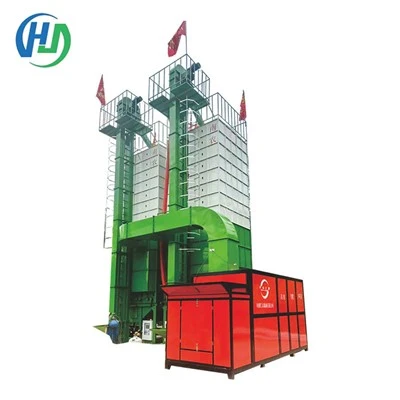
If you’re currently dealing with caking, inconsistent moisture, over-drying, or product loss in your powder drying process, I can help. Every client’s powder is unique, so we offer free, no-obligation testing of your material in our in-house lab to match you with the right drying machinery. Reach out to our team to discuss your specific powder needs, and we’ll walk through options, process specs, and solutions tailored to your operation.
Flour Processing Equipment References
- ASTM International. (2021). Standard Guide for Drying of Particulate Materials. ASTM E1075-21.
- Strumillo, C., & Kudra, T. (2014). Drying: Principles, Applications, and Design. CRC Press.
- Food and Drug Administration. (2022). Guideline on Design, Control, and Validation of Drying Processes for Pharmaceutical Solids.
- Mujumdar, A. S. (2015). Handbook of Industrial Drying (4th ed.). CRC Press.
Henan Huinong Machinery Co., Ltd.
Henan Huinong Machinery Co., Ltd. is one of the most professional drying machinery manufacturers and suppliers in China, featured by quality products and low price. Please rest assured to buy discount drying machinery from our factory. We also accept customized orders.
Address: No. 6, Northeast Corner of the Intersection of Renmin Road and Zhujiang Road, New District, Huaxian County, Henan Province
E-mail: frank.tang@huinongmachinery.com
WebSite: https://www.huinongmachinery.com/
