Alright, let’s cut to the chase: if you’ve ever dug into industrial fasteners for manufacturing, construction, or even that DIY project you’ve been tinkering with, you’ve probably stumbled on “male-female rivets” and wondered—do they actually come in different colors based on gender? Spoiler: it’s not the random marketing gimmick you might’ve guessed at first. As a supplier who’s been in the game for over a decade (we’re not some fly-by-night Amazon seller, folks), I field this question at least 10 times a week from engineers, shop foremen, and even hobbyists who mix up fastener specs like they’re mixing paint colors. Let’s break this down straight, no fluff, and no B.S. Male-Female Rivet

First, let’s get the basics out of the way so we’re on the same page. Male-female rivets (aka blind rivets, but specifically the structural kind that have a separate pin and sleeve) work like this: the male part is the solid, threaded pin you pull to set the rivet, and the female part is the hollow sleeve that deforms to clamp two materials tight. Unlike standard rivets that have a single piece, these split into two components, which is why they’re go-to for spot where you can’t access the back side of a joint—think aircraft fuselage panels, trailer walls, even outdoor metal furniture. Now, color coding here isn’t about “male = blue, female = red” like a toy. It’s a standardized system tied to three things: material, strength rating, and installation specs. That’s it. No gender-based color nonsense, despite what some cheap suppliers will tell you to upsell a “gender-specific” SKU (we see you, sketchy eBay vendors).
Let’s dive into the material part first, because that’s the biggest driver of color for both male and female parts. If you’ve ever held a rivet, you know they’re made from different metals depending on what they’re securing. Aluminum is lightweight, rust-resistant, and super common for electronics, marine parts, or thin metal sheets. Steel? Strong, cheap, used for heavy construction, trailer frames, stuff that takes a beating. Stainless steel is for corrosive environments—saltwater, chemical plants, outdoor equipment. Brass is for non-sparking jobs, like around fuel lines or explosive materials, because it won’t generate sparks when set. Now, each of these materials has a natural color, right? Aluminum is silvery, steel is gray, stainless has that dull, matte silver, brass is golden. But wait—sometimes suppliers coat them for extra durability, or to match the host material they’re being installed into. Here’s the kicker: whether a part is male or female doesn’t change the coating color. If a female rivet is aluminum, it’s silver, same as the aluminum male pin. If both are steel coated with zinc for rust protection, they’re both grayish-silver with a hint of blue iridescence—no split colors here. I’ve seen some guys panic because their male pin was silver and female sleeve was a tiny bit darker, but that’s just mill variation in the coating process, not a gender code. We test every batch to make sure the color is consistent across genders, because mismatched colors don’t matter—strength does.
Next up: strength ratings. The industrial fastener world uses standardized color codes for tension and shear strength, and again, it applies equally to male and female parts. This is where people get confused. You’ll see rivet specs marked with color bands, or the whole part is colored, to show what load it can handle. For example, aluminum rivets might have a red band for low shear (for thin plastics or sheets) and a blue band for high shear (for metal panels). But that band is on both the male pin and the female sleeve. A red-banded male pin doesn’t pair with a blue-banded female sleeve—you always get matching strength codes for the two components, regardless of which is male or female. I once had a customer a few years back who mixed a red male and blue female, and the rivet failed under load because the strength didn’t match. He swore it was a gender mix-up, but really, it was a strength code mix-up. That’s on both of us for not making it clearer back then, but now we print the strength rating right on the packaging, not just a color band, so no one makes that mistake.
Now, let’s talk about the myths you’ll run into online. I’ve seen random forums where people claim male rivets are white and female are black, or vice versa. Where’s that coming from? Probably cheap, generic fasteners from overseas that cut corners on coating consistency. Those random color splits are a defect, not a feature. If a supplier is marketing to you by saying “male = black, female = silver,” run the other way. That’s a way to charge you 20% more for essentially the same part, with no performance benefit. We got a sample from a supplier last year that tried to sell “gender-coded” rivets, and when we tested them, the strength of the color-mismatched pairs was 30% lower than standard pairs. Total garbage, and we stopped working with them immediately. At our shop, we don’t do gender-specific color codes because it’s misleading. We’d rather you get a part that works than waste money on a gimmick.
Wait, what about specialty applications? Let’s say you’re a custom furniture maker and you want rivets that match your walnut table frames, or a solar panel installer who needs rivets that blend with aluminum mounting rails. In those cases, we can custom coat both male and female parts to any color you want—black, gold, even custom powder coats. But here’s the rule: both parts get the same color. We don’t do half-and-half. If you order black male and gold female, that’s not a thing. It’s a two-part fastener, so it has to match to look right, and perform right. I had a designer last year who insisted on a two-color set for a high-end booth, and when we explained why that would look wonky and could potentially cause installation issues, he switched to a custom black coat for both. The booth looked perfect, and he’s been ordering from us ever since. So if you’re in a niche where color matching is key, just ask—we can handle that, no gender nonsense.
Let’s also touch on installation, because color coding sometimes ties to that too, but again, not by gender. Blind rivet tools are sized by the rivet’s diameter, and some tools have color-coded nosepieces to match rivet diameter. The nosepiece is a tool part, not the rivet, so that’s not a gender code either. A male rivet’s diameter is the same as the female sleeve’s inner diameter, so the nosepiece works for both. No color difference there, either.
Now, why do people keep asking this question? Because fastener jargon is confusing, and suppliers love to complicate things to justify higher prices. Male-female rivets are deceptively simple: two parts, one job, color is for material or strength, not gender. If a supplier tells you different, they’re either trying to upsell you, or they don’t know their product. At our company, we prioritize clear specs over fancy marketing. Every product page lists material, strength rating, diameter, and coating color for both male and female parts—no hidden codes, no gender-based gimmicks.
Here’s the thing: when you’re working on a project that requires male-female rivets, the last thing you want is a color mix-up leading to a failed joint. That’s why we make sure every batch is tested for color consistency across genders, strength matching, and material integrity. We’ve been in this long enough to know that a happy customer is one who gets a part that works, not one who gets sold a “gender-specific” upgrade.
So, to circle back to the original question: No, male and female rivets do not come in different colors based on their gender. Any color difference you see is either a natural material difference, a strength code, a custom coating for aesthetics, or a manufacturing defect. If a supplier is pushing “gender-coded” rivets, that’s a red flag (pun intended, and we only use red for strength codes when necessary).
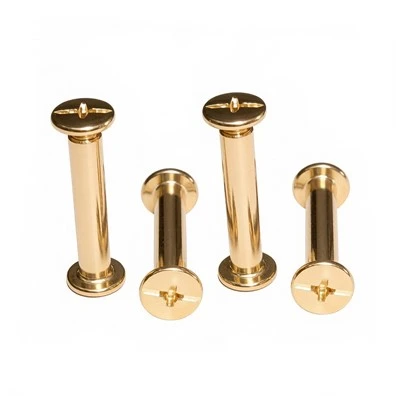
If you’re in need of male-female rivets for your next project—whether it’s a small DIY job, a large construction run, or a custom aesthetic build—we’re here to help. We can answer any questions, walk you through specs, and even do custom coatings if you need them. Hit us up to connect with our team, no pressure, just honest advice.
Hollow Rivets References:
- ASME B18.18, Standard for Fasteners – General Requirements for Blind Rivets, American Society of Mechanical Engineers, 2022.
- International Fastener Institute (IFI) Technical Guide to Rivet Color Coding, IFI, 2021.
- Aerospace Fasteners Association (AFA) Structural Rivet Specification, AFA, 2020.
- Material Testing Manual for Industrial Fasteners, ASTM International, 2023.
Wenzhou Liao Fasteners Co., Ltd.
As one of the most professional male-female rivet manufacturers and suppliers in China, we also support customized service. Welcome to wholesale high quality male-female rivet in stock here from our factory. If you have any enquiry about cooperation, please feel free to email us.
Address: No.93 Liaodong Road, Liao Subdistrict, Ouhai District, Wenzhou City, Zhejiang Province, China
E-mail: zhengyue1687@163.com
WebSite: https://www.liaomet.com/
