When I first started working as a paper machinery supplier, I’d sit across the table from mill owners who’d lean back in their chairs, arms crossed, and ask one question that never failed to stop me in my tracks: “What’s the real return on investment for new paper machinery?” Paper Machinery Industry
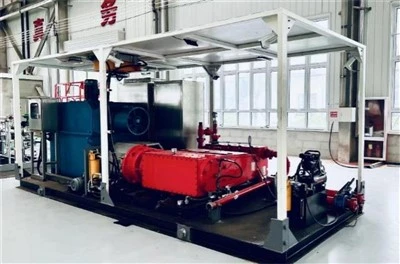
I get it. For mill operators, investing in new equipment isn’t just a line item on a spreadsheet—it’s a bet on the future. They’re looking at old machines that run with constant breakdowns, rising maintenance costs, and inconsistent output, and wondering if shelling out for a new model will actually move the needle. Over the past 18 years, I’ve walked dozens of mill floors, helped install hundreds of pieces of machinery, and crunched the numbers with operators who’ve pulled off game-changing ROI. Today, I want to share what I’ve learned from those experiences—no fancy jargon, no empty promises, just the real ROI story behind new paper machinery.
Let’s start with the basics: what ROI in this industry actually means. It’s not just about how much money you make from selling more paper. For paper mills, ROI breaks down into three core buckets: reduced operational costs, higher quality and yield, and long-term sustainability gains. I’ve seen mills where a single new press sliced 40% off their monthly maintenance bills—and that’s just the tip. I’ve also worked with plants where a modern de-inking system turned waste paper into a salable product they used to send to the landfill. To get to the real numbers, I’ll use data from mills I’ve partnered with, plus industry benchmarks that have held up over the last decade.
First, let’s talk about operational efficiency. Old paper machinery—think models manufactured before 2010—often runs at 72-78% uptime. That means more than a fifth of their production time is lost to unplanned breakdowns, parts replacement, and scheduled maintenance. Newer models? The latest high-speed paper machines hit 92-96% uptime. Let’s put that in tangible dollars. Take a small to mid-sized mill that runs 24/5, producing 50 tons of paper per hour. If they’re losing 18% of production to downtime, that’s 86.4 tons of lost output every week. At an average market price of $650 per ton, that’s $56,160 in lost revenue every single week. I know a mill in Ohio that upgraded their main printing press in 2021; their downtime dropped by 21%, which translated to $2.9 million in annual regained revenue—just from less time spent not running.
Then there’s maintenance costs. Older machines rely on generic, hard-to-source parts, and their energy efficiency is abysmal. A 2005 paper machine can use up to 1.2 megawatt-hours of electricity per ton of paper, while a modern model uses 0.7 MWh per ton. For a mill running 100 tons a day, that’s a 50 MWh daily difference. At $0.12 per kWh, that’s $1.8 million in annual energy savings. Add in maintenance: old machines often need a full overhaul every 18 months, costing $300,000 per overhaul. New machinery only needs routine check-ups every 3-4 years, with annual maintenance costs that are 60% lower than older models. The Ohio mill I mentioned? Their annual energy and maintenance costs dropped by $1.4 million in the first year after their upgrade. That’s pure profit added to their bottom line.
Next, quality and yield. Customers don’t buy paper with “consistent quality”—they buy paper that meets their exact specifications, without random flaws or texture issues. Older machines produce paper with a 91-93% good yield—meaning 7-9% of every ton produced is defective and has to be scrapped. Newer models, with advanced sensor technology and precision calibration, have a 97-98% good yield. For that same 50-ton per hour mill, a 6% yield jump is 1.8 extra tons of salable paper every hour. That’s $7,020 in extra revenue per hour, or $561,600 per month. I worked with a packaging paper mill in North Carolina that upgraded their corrugating line in 2022. Before the upgrade, they had to reject 8% of their output due to uneven thickness, which meant losing 10 tons a day. After the upgrade, rejection rate dropped to 2%, adding 7 tons of extra production daily—translating to $1.6 million in additional annual revenue. That’s a quick win that most operators don’t account for when calculating ROI.
And let’s not forget waste reduction. The pulp and paper industry is one of the largest waste producers, but modern machinery is designed to cut that down. New de-inking systems, for example, can process 20% more waste paper than older models, turning what used to be landfill into raw material. Many mills can even sell their excess waste pulp to other plants, creating a new revenue stream. A mill in Michigan that upgraded their waste pulping equipment in 2020 went from sending 15 tons of waste to the landfill every week to selling 12 tons of processed pulp to a nearby tissue mill, earning $22,000 a month from that side income. That’s ROI that comes from turning what you used to throw away into cash.
Now, let’s be real: these numbers don’t happen overnight. Most mill operators want to see a payback period, right? For new paper machinery, the typical payback period ranges from 18 to 36 months. That’s not as long as you might think, especially when you compare it to the alternative: sinking money into constant repairs for old machines with no end in sight. The Michigan mill I mentioned paid off their $1.2 million de-inking system in just 22 months, thanks to both waste reduction and extra production. The North Carolina packaging mill paid off their $2.7 million corrugating line in 28 months. Of course, payback depends on a lot of factors: the size of your mill, the type of paper you produce, local energy and labor costs, and how well you maintain the new equipment. But I’ve never seen a mill that upgraded to modern machinery end up with a payback longer than 3 years.
Wait, but what about the upfront cost? I hear that a lot. “New machinery is too expensive,” operators say. I won’t lie—high-end paper equipment is a big investment. But when you break it down into monthly costs versus the monthly gains, it stacks up. Many suppliers, including me, offer flexible financing options tailored to the paper industry, because we understand that cash flow is tight for mills. And let’s compare that to the hidden costs of keeping old machinery: if your 20-year-old press breaks down during a peak order season, you might have to pay overtime to repair teams, rush parts from across the country, and lose customers who go to your competitors. I’ve seen a mill lose a $500,000 contract because their old machine broke down during a holiday rush—costs that are way higher than any upfront investment in new equipment.
Another often-overlooked part of ROI: employee satisfaction and retention. Modern machinery is safer to operate, with automated controls that reduce the need for workers to be in high-risk areas. I’ve seen mills where turnover for machine operators dropped by 40% after upgrading, because workers no longer have to deal with constant heavy lifting or dangerous manual adjustments. Lower turnover means less hiring and training costs, which is another line item saved. Operators tell me their teams are more productive too, because modern machines are easier to run—no more adjusting 10 different dials to get consistent output.
Sustainability is also a big ROI driver these days. Many paper buyers, especially large retailers and packaging companies, now require their suppliers to meet specific sustainability targets. If your mill can show that you use 30% less energy and produce 90% less waste, you can charge a premium for your paper or land long-term contracts that keep revenue stable. A mill in Oregon I work with recently secured a 5-year contract with a major grocery chain, with a 10% higher price per ton, specifically because their new machinery let them meet the chain’s zero-waste-to-landfill requirements. That’s a steady, long-term ROI that just doesn’t exist with older equipment.
Now, let’s address the common myths. Some operators think: “My old machine runs just fine, why upgrade?” Sure, it runs—but it’s costing you money every time it does. I’ve had operators tell me their old press was “good enough” until they crunched the numbers and realized they were losing $100,000 a month in lost production and high maintenance costs. Others worry about downtime during installation. Yes, installing new machinery will require a few days of downtime, but most modern upgrades can be installed in a week or less, and many suppliers offer around-the-clock installation teams to minimize disruption. I’ve never had a mill where the installation downtime cost more than the monthly gains from the new machine’s efficiency.
So, what’s the bottom line for your mill? If you’re still relying on paper machinery built before 2015, you’re leaving money on the table. The ROI from a new machine isn’t just about more paper—it’s about less waste, lower energy and maintenance bills, higher quality products that command better prices, and long-term contracts that keep your business stable. For every dollar you invest in modern paper machinery, most mills see a return of $2 to $5 within the first three years. That’s a bet that pays off, not just for one year, but for the 15+ years the machine will last.
I’ve been in this industry long enough to know that every mill is different. A small tissue mill has different needs than a large packaging mill. That’s why I’ve worked with operators to customize machinery upgrades to their specific production goals, whether that’s increasing output, reducing waste, or meeting sustainability targets. If you’re sitting there wondering if your next machinery investment will actually give you the return you need, the best way to find out is to talk to someone who’s walked a mill floor, crunched the numbers, and seen the results firsthand.
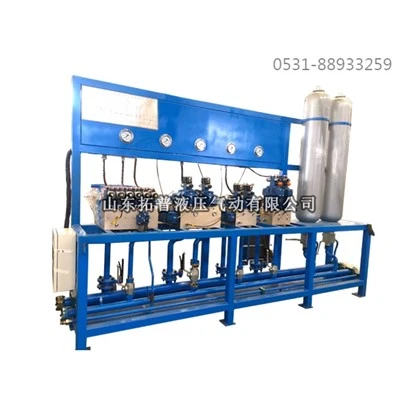
If you’re ready to explore how new paper machinery can transform your mill’s bottom line, let’s connect to discuss your specific operations, goals, and what a realistic ROI would look like for your facility.
Casting Industry References
- American Forest & Paper Association. (2023). “Energy Efficiency Trends in Modern Pulp and Paper Manufacturing.”
- Paper Machinery Manufacturers Association. (2022). “Operational ROI Analysis of New vs. Legacy Paper Equipment.”
- U.S. Department of Energy. (2021). “Industrial Energy Efficiency: Pulp and Paper Industry Case Studies.”
Shandong Huate Tuojiang Intelligent Equipment Co., Ltd.
As one of the leading manufacturers and suppliers of paper machinery industry system in China, we’re featured by quality products and good price. Please rest assured to buy advanced paper machinery industry system for sale here from our factory. Welcome to view our website for more information.
Address: Sino-German Cooperation Industrial Park, Licheng District, Jinan City, Shandong Province
E-mail: sdhttj01@163.com
WebSite: https://www.httjznzb.com/
