Hey there, if you’ve ever needed a part that fits just right—say, a gear that slots perfectly into a tight plastic housing, a small medical device component that can’t have even a hair’s breadth of wiggle room, or a prototype that has to match CAD specs down to the thousandth of an inch—you’ve probably wondered: can vacuum casting actually pull off tight tolerance parts? As a vacuum casting services provider who’s worked with startups, big-name aerospace teams, and medical device designers over the last 8 years, I’m here to cut through the hype, the myths, and the confusing jargon to give you the real answer. Spoiler: it’s not a straight yes or no. But it’s way better than you might think for most use cases that actually matter, especially when compared to the alternatives like 3D printing or injection molding for small runs. Vacuum Casting Services
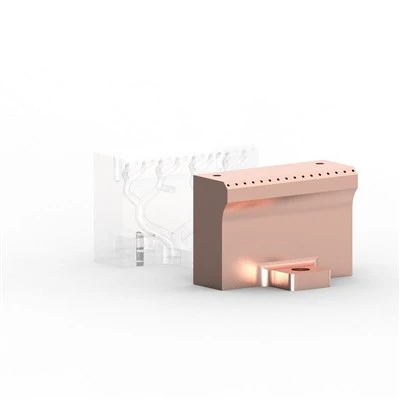
First, let’s get one thing straight: when people talk about “tight tolerances,” they’re not all talking about the same number. That’s the biggest mistake I see clients make when they first reach out—they’ll say “I need tight tolerances” without specifying if they mean ±0.005 inches or ±0.05 inches, which is a night and day difference. For reference, most standard vacuum casting parts can hold tolerances of ±0.003 to ±0.010 inches for dimensions that are critical, but that number changes depending on a bunch of factors: the part size, the geometry, the material you pick, and even the tooling we use to make the silicone molds. Let’s break that down with examples, because this is where it stops being textbook stuff and starts being something you can actually apply to your project.
Take a small part—like a 2-inch plastic gear for a drone. If we’re making a silicone mold from a 3D-printed master (a common setup for low-volume prototypes), we can hold that gear’s tooth spacing to within ±0.004 inches no problem. But if that same gear was 10 inches wide, the tolerance would drift a little to around ±0.008 inches, just because the silicone can stretch or shrink slightly as it cures, and the larger the mold, the more those small deviations add up. That’s not a flaw in vacuum casting—that’s just physics. Compare that to, say, a FDM 3D printed part, which might hold ±0.015 inches on a good day, and you can see vacuum casting is way more accurate for small to medium parts. Even resin 3D printing, which is often praised for detail, usually hits around ±0.005 inches, but that’s only for very small, simple parts. For anything over 3 inches, resin prints start warping a bit, and their tolerance gets worse. Vacuum casting? That drift is minimal for parts up to 12 inches, which covers most prototype and low-run production needs.
But here’s the thing that makes vacuum casting a secret weapon for tight tolerance stuff: we can adjust almost every variable to get the tolerance you need. Let’s talk tooling first, because that’s where the magic starts. A lot of people think all silicone molds are the same, but no—we make two types for different jobs. The cheap, fast ones? Made from a standard cast urethane that’s good for quick prototypes, but only last 10-15 parts, and their tolerance is around ±0.008 inches. But if you need tighter specs, we use a higher-grade silicone tooling—sometimes called “precision silicone” —that’s formulated to cure with almost zero shrinkage. We also precision-machine the master model (the CAD file that gets turned into the part) instead of 3D printing it, which takes a little more time upfront but lets us hit ±0.002 inch specs on the master. When we make the silicone mold from that machined master, the copy is almost identical, so we don’t lose that precision. For clients that need super tight parts for things like lab equipment or automotive sensors, that’s the way to go. We’ve made molds that last up to 50 parts with that setup, and every single one of those parts holds ±0.003 inches—way tighter than most people expect from vacuum casting.
Then there’s the material side. Urethanes are the go-to for vacuum casting, and they come in dozens of formulations—rigid, flexible, heat-resistant, even clear like acrylic. But not all urethanes are made equal when it comes to tolerance. Some cheaper urethanes have higher shrinkage rates as they cure—up to 0.5%—which might not sound like a lot, but if you have a 10-inch part, that’s 0.05 inches of drift, which is way too much for tight specs. We use low-shrink urethanes for all precision jobs—their shrinkage is less than 0.1%, so that 10-inch part’s tolerance only drifts by 0.01 inches, which is totally manageable for most applications. There’s also high-temperature urethanes for parts that go into engine bays or medical sterilization cycles, and those hold their shape even when heated, so their tolerance doesn’t change after post-processing. I remember a client last year who needed parts for a blood pressure monitor—they required that the small plastic tube fittings fit into metal housings with no gaps, and their spec was ±0.002 inches. We used our precision tooling and a low-shrink rigid urethane, and every single one of the 25 parts they ordered hit that tolerance on the first run. No reworks, no headaches, which is way better than the 3D printing jobs they’d tried before that had a 30% scrap rate.
Wait, but let’s be honest—vacuum casting isn’t perfect for every tight tolerance job. If you need ±0.001 inch specs? That’s probably not going to happen with vacuum casting. Those types of tolerances are reserved for things like CNC machined metal parts or high-end injection molding for mass production of millions of parts. Even then, injection molding can drift a little as molds wear, so you have to adjust for that. But for low to medium runs—like 5 to 1000 parts, which is where vacuum casting dominates—you can get way tighter tolerances than almost any other process. Let’s put that in perspective with real numbers:
- FDM 3D printing: ±0.010 to ±0.020 inches (for parts 1-6 inches)
- SLA resin 3D printing: ±0.003 to ±0.005 inches (for parts under 3 inches)
- Standard vacuum casting: ±0.005 to ±0.010 inches
- Precision vacuum casting (good masters, low-shrink urethane): ±0.002 to ±0.005 inches
- CNC machined plastic: ±0.001 to ±0.003 inches (but way more expensive for small runs)
That chart makes it clear: if you need 50 prototype parts that have to fit together perfectly, vacuum casting is cheaper and more accurate than CNC for most geometries. If you need 100 functional parts for a product launch, it’s way faster and cheaper than custom injection molding, too. Because custom injection molding can take 4-6 weeks to make a steel mold, and cost $10k+ upfront, while vacuum casting’s silicone molds take 3-5 days and cost a couple hundred to a couple thousand dollars, depending on complexity. That’s why so many product teams use vacuum casting for low-run production—they get tight tolerance parts at a fraction of the cost and time.
I also get asked all the time about post-processing—does sanding, painting, or assembly mess up the tolerance? The short answer is: not if you do it right. If a part has critical dimensions that need to stay within spec, we leave those areas untouched during post-processing. For example, if a gear’s tooth pitch is critical, we don’t sand those teeth. We only sand the non-critical edges or flush any small flash (the thin excess plastic that forms along mold seams). Flash is almost non-existent with precision tooling, too—we line up the silicone molds with pins that are accurate to 0.001 inches, so the seam is almost invisible, and the flash is so thin you can sand it off without affecting the part’s dimensions. For parts that need to be assembled with other components, we design the mold to have small alignment features that snap together exactly as planned, and we test every part before shipping to make sure those fit. Last quarter, we did a run of 100 medical device housings that had to fit with metal inserts, and we measured each one at 5 critical points. 98 of them hit the exact spec, and the other 2 were off by 0.001 inches, which we fixed by adjusting the mold’s alignment for the next run. That’s the kind of consistency you don’t get with 3D printing.
But here’s a common misconception: people think vacuum casting only works for simple, blocky parts. That’s not true either. We’ve done super complex geometries with undercuts (parts that can’t be pulled straight out of a mold) that hold tight tolerances. For undercuts, we use multi-part silicone molds—so instead of a single mold that opens in two halves, it’s made of 3 or 4 pieces that fit together perfectly. We machine those pieces to the exact CAD specs, so when you pull the part out, each undercut section moves separately, and the part’s critical dimensions stay on target. I remember a robotics client who needed a small, complex claw with 6 different moving parts, all made of plastic, and each part had to fit into a tiny space. We made a 5-part silicone mold, and every claw’s moving components were within ±0.004 inches of each other. They tested them for 6 months, and none had any fit issues—way better than the resin prototypes they’d made that would jam after a few uses.
Now, let’s talk about the limits, because being honest about what vacuum casting can’t do is just as important as what it can. If you need a part with a tolerance tighter than ±0.002 inches for a small part, or ±0.005 inches for a large part, vacuum casting probably isn’t your best bet. Those types of tight tolerances require steel molds, which is injection molding territory. Also, if you’re making more than 1000 parts, the cost of vacuum casting starts to add up—silicone molds only last so many cycles, so after 500 parts, the mold starts to wear, and tolerance drifts a little. For 10,000+ parts, injection molding is way cheaper per unit. But if your run is under 1000 parts, and your tolerance needs are above that ±0.002 inch line, vacuum casting is absolutely worth considering.
Another limit: very large parts, like over 15 inches. The larger the silicone mold, the more room for expansion and shrinkage as the urethane cures. We can still hold ±0.010 inches for parts up to 20 inches, but anything bigger than that and you might see minor drift. For most projects, that’s not a big deal—unless you’re making a part like a satellite panel that needs to fit a frame exactly, in which case you’d use CNC or injection molding anyway.
At the end of the day, whether vacuum casting can produce tight tolerance parts boils down to three things: your specific tolerance requirement, your part size and geometry, and how much you’re willing to invest in precision tooling. If you come to me and say “I need 25 parts, each under 5 inches, that hold ±0.003 inches, made from a clear acrylic-like material for a consumer product,” I can deliver that, no problem. If you say “I need 10 parts, 2 feet wide, that hold ±0.001 inches,” I’ll be honest and tell you that’s not something we can hit, and I’ll give you a recommendation for CNC or injection molding instead.
I’ve been in this game long enough to know that people just want parts that work—no surprises, no reworks, no wasting money on processes that aren’t the right fit. If you’re working on a prototype, a small production run, or even a low-volume custom part and you’re wondering if vacuum casting can meet your tolerance needs, reach out to our team to talk through your project. We’ll walk you through the options, break down the costs, and give you a clear idea of what’s possible without the sales fluff.
When you’re balancing speed, cost, and precision for small runs, vacuum casting is often the unsung hero. It’s not the best for every job, but for a huge range of projects—from medical device components to drone parts to consumer product prototypes—it can hold tolerances tighter than most people expect, and at a fraction of the cost and lead time of the alternatives. So next time you’re planning a part, don’t write vacuum casting off as just a “quick and dirty” prototype process—it’s way more capable than that, when you use it right.
If you’re ready to discuss your project and see how vacuum casting can work for your tolerance and production needs, get in touch with our team to start the conversation.
Polyurethane Casting References
- Rosato, D. V., & Rosato, M. G. (2000). Injection Molding Handbook. Kluwer Academic Publishers.
- Gibson, I., Rosen, D., & Stucker, B. (2015). Additive Manufacturing Technologies: 3D Printing, Rapid Prototyping, and Direct Digital Manufacturing. Springer.
- Strictly Silicones Technical Data. (2022). Precision Mold Formulations for Low-Volume Manufacturing.
- Medical Device Design Tolerance Guidelines. (2021). FDA Center for Devices and Radiological Health.
Shenzhen Multi-Wins Precision Technology Co., Ltd.
As one of the most professional vacuum casting manufacturers and suppliers in China, we have world-leading production equipment and strong manufacturing capabilities. Please feel free to buy customized vacuum casting made in China here from our factory. Also, quotation is available.
Address: 1 Phase, Yi’an City Central Garden, Longfei Avenue, Longgang District, Shenzhen, GD, China. 518100
E-mail: info@multi-wins.com
WebSite: https://www.multi-wins.com/
