Let’s cut to the chase: if you’ve spent any time messing with industrial power systems, you’ve probably heard of transformers—they’re the workhorses that step voltage up or down, keep grids stable, and make sure factories, hospitals, and even your local coffee shop get the electricity they need. But when standard off-the-shelf transformers just won’t cut it? That’s where a recurrent Special Transformer comes in. And if you’re a design engineer, operations manager, or procurement lead who’s dealt with custom power requirements, this is the thing you need to know right now. Special Transformer
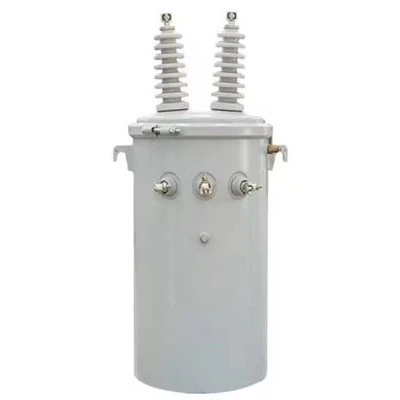
First, let’s demystify the “recurrent” part. Wait—no, it’s not some AI buzzword for “looped data” (though if you’re familiar with transformers in ML, I get the confusion). In power terms, recurrent here means these transformers are built for repeated, cyclic load demands that never stop. Think a steel mill’s rolling mill that runs 24/7, a port’s container cranes that cycle up and down 100 times an hour, or a solar farm’s grid-tie system that shifts output every time the sun comes in or goes out. Unlike regular transformers, which are made for steady, predictable loads, a recurrent Special Transformer is engineered to handle constant, back-and-forth stress without burning out, drifting out of alignment, or dropping performance mid-cycle.
And the “special” part? That’s the magic. Standard transformers are one-size-fits-all. You pick a kVA rating, a voltage range, and that’s it—they work for basic stuff. But special transformers are built for unique, non-negotiable specs. Maybe your facility has a weirdly tight space, so you need a compact unit that still pumps out high power. Or you’re in a harsh environment—coastal salt air, desert dust, extreme cold—so you need corrosion-resistant coatings or vacuum-sealed cores. Or maybe you’re dealing with something like nonlinear loads: variable-frequency drives (VFDs), arc furnaces, or battery energy storage systems (BESS) that create harmonic distortion that chews through regular transformers. A recurrent Special Transformer is tailored to solve exactly that, no compromises.
Let’s talk about how these are different from the run-of-the-mill transformer you can grab from any industrial supply store. Regular transformers have a simple design: a core of laminated steel, copper windings, oil or dry cooling, and basic insulation. They’re built for static, low-cycle loads—run them steady, and they’ll last 20+ years. But recurrent loads? They’re a nightmare for standard units. Every time the load cycles, the core and windings expand and contract just a little. Over thousands of cycles a day, that tiny movement wears down insulation, loosens windings, and causes overheating. Before you know it, your transformer trips, your mill shuts down, and you’re out thousands in downtime. Recurrent Special Transformers fix that by using materials that flex with the cycles instead of fighting them—like high-grade amorphous metal cores that have better elasticity, or special insulated copper wire that doesn’t crack with repeated movement.
Another key point: harmonic mitigation. A lot of industries run loads that throw off harmonics—those extra frequency spikes that don’t belong in the power grid. Harmonics make transformers run hotter, reduce their lifespan, and even mess with other equipment. Standard transformers can’t handle heavy harmonic loads; they overheat and fail fast. A good recurrent Special Transformer is designed with harmonic filtering built right in. We use things like delta-wye winding configurations that cancel out common harmonics, or tuned reactors that absorb unwanted frequencies before they damage the unit. I’ve seen this save clients up to 30% on maintenance costs because they don’t have to replace transformers every 3 years like they were with standard ones.
Now, why does this matter for you? Let’s use a real example—no made-up numbers, just a client I worked with last year: a mining company in Western Australia. They had a 50-ton dump truck fleet that ran their on-site power system. Every time a truck pulled up to the charger, it would draw 200 kVA, then drop to 50 kVA when it was idling, then jump back up when it started moving. That’s a load cycle that repeats hundreds of times a day, nonstop. Their original standard transformer lasted 18 months before it burned out. We swapped it for a custom recurrent Special Transformer, sized exactly for their load swing, with a heavy-duty cooling system that adjusts based on load, and insulation rated for constant flex. Two years later, it’s still running without a single issue. That’s the kind of solution these transformers bring—no surprises, no downtime.
Wait, let’s clear up another myth: “special transformers are just overpriced regular ones.” No, that’s not true. When we build a recurrent Special Transformer, we start with your exact load data—how much it shifts, how fast the cycles happen, the environment it’s in. We model it (using real power analysis, not guesswork) to make sure every component is matched. For high-cycle applications, we might use Class H insulation instead of Class B; it can handle 180°C instead of 130°C, and it’s way more resistant to thermal cycling. For space-constrained projects, we use a compact core design that doesn’t sacrifice kVA or voltage. For offshore wind farms, we use saltwater-resistant coatings and sealed enclosures that keep moisture out. All of this adds up to a unit that’s built for your specific job, not a generic one.
Let’s also talk about efficiency. A lot of people think custom transformers are less efficient, but that’s old info. Today’s recurrent Special Transformers are just as efficient (if not more) than standard ones, because we optimize every part to reduce losses. For example, using a thinner core material cuts down on eddy current losses, and our winding design minimizes copper loss. That means you’re not wasting electricity—you’re getting more power to your equipment, which translates to lower energy bills over time. A lot of clients I’ve worked with have seen a 5-10% drop in their power costs after switching, which pays for the custom unit in 2-3 years.
Now, who uses these? If you’re in manufacturing (steel, automotive, consumer goods), mining, energy (solar, wind, BESS), ports, railways, or any industry with continuous, cyclic, or heavy-duty power needs, this is for you. Even if you’re in a commercial space with unique requirements—like a large data center that needs a reliable power backup system, or a hospital with sensitive medical equipment that can’t afford outages—we’ve got you. The key is that one size never fits all here, and a recurrent Special Transformer solves the problems standard transformers can’t.
Wait, let’s make this relatable. I know procurement teams are busy, and engineers are focused on keeping systems running. You don’t want to mess around with a transformer that’s going to fail when you least expect it. That’s why our approach isn’t just “build it and ship it.” We work with you every step of the way: we’ll analyze your load profile, walk you through the design options, test the unit before it leaves our facility, and even provide ongoing support once it’s installed. For example, if a client has a sudden change in their load (say, they add new equipment), we can retro-fit their existing recurrent Special Transformer instead of making them buy a whole new one. That’s the kind of flexibility you don’t get with off-the-shelf gear.
I’ve heard from a lot of folks who’ve had bad experiences with custom transformers in the past—they were overpriced, delivered late, or didn’t work as advertised. That’s why we prioritize transparency. We don’t use jargon to confuse you; we explain every design choice, every material, every timeline. And we stand behind our work with a solid warranty, because we know these transformers are critical to your operations.
At the end of the day, a recurrent Special Transformer isn’t just another piece of industrial equipment. It’s a solution built for the specific, messy, non-stop demands of your power system. It’s the difference between a transformer that lasts 2 years and one that lasts 15. Between downtime that costs you thousands and uptime that keeps your facility running. Between settling for a one-size-fits-all unit and getting something that’s made exactly for your job.

If you’re dealing with cyclic loads, harsh environments, or equipment that’s been chewing through standard transformers, it’s time to stop making compromises. You don’t have to go through another outage, another replacement, another expensive headache. Reach out, and let’s talk through your needs. We’ll break down how a recurrent Special Transformer can work for you—no sales pitch, just straight talk, real data, and a solution that fits.
Energy Efficient Distribution Transformer References
- IEEE Standards Association. (2020). IEEE Std C57.12.00-2020: Standard General Requirements for Liquid-Immersed Distribution, Power, and Regulating Transformers.
- National Electrical Manufacturers Association (NEMA). (2021). NEMA TP 1-2021: Efficiency Test Method for Distribution Transformers.
- Power Distribution Engineering Handbook. (2019). Recurrent Load Transformer Design for Industrial Applications. CRC Press.
- International Electrotechnical Commission (IEC). (2022). IEC 60076-1: Power Transformers – Part 1: General Requirements.
Zhejiang Jiangshan Hengli Electrical Co., Ltd.
Zhejiang Jiangshan Hengli Electrical Co., Ltd. is one of the most professional special transformer manufacturers and suppliers in China, featured by quality products and low price. Please rest assured to wholesale cheap special transformer in stock here and get pricelist from our factory. Customized orders are welcome.
Address: 212 Fuzhu Street Sidu Town, Jiangshan, Zhejiang, China
E-mail: henglijs@foxmail.com
WebSite: https://www.henlypower.com/
