What’s up everyone, if you’ve ever worked with grey iron castings—whether you’re a machinist, engineer, or just someone who’s dealt with heavy, durable cast parts for machinery, automotive components, or even construction equipment—you know grey iron is kind of a workhorse. It’s got that signature graphite structure that makes it shock-absorbent, easy to machine, and way cheaper than a lot of other cast metals. But here’s the thing I see so many people (even some experienced folks) miss: the cooling rate when we pour molten grey iron into a mold is straight-up make-or-break for how the final casting turns out. As a grey iron casting supplier, I’ve spent years messing around with different cooling times, mold materials, and part designs, and let me tell you—this isn’t just some random casting trick. It’s science, but it’s science that actually matters for every part you order. Grey Iron Casting

Let’s start with the basics to keep this real, no stuffy textbook jargon that makes your eyes cross. Grey iron gets its name from the grey color of the fracture surface, right? That graphite is the key. Graphite forms when the molten iron cools, and how fast that cooling happens directly controls how that graphite grows—plus the iron’s matrix (the stuff around the graphite, mostly iron with other elements like silicon, manganese, carbon).
If you’ve got a thick part, say a large engine block core or a heavy gear housing, that’s gonna cool way slower than a thin, flat part like a pump flange or a small bracket. I see people all the time think “bigger part = longer cool time, duh,” but it’s more than that—how you set up the mold, what you use for the mold, even where you place the risers (those little extra metal chunks we add to molds to feed molten iron as it shrinks) changes the cooling rate. And that rate directly impacts three big things: graphite structure, tensile strength, and machinability—three things every customer cares about.
First, graphite structure. When cooling is super fast—like, if you pour molten iron into a thin sand mold with a lot of exposed surface, or use a metal mold (permanent mold casting) instead of sand—those graphite flakes don’t have time to grow long and thick. They turn into tiny, interlocking flakes, like little pieces of graphite scattered all through the iron. Wait, but hold on—too fast cooling can make graphite way smaller, even weird, non-flaky graphite called ledeburite? No, wait, let’s get that right. If cooling is extremely rapid (like quenching the casting in water right after pouring), you get what’s called white iron, where carbon forms cementite instead of graphite. That’s hard as nails, almost impossible to machine, and way too brittle for most uses. No one wants a grey iron part that’s actually white iron—we’ve had a customer come to us once with a part that was supposed to be grey iron for a tractor hitch, but their mold was metal and cooled way too fast, so it was cracking when they tightened the bolts. We re-made it with a sand mold that slowed the cooling down, and boom—no more cracks, perfect graphite structure.
On the flip side, if cooling is way too slow? Like a super thick part buried in a ton of sand, no proper ventilation, so it takes days to cool? Then the graphite flakes grow big, long, and straight. Those big flakes act like little stress raisers—meaning when you put the part under pressure or vibration, those flakes crack, and the whole part fails. I had another customer, a small construction company, who ordered a set of grey iron bucket links. They didn’t tell us the links were extra thick, so we set them in a mold that cooled over 72 hours (we usually do 48 max for that size). When they used them on a excavator, one link snapped in half under a small load. Turns out the big graphite flakes made the part way less strong than it should be. Now they work with us to adjust the mold’s venting and add small chill blocks (metal inserts in the mold to speed up cooling in thick spots) so the graphite stays small and uniform.
Now, tensile strength— that’s how much stress a part can take before breaking. Fast cooling gives smaller, more evenly distributed graphite flakes, so the matrix (the iron around them) is finer-grained too. Finer matrix = higher tensile strength. Slow cooling = big graphite flakes, coarse matrix = lower tensile strength. That’s why we have to match cooling rate to the part’s purpose. For engine cylinder heads, which need to handle high pressure and heat, we use a mix of sand mold and small chill blocks in the valve seats—speeds up cooling just enough to get high tensile strength, without going so fast we get white iron. For something like a small, non-structural bracket that just needs to hold a light part, we can let it cool a little slower, no need for chills, which saves time and money for the customer.
Then there’s machinability— this is huge for anyone doing post-casting machining, because no one wants to pay a ton to mill or drill a part that’s a pain to cut. Here’s the thing: the sweet spot for machinability isn’t too fast or too slow cooling. If cooling is perfect (not too fast, not too slow), the graphite flakes are a medium size, and the matrix is mostly ferrite and pearlite (those are the two iron matrix types—pearlite is harder, ferrite is softer). Medium graphite flakes break off easily when you machine the part, so your tool doesn’t wear out as fast, and you get a smooth finish. Too fast cooling? We get that ledeburite or super fine, hard graphite, which wears down drill bits and mills like crazy. We had a customer who was machining 50 grey iron parts a day, but when they switched to a cheaper supplier who used metal molds (cooling way too fast), their tooling costs doubled. We adjusted our cooling rate for their specific part, and their tooling went back to normal. Too slow cooling? Big graphite flakes that leave rough holes when you drill, and the coarse matrix is hard to machine without chattering (that vibration that ruins the part surface).
Wait, let’s talk about chill blocks—those are our go-to trick as suppliers to control cooling rate without messing up lead times. A lot of people don’t know what chill blocks are: they’re small pieces of metal (usually steel or cast iron) that we put inside the mold in thick sections of the casting. Since metal conducts heat way faster than sand, the chill block speeds up cooling in that thick spot, so the graphite stays small and uniform, just like we need. For example, a large gear housing has a hub that’s way thicker than the gear teeth. If we don’t add a chill block to the hub, it cools slow, gets big graphite flakes, and the hub cracks when the customer presses a shaft into it. We add a small steel chill to the hub, and that thick spot cools at the same rate as the thin gear teeth—same graphite structure, same strength, no cracks.
I also want to mention mold material, because that’s a big variable in cooling rate. Sand is our most common mold material, and it’s porous, so it lets heat escape a little slower. Metal molds (permanent molds) cool way faster, so we only use those for small, simple parts where we don’t need super high tensile strength and machinability is less of a concern. For most custom parts, though, we use a sand mold, and we adjust the sand’s composition (how much clay, silica, even small amounts of organic material that burns out and creates vents) to tweak the cooling rate. If a part is extra thick, we add more venting or a chill block; if it’s extra thin, we slow the cooling down a tiny bit with a thicker sand layer so it doesn’t cool so fast it turns white iron.
Let’s get real about why this matters for you, the customer. When you order grey iron castings, you don’t just want a part that “looks like the drawing.” You want it to hold up to what you’re using it for, machine easily, not break in the field, and be cost-effective. That’s where cooling rate comes in. If you get a part that cooled too slow, it’ll fail prematurely. If it cooled too fast, it’ll be expensive to machine and might crack during assembly. As a grey iron casting supplier, we don’t just pour metal and ship it—we think about every step, including how fast that metal cools, because we know it directly affects your bottom line and your customer’s experience.
Wait, I should also touch on shrinkage, because that’s another thing tied to cooling rate. When molten iron cools, it shrinks, right? If it cools unevenly, different parts of the casting shrink at different rates, which causes warping or cracks. Fast cooling in thin spots, slow in thick spots = uneven shrinkage = warped parts. That’s why we use chill blocks and risers to make sure all parts of the casting cool at roughly the same rate, so shrinkage is uniform, no warping, no cracks. I once had a customer send back a batch of pump housings that were warped so bad they couldn’t bolt them to the engine. Turns out their mold had a thick base that cooled way slower than the thin outlet ports, so the shrinkage was uneven. We re-tooled the mold to add a chill to the base, making it cool faster, and now all their housings are straight, no returns.
Let me wrap this up with a quick recap so it’s not just a bunch of technical stuff. Cooling rate is the unsung hero of grey iron casting quality. Too fast = white iron or ultra-fine graphite, high strength but terrible machinability, risk of cracking. Too slow = big graphite flakes, low strength, risk of failure in the field. The sweet spot is medium cooling rate, controlled by mold material, venting, chill blocks, and risers, which gives you uniform graphite structure, good tensile strength, and easy machinability. As a grey iron casting supplier, we’ve honed this over years of working with all kinds of parts—from small brackets to large engine blocks to construction equipment components. We don’t cut corners on cooling because we know that’s what makes our castings reliable for our customers.
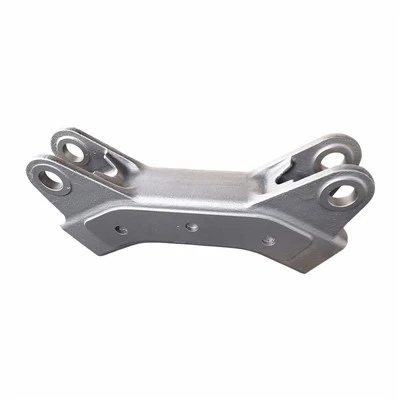
If you’re currently dealing with casting issues—parts breaking, machining costs being too high, warped castings—hit us up to chat about your next project. We can work with you to adjust cooling rates for your specific part, so you get exactly what you need, no surprises. Let’s make your next grey iron casting project a success, no stress.
Alloy Cast Iron Parts References
- ASM International. (2008). Grey Iron: Structure, Properties, and Applications. ASM Handbook, Volume 15: Casting, 1027-1042.
- Steinmetz, P., et al. (2015). Effect of Cooling Rate on Microstructure and Mechanical Properties of Grey Cast Iron. Journal of Materials Processing Technology, 222, 384-392.
- Campbell, J. (2015). Casting Practice: A Guide to Sound Castings. Butterworth-Heinemann, 147-165.
Sangroove (Jiangsu) Machinery Co., Ltd.
Sangroove (Jiangsu) Machinery Co., Ltd. is one of the most professional grey iron casting manufacturers and suppliers in China, also supports customized service with low price. Please feel free to wholesale cheap grey iron casting in stock here from our factory. Also, pricelist is available.
Address: No.789, Hengyang South Road, Jinhu County, Huai’an City, Jiangsu Province
E-mail: quote@sangroove.com
WebSite: https://www.sangoh.com/
