Hey everyone, Tom here, from the Motor Shaft Supply team – I get questions literally every week from new customers and even some long-time folks who just want to double down on the basics: “What’s this concentricity thing for a motor shaft, and why should I care?” Motor Shaft
If you’ve ever opened up a failed motor, you’ve probably seen what happens when the inner parts get wobbly. That’s usually concentricity’s fault. Let me break this down like I explain it to my nephew who’s into RC cars – no jargon, just straight-up how it works, and why it matters for your bottom line.
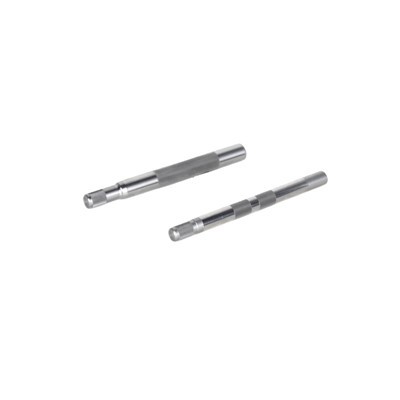
First, let’s define the actual lingo, plain and simple. A motor shaft is a long, metal rod – usually steel, sometimes aluminum, depending on the motor type – that connects your rotor (the spinning inner part of the motor) to whatever’s driving load, like a fan, gear, or pump. Concentricity is how aligned two or more circles are that share the same center point. For a motor shaft, that means two critical things: the center of the shaft’s own main body (the part that goes into the bearings) and the center of the tiny rotor mounting hub at the end of the shaft need to line up perfectly. If they don’t, that’s bad.
Think of it like a bike wheel. If you true a wheel, you’re making sure the rim spins evenly, no side-to-side wobble. That’s exactly what concentricity is for a motor shaft. If the wheel’s hub (where the axle goes) is off-center from the rim, you get a wobbly ride, uneven tire wear, and maybe the wheel falls apart fast. Same with a motor shaft: off-center = wobbly parts, wear, and broken stuff.
Now, why does this matter for a motor shaft supplier like us? Because every single motor we ship out has to hit a super tight concentricity spec – usually between 0.001 and 0.005 inches, depending on the motor size. If a shaft comes in at 0.01 inches off, that’s enough to mess up the whole motor. I’ve seen it happen: a customer bought cheap shafts from someone who cut corners on machining, and their motors were dying within 100 hours of use. They came back to us, and we not only replaced all their shafts but also sat down with their machinist to walk through how we check concentricity in our shop.
Let’s get into the nitty-gritty of how we measure it, so you understand why we’re so strict. We use a coordinate measuring machine (CMM) – it’s basically a fancy robotic arm that touches specific points on the shaft to map its center. We also run a “runout check” on a lathe: spin the shaft slowly, and use a dial indicator to track how much it moves side to side. That number is your total runout, which is directly tied to concentricity. If runout is high, concentricity is off.
Why is that number so important? Let’s walk through the real-world effects. First, bearing wear. Motor bearings are super sensitive – they’re designed to hold the shaft straight. If the shaft is off-center, it pulls and pushes on the bearings every time it spins. That friction builds up fast, and the bearings seize or crack way sooner than they should. We had a customer who was in industrial HVAC – they were replacing bearings every 6 months on 500 motors. They switched to our shafts, and now they go 3 years without a bearing change. That’s a huge cost save for them.
Next, vibration. Wobbly shafts make the whole motor shake. For small motors, that means annoying noise – think of an old computer fan that sounds like it’s going to take off. For larger motors, like in forklifts or pumps, vibration can crack the motor housing, loosen wires, or even damage whatever the motor’s connected to. A friend of mine works on farm equipment – he told me a customer had a grain auger motor that kept shaking loose, spilling grain and shutting down their whole harvest. Turns out the supplier’s shafts had 0.008 inches of runout, way over spec. We fixed their shaft issue, and they haven’t had a problem since last fall.
Then there’s efficiency. If the shaft isn’t spinning straight, the rotor doesn’t align perfectly with the stator (the stationary part of the motor that creates the magnetic field). That means the motor wastes energy trying to spin a wobbly shaft instead of turning your load. We did a test a few years back: same motor, same size, one with a concentricity error of 0.007 inches, one with 0.002. The off-center one used 12% more electricity to do the same work. For a big operation running 100 motors, that’s thousands of dollars a year in extra power bills. That’s not a small number – that’s the difference between a profit and a loss on a project.
Wait, but what about different types of motors? Does concentricity matter the same for every one? Let’s break it down:
- AC motors: Super sensitive, especially variable-speed ones. When you’re ramping a motor up from 0 to 3000 RPM, any off-center spot gets amplified. If concentricity is off, you’ll get way more vibration at high speeds.
- DC motors: A bit more forgiving, but still important, especially for brushed DC motors. The brushes wear way faster if the shaft is wobbly, because they’re constantly bouncing off the rotor.
- Stepper motors: These are used in precision stuff – CNC machines, 3D printers, medical devices. Concentricity is non-negotiable here. Even a tiny error can make the steps miss, ruining a part or causing a machine error.
Now, let’s talk about why some suppliers cut corners on this. Machining to tight concentricity spec takes time and good equipment. You can’t just whack a shaft on a lathe and call it good – you have to set it up just right, check it multiple times while machining, and verify it after coating (most shafts get a zinc or black oxide finish, which can shift the center if you’re not careful). Some cheaper suppliers will skip the post-coating check, so you might get a shaft that looks good straight out of the lathe, but after coating, it’s off by 0.003 inches. That’s a dead giveaway of a supplier that doesn’t care about quality.
What should you look for when you’re ordering motor shafts? First, ask for the concentricity spec – don’t just take “we make motor shafts” as an answer. A good supplier will tell you exactly what their tolerances are, and have documentation (a COC, certificate of conformity) to back it up. Second, ask how they measure it. If they just say “we check it by eye” or “run it on a lathe”, that’s a red flag. A proper CMM check or dial indicator runout test is non-negotiable. Third, check reviews (or ask other people in your industry). We get a lot of customers who came from suppliers that had bad concentricity – they’ll tell you exactly what problems they ran into, so you don’t have to.
Let’s wrap this up with a quick example from our shop. Last month, a customer came to us with 200 shafts for a 15HP motor. Their old supplier’s shafts had 0.009 inches of runout, leading to 40% more bearing failures. We manufactured each shaft to 0.002 inches max runout, and we did a 100% inspection on every single one before shipping. They installed them last week, and their bearing failures are already down to zero. That’s the kind of result we care about, and that’s why concentricity isn’t just a technical term – it’s the difference between a motor that works for years, and one that’s a constant headache.

If you’re dealing with motor shaft issues – whether it’s vibration, bearing wear, efficiency losses, or just want to make sure your next order is up to spec – hit us up for a no-pressure chat. We’ll walk you through what you need, answer all your questions, and even help you figure out the right spec for your application. No sales pitch, no jargon – just real talk from folks who’ve been in the motor shaft game for over a decade.
Pump Shaft References
- Electrical Apparatus Service Association (EASA). "Motor Shaft Concentricity and Its Impact on Reliability". Technical Bulletin TB-01, 2022.
- American Society of Mechanical Engineers (ASME). "Dimensioning and Tolerancing for Rotating Shafts". Standard Y14.5, 2021.
- National Electrical Manufacturers Association (NEMA). "Motor Shaft Tolerance Requirements for Industrial Applications". Publication MG 1, 2020.
Ningbo Uni-drive Technology Co., Ltd.
Ningbo Uni-drive Technology Co., Ltd. is one of the most professional motor shaft manufacturers and suppliers in China. Please feel free to buy cheap motor shaft made in China here and get pricelist from our factory. All customized products are with high quality and competitive price.
Address: Industrial Site No.6, Jingtou Village, Sanqi Town, Yuyao City, Zhejiang Province
E-mail: admin@uni-drive.com.cn
WebSite: https://www.motordriveshaft.com/
